






HubSpot Alternatives - HubSpot is considered one of the best CRM out there. It has a clean interface, a powerful feature set, and a good reputation that is hard to beat. However, a good doesn’t always mean it is right for you. For one thing, HubSpot pricing makes your stomach drop. As your contact list grows and team expands, its pricing climbs fast, which is one of the main reasons businesses start looking for HubSpot alternatives.
This makes you pay for enterprise-level prices for features that you only half-use. So, the real question isn’t “Is HubSpot worth it?” The real question is, “Is HubSpot worth it for your business, at your stage, with your budget?” A lot of companies that honestly answer “No” and that’s completely fine. The market is full of HubSpot alternatives that aren’t just cheaper; some of them are genuinely better suited to specific needs.
Why Do You Need HubSpot Alternatives
At first glance, HubSpot’s free plan looks generous. And it is until you need that goes beyond just the basics. While many businesses appreciate the wide range of HubSpot features, unlocking advanced automation, custom reporting, and high-level marketing capabilities often requires upgrading to expensive paid tiers. The marketing hub alone can cost hundreds of dollars a month, and if you want the full CRM suite, you’re in for significant monthly commitment.
HubSpot is built for scale, which means smaller teams or startups often end up paying for the plan that they don’t need yet. One reason it remains popular is its extensive HubSpot Integrations, which allow businesses to connect their CRM with a wide range of marketing, sales, and customer support tools. However, that feature richness can feel overwhelming when all you want is to manage your pipeline and send a few automated emails.
That’s where HubSpot alternatives for small businesses come in. Many startups and small-to-medium sized businesses use HubSpot’s free CRM; however, they are forced to upgrade to one of HubSpot’s high-tier plan because of limited budget and features. But worry not as there are a number of alternatives to HubSpot available on the market, which are worth considering.
13 HubSpot Alternatives Worth Your Attention
Let's see HubSpot CRM alternatives in detail so that you can choose the right CRM for your business.
Zoho CRM
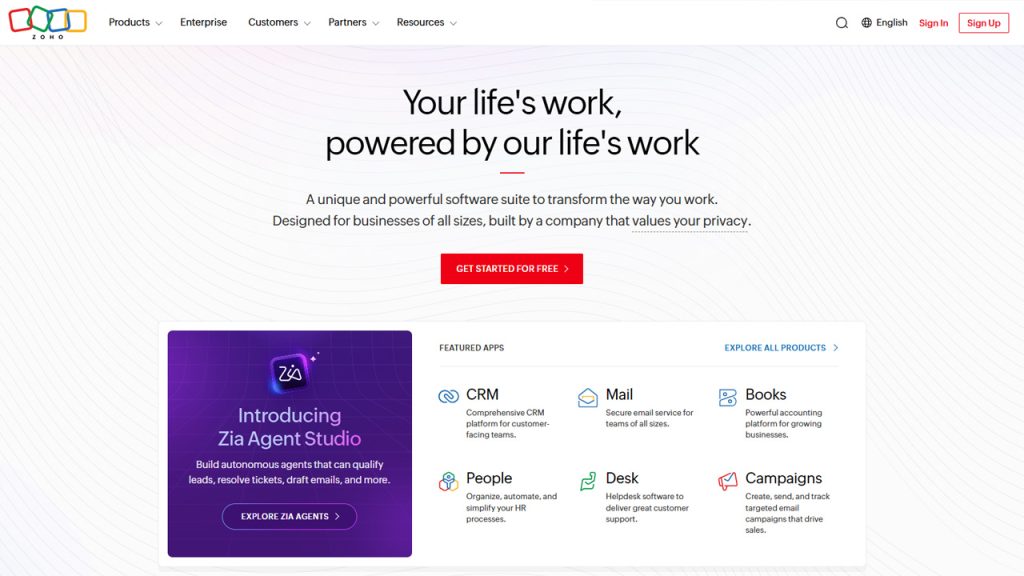
Zoho CRM is probably the most well-suited alternative to HubSpot. It covers sales automation, lead management, analytics, and AI-powered insights through its AI assistant, Zia. Although the interface is not as polished as HubSpot’s, it’s highly customizable and that matters for businesses that have specific workflows.
It offers a lot of functionality without a steep price jump. It also integrates naturally with the broader Zoho ecosystem, which is a genuine advantage if you’re already working with Zoho Books, Zoho Desk, or other tools in the family. For mid-sized businesses that need depth without having to pay premium prices, Zoho CRM is a strong contender.
Pricing: Free plan available. Paid plans start at $20/user/month
Agile CRM
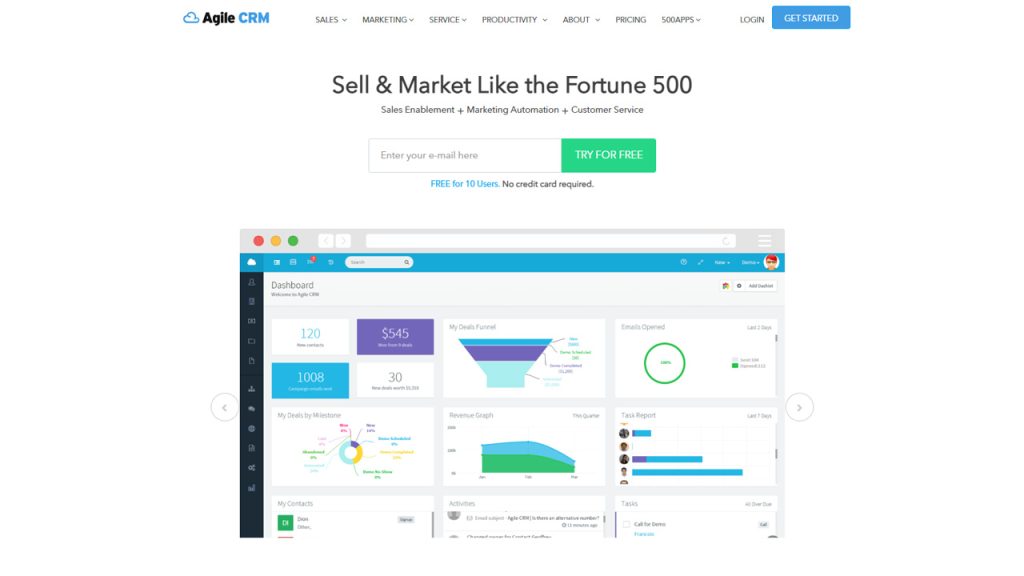
Agile CRM combines sales, marketing, and customer service features into one platform, and its free plan supports up to 10 users, which is genuinely rare. You get contact management, deal tracking, email campaigns, and basic automation without spending a cent.
It's not the most sophisticated tool on the market. The interface feels a little dated, and the automation builder isn't as intuitive as some competitors. But if you're an early-stage startup or a small team that needs functional CRM capabilities on a tight budget, Agile CRM does the job well.
Pricing: Free plan available for up to 10 users. Paid plans start at $8.99/user/month
Monday CRM
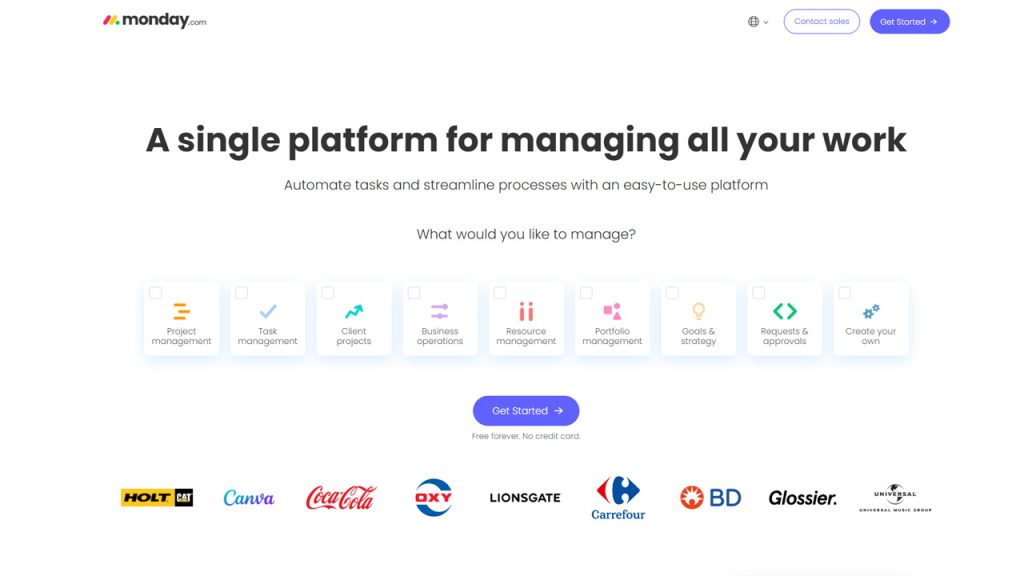
Monday.com started as a project management tool. Monday CRM is visually clean, highly flexible, and it is easy for teams to adopt. If your team is struggling with HubSpot CRM’s learning curve, Monday might be easier for them to work with.
It allows you to customize pipelines, automate repetitive tasks, and get a clear view of your sales process without reading through a manual. It's particularly well suited for teams that work across departments like marketing, sales, and operations. However, its downside is that deeper CRM features such as advanced reporting or lead scoring aren’t as robust as HubSpot’s. But for collaboration-heavy teams, Monday CRM is hard to beat. The discussion around HubSpot vs Monday CRM usually comes down to flexibility and ease of collaboration versus advanced CRM functionality.
Pricing: Free plan available. Standard paid plan starts at approximately $12/user/month.
Engagebay
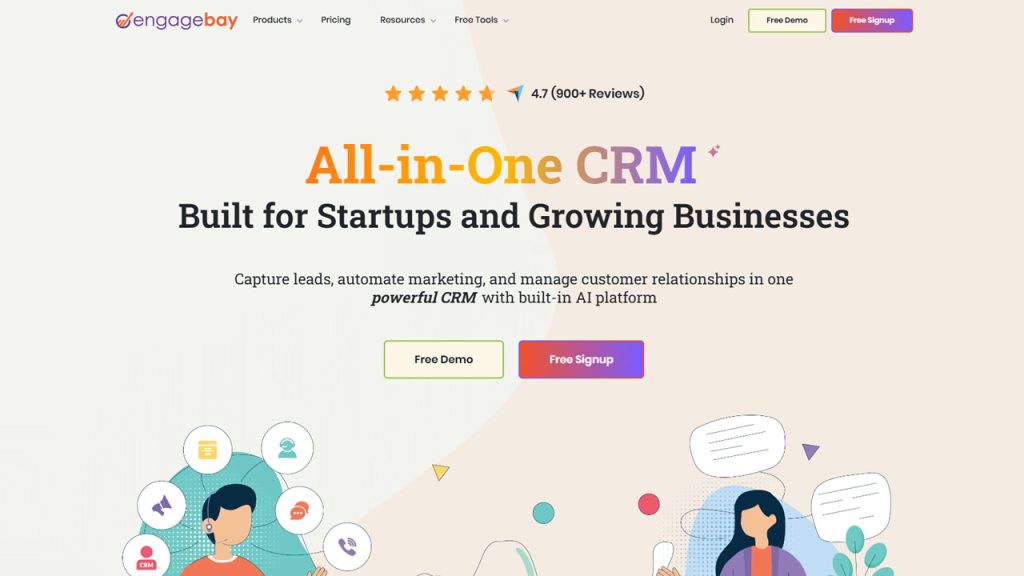
Engagebay is arguably the closest CRM to a true HubSpot alternative in terms of structure. It offers marketing, sales, and support tools under one roof, and that too, at a fraction of cost. Its free as well as paid plans are both affordable.
The email marketing module is solid, the CRM is clean, and the automation capabilities are more than enough for most small to mid-sized businesses. It is far from perfect. The interface can feel a little cluttered, and integrations are more limited than HubSpot's. But if you want an all-in-one platform without the all-in-one price tag, EngageBay deserves serious consideration. For businesses comparing the best CRM software options on a budget, EngageBay often stands out because it combines sales, marketing, and support tools in a single platform.
Pricing: Free plan available. Paid plans start at $12.74/user/month for Basic.
Freshsales
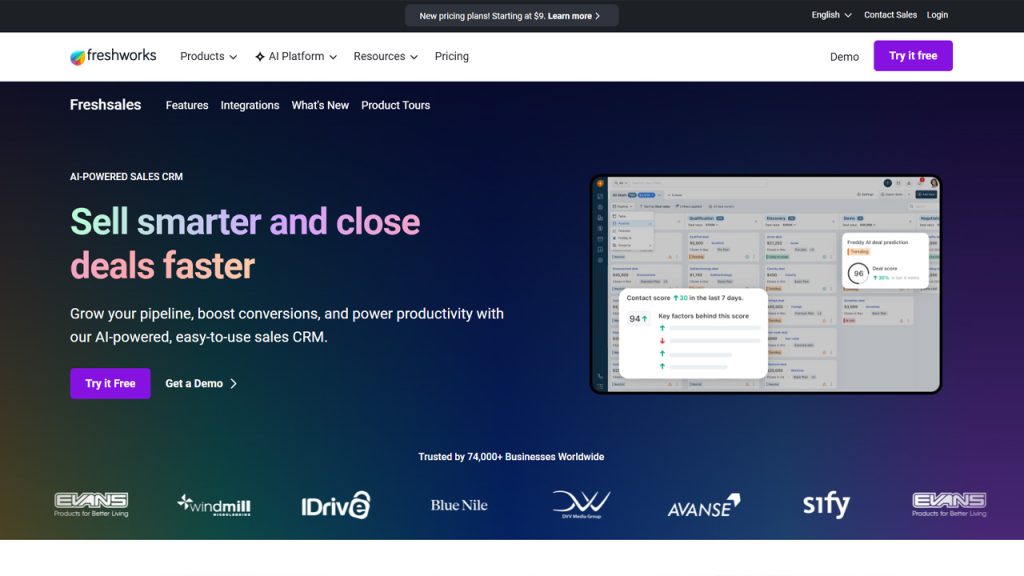
Freshsales by Freshworks is built especially for sales teams. It's clean, fast, and comes with AI-powered lead scoring built into its core functionality. You can see exactly which leads are worth prioritizing, and the interface makes acting on that information simple.
It also offers a free plan that's more functional than most. Phone, email, and chat are natively integrated, which means your sales team doesn't need to toggle between tools to communicate with prospects. If your primary pain point with HubSpot is that it feels too marketing-heavy and not sales-focused enough, Freshsales is a natural switch. Businesses comparing HubSpot vs Freshsales often find Freshsales more appealing when sales-focused functionality is a higher priority than marketing tools.
Pricing: Free plan available for up to 3 users. Paid plans start at $9/user/month.
Salesforce
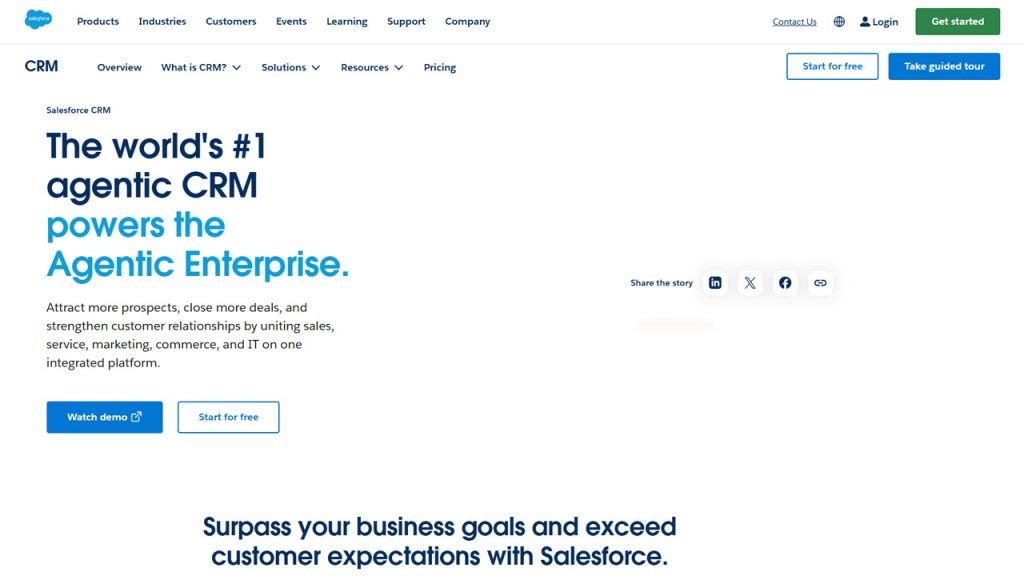
Salesforce is the biggest name in the CRM industry, and for good reason. It offers an incredibly powerful platform that can handle everything from sales and marketing to customer service, analytics, and automation.
The downside is complexity. Salesforce isn't the kind of CRM most teams can set up and master in a weekend. It often requires customization, onboarding, and sometimes even dedicated administrators to get the most out of it. However, businesses with complex sales processes or ambitious growth plans often find the investment worthwhile. If HubSpot feels limiting as your company scales, Salesforce gives you almost unlimited flexibility, provided you're willing to handle the learning curve that comes with it. The choice between HubSpot Vs Salesforce often depends on whether a business values ease of use or enterprise-level customization.
Pricing: Free plan available. Paid plans start at $7.50/user/month for Starter Suite.
ActiveCampaign
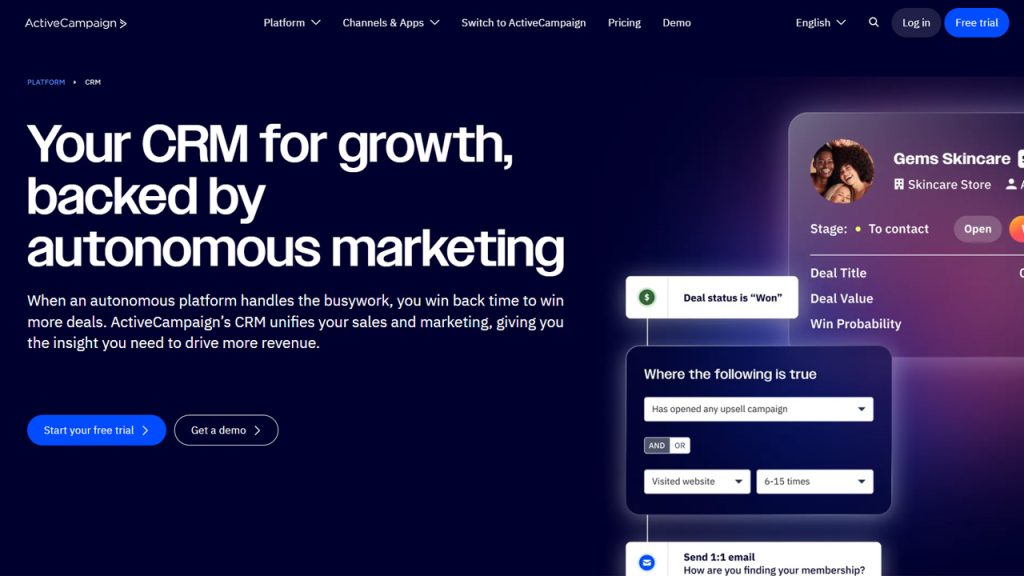
Businesses that prioritize email marketing and automation prefer ActiveCampaign. It offers one of the best automation builders in the industry. Its visuals are powerful and are far more intuitive than HubSpot’s at the same price point.
It is not considered a full CRM in the traditional sense. The sales features exist, but it is not the selling point. ActiveCampiagn truly shines in building sophisticated customer journeys, segmentation, conditional logic, and behavioral triggers. Businesses evaluating HubSpot vs ActiveCampaign typically compare marketing automation depth against broader CRM and sales functionality. If you’re a marketing-driven business that depends heavily on email, ActiveCampaign is more than just an alternative to HubSpot. In specific cases, it might actually be better.
Pricing: Plans start at approximately $15/month.
Pipedrive
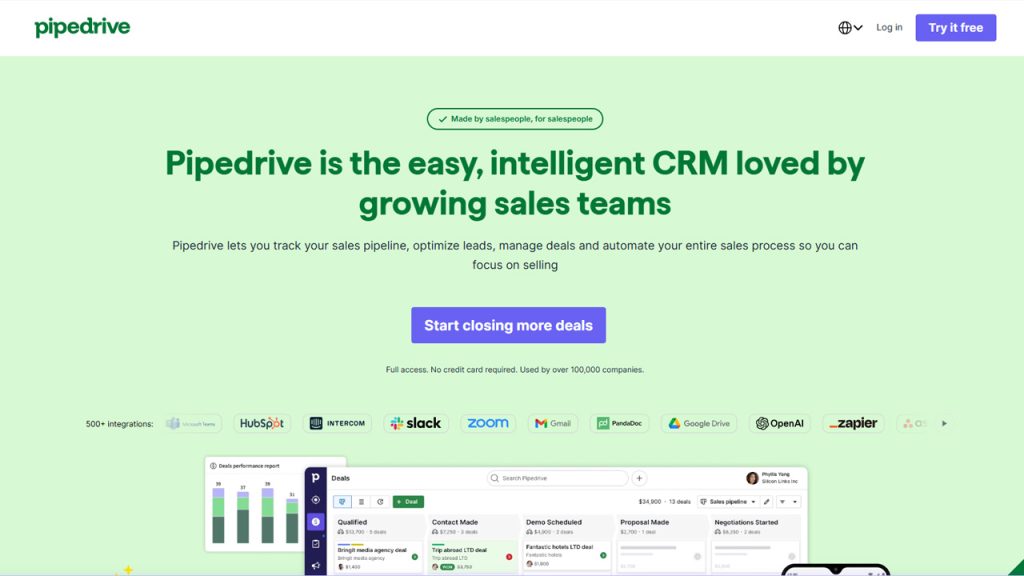
The main goal of Pipedrive is to help sales teams' close deals successfully. It offers one of the most intuitive visual pipelines in the CRM space. It is designed to minimize admin work, so sales reps can spend more time actually selling.
Pipedrive doesn’t offer a free plan, but the entry-level pricing is reasonable, and you get a lot of sales-specific functionality for that cost. It offers automation, email integration, activity reminders, and revenue forecasting, all of which is built around the sales workflow. If your team found HubSpot's CRM either too complex or too generalized, Pipedrive is the focused, no-fuss alternative.
Pricing: Paid plans start at approximately $14/user/month.
GetResponse
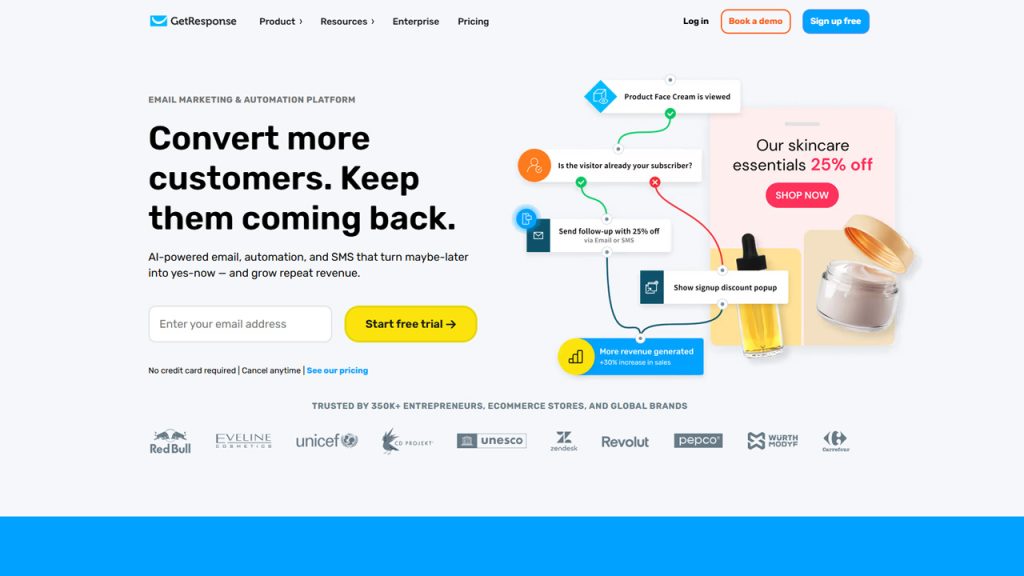
GetResponse started as an email marketing platform and has steadily grown into something more. Today it offers automation workflows, landing pages, webinars, and basic CRM functionality; all from one dashboard.
It's not trying to replace HubSpot entirely, and it doesn't pretend to. But for businesses where email is the primary channel, and CRM is a supporting function, GetResponse offers a clean, cost-effective setup. The automation features are strong, and the interface is much easier to navigate than HubSpot's for users who just want to run campaigns without the complexity.
Pricing: Plans start at approximately $19/month.
Zendesk
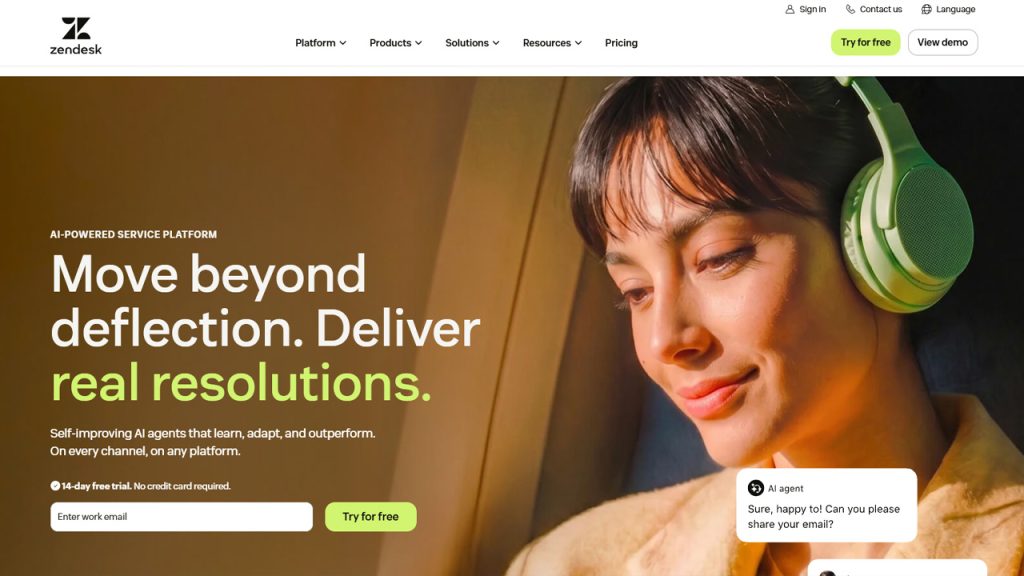
Zendesk is widely known for its customer support, but its CRM, Zendesk Sell, is a capable sales tool. It is particularly powerful for those businesses where customer relationships don’t end with the sale. If your business centers around post-sale support, customer retention, and service quality, Zendesk offers a unified approach which is genuinely valuable.
The integration between Sell and Zendesk Support means your sales and support teams always have context about the customer. That kind of continuity is hard to find in most other CRMs. This platform might not be the richest one when it comes to marketing, but for customer-centric businesses, it fills a gap that HubSpot doesn’t always address as naturally.
Pricing: Zendesk Sell plans start at approximately $19/user/month.
NetHunt CRM
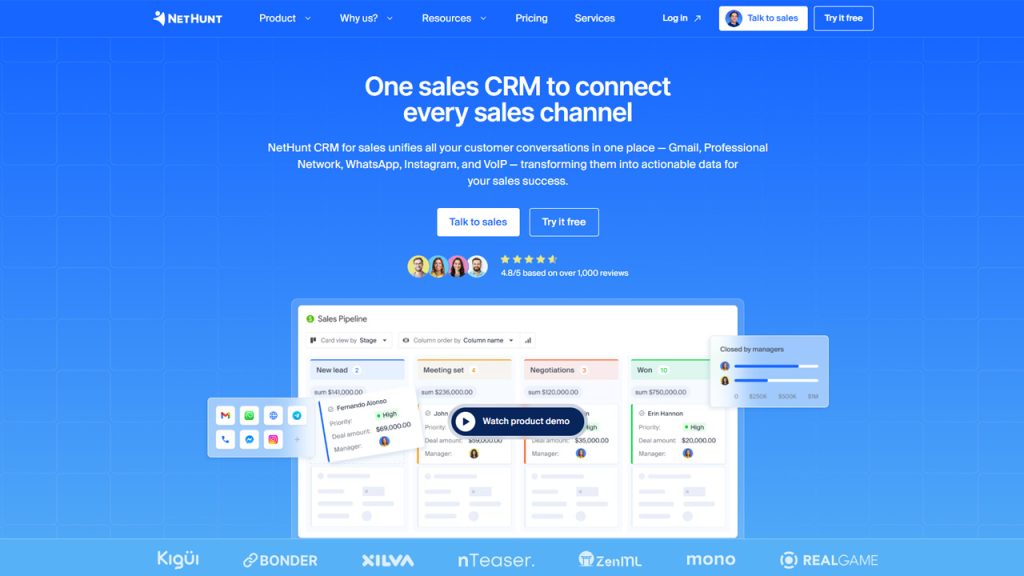
NetHunt CRM takes a different approach by building directly inside Gmail. Instead of forcing your team to work on a separate platform, it turns your inbox into a fully functioning CRM. For businesses that spend most of their day managing conversations through email, that can be a huge advantage.
You can track leads, manage pipelines, automate follow-ups, and store customer information without constantly switching tabs. That's exactly what makes adoption so easy. While it doesn't offer the extensive marketing features that HubSpot provides, NetHunt excels at keeping sales processes simple and organized.
Pricing: Free trial available. Paid plans start at $30/user/month.
Keap
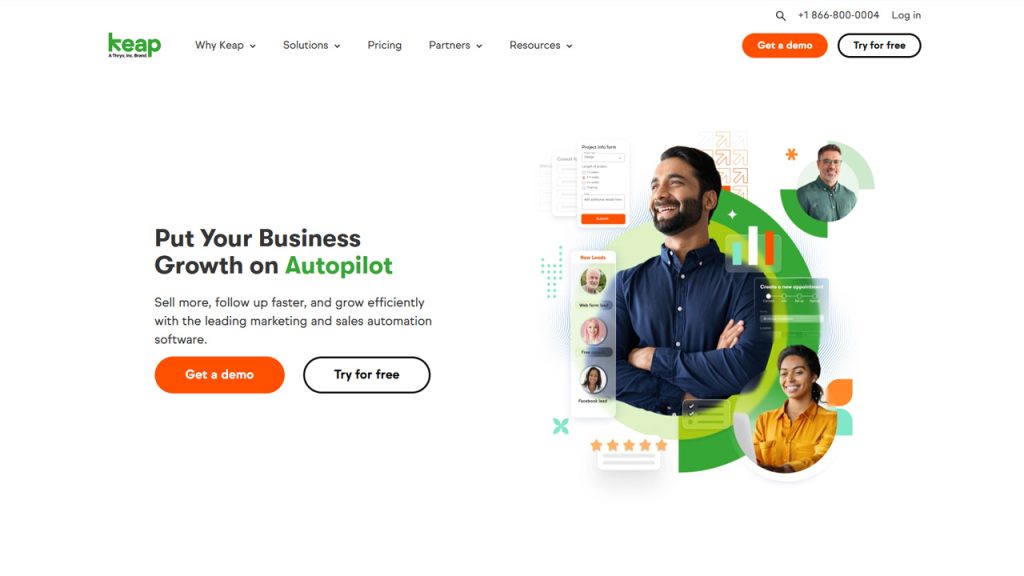
Keap is designed for small businesses that want CRM and marketing automation in one place without getting buried under enterprise-level complexity. It combines contact management, email marketing, sales pipelines, appointment scheduling, and automation into a single platform that's surprisingly approachable.
Its biggest strength is automation. Keap helps businesses automate repetitive tasks such as follow-ups, lead nurturing, and appointment reminders without requiring technical expertise. The interface is straightforward, and the setup process feels much less intimidating than larger CRM systems. If you're looking for an alternative to HubSpot that focuses on efficiency and simplicity, Keap is worth considering. When evaluating HubSpot vs Keap, many small businesses prioritize simplicity and automation over an extensive feature set.
Pricing: Plans start at $299/month for up to 1,500 contacts.
Streak
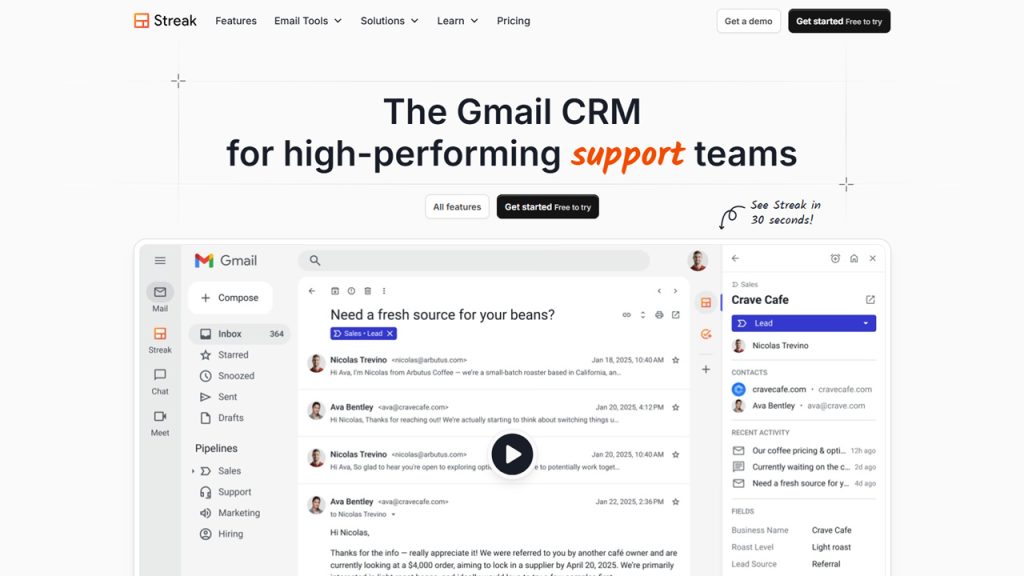
Streak is another CRM that operates directly within Gmail, but it takes simplicity even further. It focuses on helping individuals and small teams manage relationships and workflows from the inbox they already use every day.
You can create pipelines, track deals, manage customer interactions, and collaborate with team members without leaving Gmail. However, that simplicity comes with limitations. You won't find the advanced reporting, automation depth, or marketing capabilities that HubSpot offers. Still, if HubSpot feels too large, too expensive, or simply too much for your needs, Streak provides a refreshingly lightweight alternative that gets the essentials right.
Pricing: Free plan available. Paid plans start at $49/user/month.
Quick Comparison Table At-a-Glance
Before choosing HubSpot alternatives, it's helpful to compare features, free plans, and pricing side by side especially if rising HubSpot pricing is one of the main reasons you're exploring alternatives.
| Tool | Best For | Free Plan | Starting Price |
| Zoho CRM | Flexible, mid-size teams | Yes | ~$20/user/month |
| Agile CRM | Startups on a budget | Yes (10 users) | ~$8.99/user/month |
| Monday CRM | Visual, collaborative teams | Yes | ~$12/user/month |
| Engagebay | All-in-one on a budget | Yes | ~$12.74/user/month |
| Freshsales | Sales-focused teams | Yes | ~$9/user/month |
| Salesforce | Large businesses and enterprises | No | $7.50/user/month |
| ActiveCampaign | Email & marketing automation | No | ~$15/month |
| Pipedrive | Pure sales pipeline management | No | ~$14/user/month |
| GetResponse | Email-first businesses | Limited | ~$19/month |
| Zendesk | Customer support-heavy businesses | No | ~$19/user/month |
| NetHunt CRM | Gmail-based sales teams | Yes | $30/user/month |
| Keap | Small businesses and solopreneurs | No | $299/month |
| Streak | Freelancers and small teams | Yes | $49/user/month |
How to Choose the Right HubSpot CRM Alternatives
There's no universal answer, but there is a useful framework. Before you commit to anything, ask yourself these four questions:
What is the primary job you need this tool to do?
If it is sales pipeline management, lean toward Pipedrive or Freshsales. If it's marketing automation, ActiveCampaign or GetResponse. If you need everything, EngageBay or Zoho.
What is your realistic budget per user per month?
Be honest about this. A tool that stretches your budget will be abandoned. A tool that fits it will get used.
How tech-savvy is your team?
Some tools reward technical users with deep customization. Others prioritize ease of use. Monday and Freshsales are easier to adopt; Zoho and ActiveCampaign have steeper curves but more depth.
Where do you expect to be in 12 months?
Choose a tool that fits where you're going, not just where you are. Switching CRMs mid-growth is painful and expensive.
Final Thoughts
HubSpot earned its reputation. But reputation isn't a reason to overpay or overcommit to a platform that doesn't fit how your business actually works. The 13 HubSpot alternatives covered here aren't lesser options; they're different options, each built with a specific kind of business in mind.
The best CRM isn't the most famous one. It's the one your team actually uses, that fits your workflow, and that grows with you without draining your budget in the process. Take the time to match the tool to the need, not the other way around.
Frequently Asked Questions (FAQs) : HubSpot Alternatives
Zoho CRM, EngageBay, and Freshsales are among the best HubSpot alternatives for small businesses because they offer strong CRM features at more affordable prices.
Many businesses switch to an alternative to HubSpot due to rising costs, feature limitations on lower-tier plans, and the need for a simpler CRM solution.
Zoho CRM, Agile CRM, Freshsales, EngageBay, NetHunt CRM, and Streak all offer free plans or free versions for users getting started.
Salesforce offers greater customization and scalability, while HubSpot is generally easier to use. The better choice depends on your business size and requirements.
Look at your budget, team size, required features, ease of use, integrations, and long-term growth plans before selecting a HubSpot alternative.