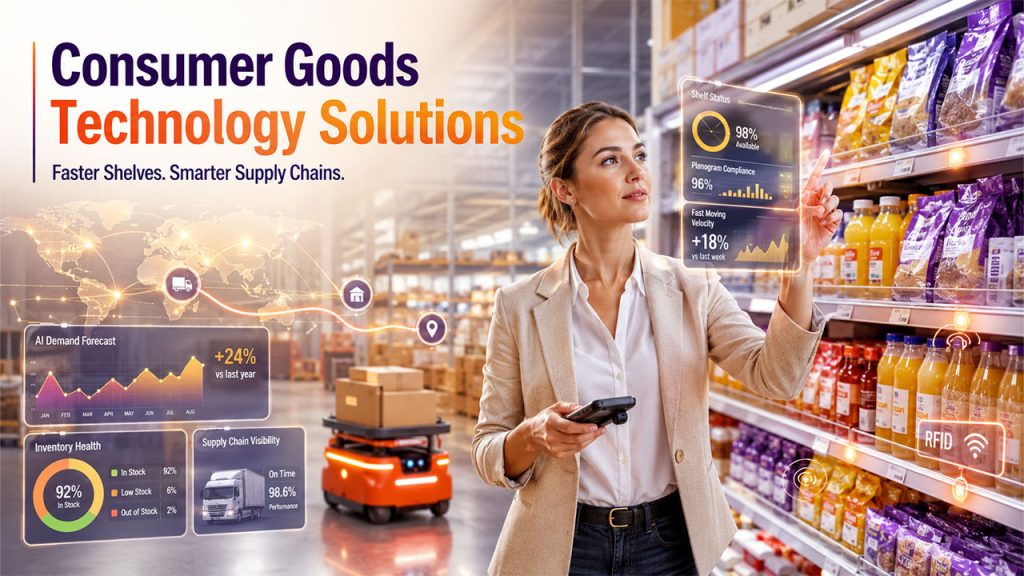






Shelves move faster than the systems behind them can keep up. That's the honest version. Shoppers want things personalized down to the SKU, retailers want margin protected, and somewhere in between sits a tangle of legacy ERP, half-finished cloud migrations and AI pilots nobody quite finished rolling out. So this piece does the unglamorous thing: it actually names names. Eight technology partners, eight different angles on the same mess.
As brands seek more efficient operations and better customer experiences, consumer goods technology solutions have become essential for staying competitive. Many organizations are also investing in retail CRM software to unify customer data, strengthen loyalty programs, and deliver more personalized shopping experiences.
Fifty Years, Roughly, of Getting Here
Worth a minute of context before the list. None of this happened overnight — it stacked, layer on layer, decade after decade.
- 1970s–80s: barcode scanning shows up, POS terminals replace paper ledgers, UPC becomes the universal language of a shelf.
- 1990s: ERP arrives. SAP R/3, Oracle Financials — suddenly finance, HR and inventory live under one (clunky) digital roof.
- 2000s: e-commerce stops being a novelty. Amazon and eBay reset what "fast" means for everyone else.
- 2010s: mobile shopping, cloud ERP, buy-online-pick-up-in-store. Omnichannel stops being a buzzword and becomes the job.
- 2020s: AI forecasting, item-level RFID, warehouse robots that talk to each other. COVID compressed about a decade of this into eighteen months.
Funny thing — none of the old layers actually went away. Plenty of 2026 retail stacks still have a mainframe somewhere in the basement, quietly cutting payroll the way it has since the Clinton administration.
The following providers offer specialized consumer goods technology solutions, ranging from cloud modernization and AI implementation to supply chain optimization and digital commerce transformation.
Companies Worth Knowing
DXC Technology
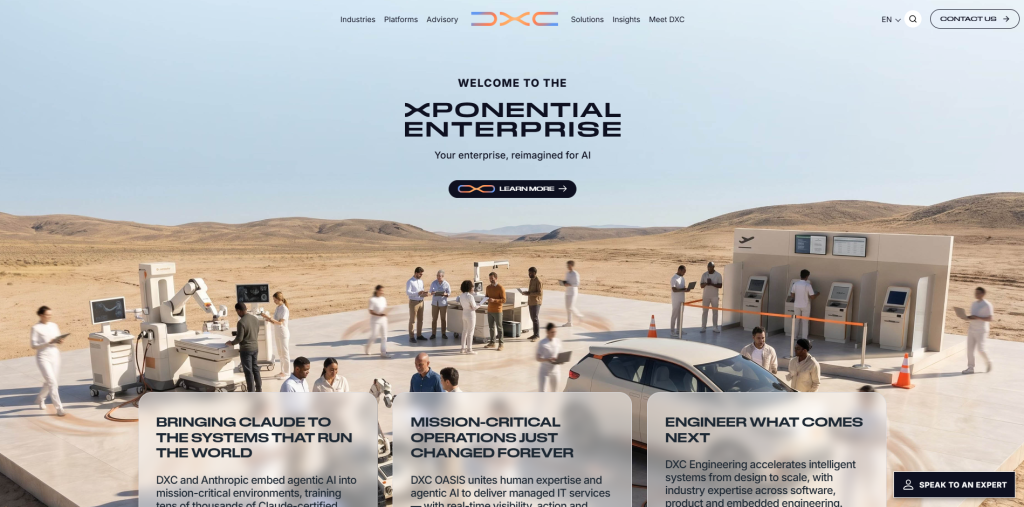
Six decades old, still standing, and increasingly pointed at AI-driven retail work rather than just keeping the lights on. DXC has run customer analytics and demand forecasting for names like Yum China and Jollibee, plus SAP and AWS-based modernization projects across the sector. Its SPARK for CPG offering, built jointly with AWS, goes after a specific pain point — production disruption and variable cost — rather than trying to solve everything at once. Details are available on its consumer goods and retail solutions portfolio.
DXC delivers enterprise-grade consumer goods technology solutions focused on AI forecasting, SAP modernization, and operational resilience.
Endava
London HQ, Romanian engineering roots, somewhere around 13,000 people scattered across Europe and the Americas. Endava builds custom platforms — loyalty engines, e-commerce replatforming, data architecture — rather than reselling packaged software. The model is embedding: teams sit inside a client's roadmap for years, not for a single project sprint. That long-haul approach suits brands tired of vendor turnover every eighteen months.
Publicis Sapient
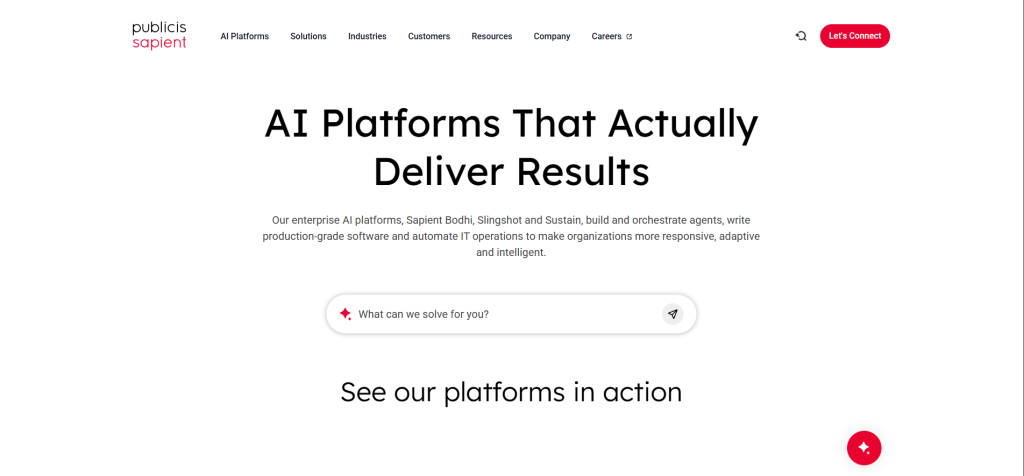
Digital transformation arm under the Publicis Groupe umbrella, strongest in customer experience and commerce engineering. Rebuilt e-commerce backbones for global beverage and apparel names, leaning on composable, modular commerce architecture instead of monolithic platforms. Their internal framework — strategy, product, experience, engineering, data — gets referenced often enough at NRF that it's become something of a shorthand in the industry.
Globant
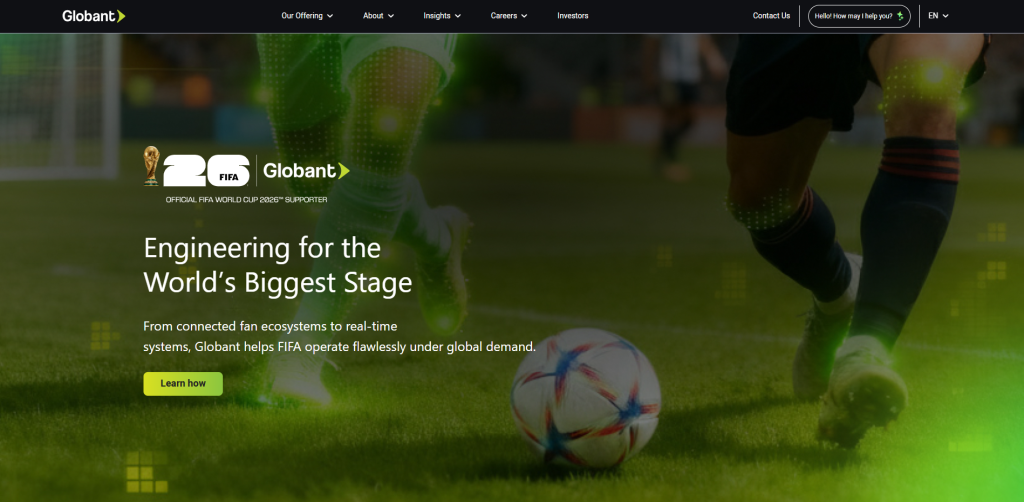
Started in Argentina, now running in 30-plus countries, Globant mixes design sensibility with serious AI engineering. Built shopper-facing AI assistants and inventory tools for Latin American and European retail chains. The structural trick is "Studios" — small, specialized teams assigned per domain instead of one giant delivery org. Brands chasing speed over scale tend to gravitate here, and it shows in how fast some of their rollouts land.
Sopra Steria
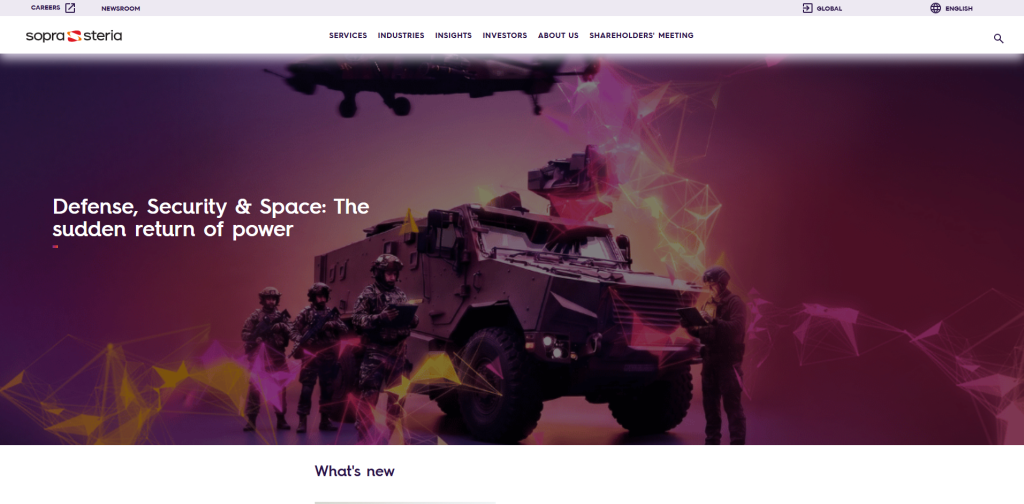
French-headquartered, deeply rooted in continental Europe's retail and FMCG world. Runs SAP and Microsoft Dynamics implementations for grocery chains, plus cybersecurity hardening for point-of-sale networks that, frankly, are often the weakest link in a store's whole setup. Particularly strong presence in France, Germany and the Nordics — a real consideration if EU regulatory nuance outweighs raw global footprint.
LTIMindtree
India-headquartered with major delivery hubs across Europe and the US, focused on supply chain digitization and AI-driven merchandising for CPG brands. Built demand-sensing platforms for packaged food manufacturers that measurably tightened forecast error. Their Salesforce and ServiceNow integration practice rounds things out — useful for brands juggling multiple customer-facing systems that don't naturally talk to each other.
Valtech
Danish-founded, around 6,000 people worldwide, and noticeably less infrastructure-heavy than most names on this list. Valtech specializes in commerce platform builds — Shopify Plus, Salesforce Commerce Cloud, Adobe Commerce — for European fashion and beauty retailers that need a storefront live fast and looking sharp. Less about deep backend overhaul, more about getting the front door right.
Wipro
Indian multinational, sizable retail practice across Europe and the Americas, running large supply chain visibility projects and AI pricing optimization for grocery and apparel clients. Its FullStride Cloud unit handles legacy ERP migration — the unglamorous but necessary work. A solid pick for brands stuck with three regional ERPs that never quite agreed on a shared data model.
Wipro's portfolio of consumer goods technology solutions includes cloud migration, pricing optimization, and supply chain visibility initiatives.
Minsait (Indra)
Spanish technology group, strong across Iberia and Latin America specifically. Built loyalty and payment infrastructure for supermarket chains, plus IoT cold-chain monitoring for food distributors — the kind of project that sounds boring until a truckload of yogurt spoils because nobody caught the temperature spike in time. A natural fit for brands with real exposure to Spanish-speaking markets. This reflects a broader trend of using IoT in business processes to improve operational efficiency, product quality, and supply chain transparency.
How to Choose the Right Consumer Goods Technology Solutions Provider
Not every vendor suits every brand, and pretending otherwise wastes everyone's time. A boutique skincare label and a multinational beverage conglomerate are not shopping for the same thing. A few questions worth asking before any contract gets signed:
- Real industry scars. Has this vendor shipped actual CPG or retail work, or is "consumer goods" just one slide in a generic deck?
- Will it talk to what you already have? SAP, Oracle, Microsoft — integration matters more than a shiny new platform that ignores your legacy stack.
- Is the AI actually running, or still "in pilot"? Ask to see it live. Not a roadmap. Production.
- Geography and rules. GDPR, EU sustainability disclosure, US data residency — these aren't footnotes anymore.
- How painful is leaving? Fixed-scope versus outcome-based pricing, and what the exit clause actually says in plain English.
One more thing — ask for a named reference client in your specific sub-vertical. Not "retail" generally. Yours. If they hesitate, that's the answer right there.
So, Which One?
The best consumer goods technology solutions provider depends on your organization's priorities. Honestly — none of these eight do the same job. Some are storefront speed specialists, some live in supply chain plumbing, some know EU regulation cold. Pick based on what's actually broken — slow checkout, bad forecasting, an ERP held together with duct tape — not on which logo sounds most familiar in a boardroom.
A Few Quick Questions
Q1. Do any of these work with smaller CPG brands, not just giants?
Most do, though minimum engagement sizes vary a fair bit between firms.
Q2. Is AI forecasting worth bothering with for a smaller retailer?
Usually, yes — even a modest accuracy gain tends to shrink inventory costs noticeably.
Q3. How long does an ERP overhaul realistically take?
Anywhere from six months for one module to two years for the full thing.
Q4. Does sustainability reporting actually affect vendor choice?
Increasingly so, especially for brands selling into the EU — the reporting rules aren't loosening anytime soon.