





Those who use mobiles skim, swipe, and move on quickly without even giving seconds to messages. So, the first thing that any outbound message must do is get seen. For years, that meant bulk-SMS. Then, the WhatsApp Business API entered the picture with instant-reply buttons, rich templates, and full-funnel analytics.
Let's see which channel delivers the best ROS in 2026. This provides the data-backed scorecard along with a decision checklist that you can apply to your own campaigns.
Why is Mass Messaging Important?
Globally, 84% of the population owns smartphones. Additionally, the average users who check messaging apps are more than social media platforms. Mass messaging whether it is by text or chat still outperforms opt-in intent or display ads in immediacy.
SMS works on every type of handset, and it doesn’t need data. SMS has been dominating for three decades. In contrast, WhatsApp has crossed three-billion monthly users and now it offers official APIs for payments, automation, and catalogs.
This raises a simple question: is now the time to shift budgets away from SMS?
Reach & Engagement Showdown: WhatsApp vs Traditional SMS
Open and Read Rates
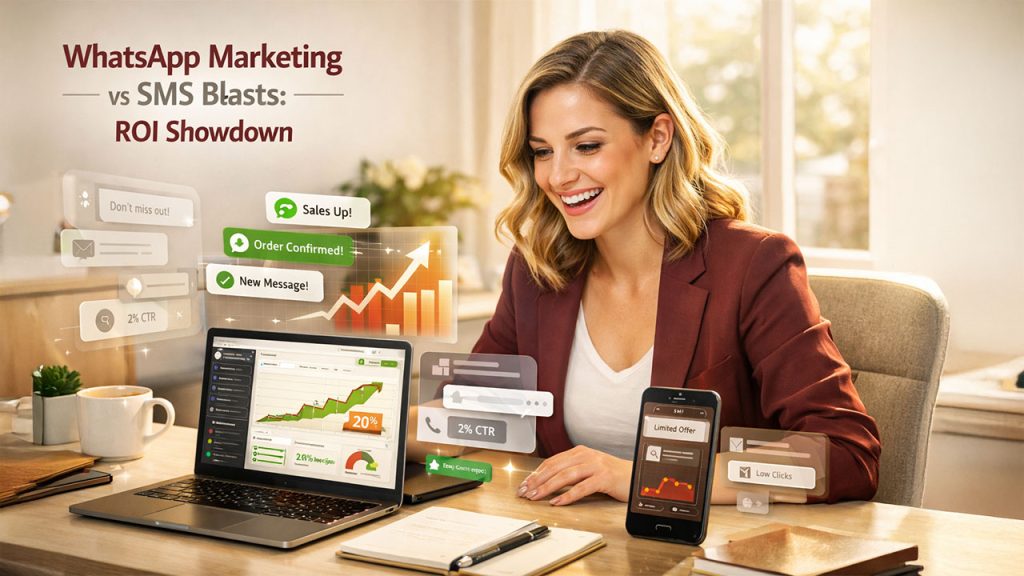
WhatsApp messages boast a staggering 98% open rate. Compare that with carrier data that pegs SMS opens at about 82%. While SMS is still impressive, the extra 16 percentage-point gap means 160 more eyeballs per 1,000 sends.
Click-Through and Response
Engagement has a deeper story to tell. A cross-channel study of 423 retail campaigns found that WhatsApp Business API messages averaged a 15% click-through rate, while equivalent SMS blasts managed just 4%.
Another benchmark roundup places typical SMS CTR between 3–4%. The gulf widens when you add quick-reply buttons, images, or PDF coupons that only WhatsApp templates can carry.
Why the Difference?
- Two-way threads keep the chat in the same window users share with friends.
- Rich templates eliminate the friction of typing a reply; one tap suffices.
- Delivery status (sent, delivered, read) lets marketers iterate quickly on copy.
When comparing WhatsApp vs Traditional SMS, these engagement mechanics explain why chat-based interactions consistently outperform one-way messaging in modern campaigns.
Scorecard so far: WhatsApp leads both visibility and action, setting the stage for stronger downstream conversions.
Cost Structures You Can Actually Control
Many marketers assume SMS is cheaper because of per-message pricing. Reality is nuanced.
WhatsApp’s Conversation-Based Billing
Meta charges per 24-hour conversation window, with different rates for marketing, utility and authentication messages. Providers layer on their own platform fees.
In India—one of the world’s largest bulk-messaging markets—a comparative study found WhatsApp campaign costs to be 30–50% lower per delivered message than bulk-SMS.
SMS Surcharges Add Up
- Carrier pass-through fees (United States A2P, India DLT)
- Long-code vs. toll-free number rental
- One-time brand registration and template vetting
Across 10,000 marketing messages, the sample spreadsheet below shows how costs diverge:
- SMS: US$0.012 × 10,000 = US$120 (plus 10% carrier surcharge).
- WhatsApp Marketing window: US$0.009 × 10,000 = US$90.
Even before conversion gains, WhatsApp saves roughly 25%.
For a live calculator of conversation tiers—and bundles that include chatbot credits—check the WhatsApp business api pricing page from Wati.
Transparent rate cards make forecasting far easier than juggling multiple SMS gateways.
When SMS Can Still Win
- One-way transactional alerts where replies are unnecessary.
- Rural markets with patchy data service or high smartphone-share feature-phone mix.
- Time-sensitive outage notifications where template approval delays are impractical.
Compliance & Deliverability
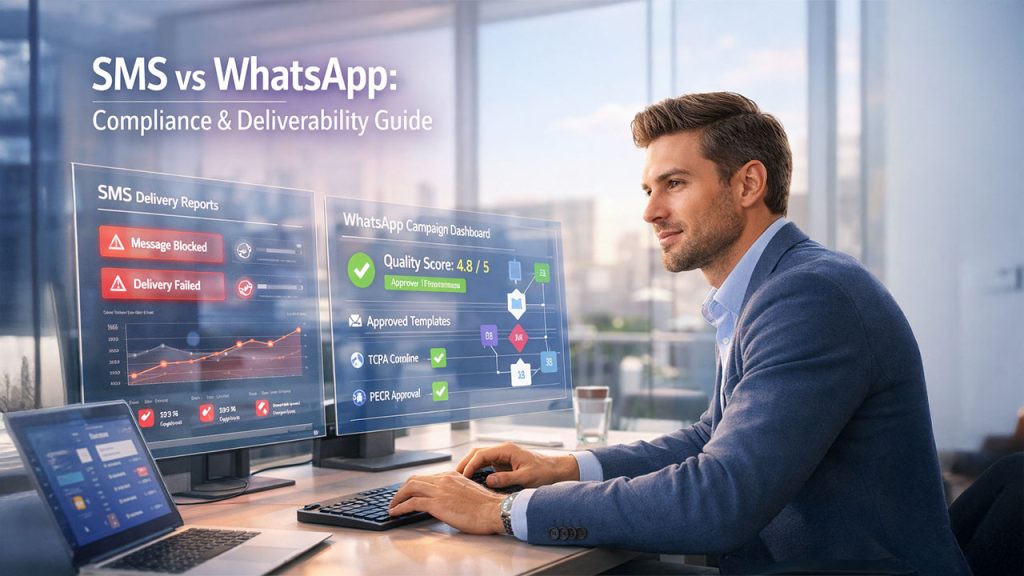
Regulation impacts both channels—but in different ways.
Opt-In Rules
- SMS: TCPA (U.S.), PECR (U.K.) and TRAI DLT (India) mandate explicit prior consent.
- WhatsApp: Users must actively message first or sign a checkbox; brands must register message templates.
Spam Filters
- Carriers silently block high-frequency senders; SMS deliverability is partly opaque.
- WhatsApp assigns a quality score—drop too low and your template gets throttled.
Template Approval
- WhatsApp marketing templates can take minutes to hours for Meta to approve.
- Once approved, quality rating determines future reach.
Fail-Safes
- Platforms such as Wati offer automatic SMS fallback if a WhatsApp session expires.
- Webhooks trigger CRM tasks when delivery fails, letting agents follow up.
Bottom line: Both channels are regulated; WhatsApp offers clearer feedback loops, while SMS remains the universal emergency backup.
Building Conversion-Focused Flows, Not Blasts
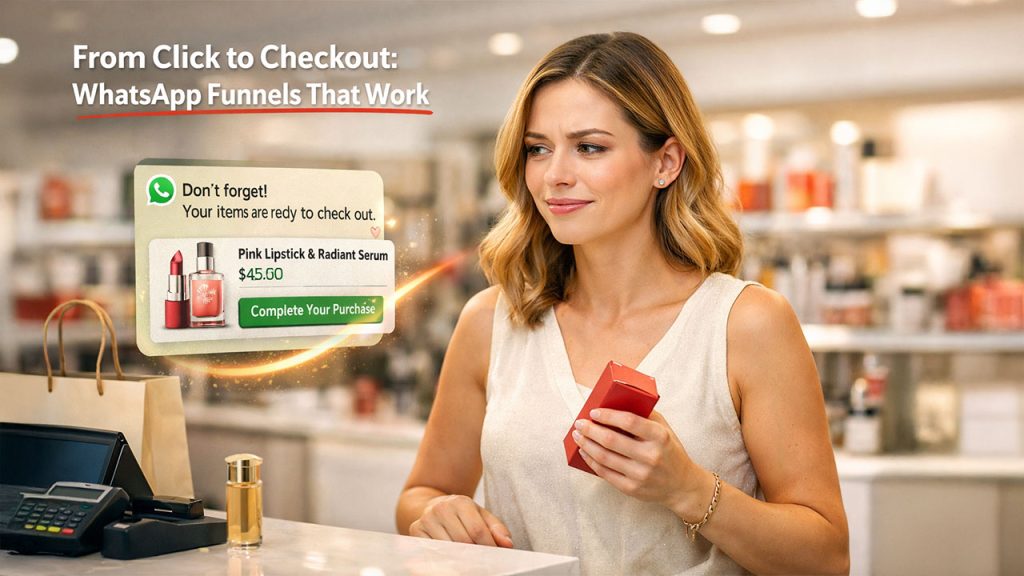
High CTRs mean little if the hand-off to checkout or support is clunky. WhatsApp’s API supports end-to-end funnel building:
- Acquire – Run Click-to-WhatsApp ads that open a pre-filled chat.
- Nurture – Send an automated welcome with quick-reply product categories.
- Convert – Drop catalogue cards and a payment link.
- Retain – Use order updates and service bots inside the same thread.
A D2C cosmetics brand cited in the Pushwoosh study cut cart abandonment by 25% after migrating its reminder series from SMS to WhatsApp.
Personalization tokens {{first_name}} feel natural in chat. MMS-style images inside SMS often break on iOS/Android combos, whereas WhatsApp media is native.
[For outreach beyond customers, see OutRight Store’s practical guest post outreach tools guide on scaling manual follow-ups—many of the same segmentation tricks apply inside WhatsApp sequences.]
Decision Checklist: When to Choose Which Channel
Ask these five questions before every campaign:
- Who is my audience? Feature-phone users → SMS. Smartphone millennials → WhatsApp.
- Do I need rich media? Coupons, catalogues or surveys favour WhatsApp.
- How urgent is the message? Platform outages may still require SMS redundancy.
- What’s my budget per conversion? Calculate cost after expected CTR.
- Does my CRM integrate? If you can push tags and events from chat back to deals, WhatsApp wins.
Hybrid Playbook:
Opt-in on WhatsApp → send promotional flows → if delivery fails or session expires, trigger SMS backup with condensed copy → unify reporting inside your CRM.
Maximizing business growth with WhatsApp CRM integration take this a step further by syncing contacts, conversations, and lead statuses bidirectionally.
Caveats & Counterpoints
No channel is perfect:
- Rural Connectivity – Data throttling can delay WhatsApp images; SMS often squeaks through.
- Template Rejection – Over-promotional wording may get blocked; build fallback SMS text.
- Verification Lag – New WhatsApp business numbers need Meta approval and may start with throughput caps.
- Universal Reach – During widespread internet outages, SMS is still the only option.
Risk-mitigation tips: stagger sends, A/B test content, and monitor quality scores; keep an SMS gateway configured for mission-critical alerts.
Conclusion
The data is as clear as crystal: in this growing digital era, higher open rates, richer engagement and lower per-conversation costs establish WhatsApp Business API as the main component in most marketing scenarios in 2026. When evaluating WhatsApp vs Traditional SMS, it becomes evident that while SMS remains essential for universal reach and emergency alerts, WhatsApp leads in overall marketing performance and conversions.
Run a cohort test, measure revenue per send, and then crunch your own numbers with Wati’s WhatsApp business API pricing calculator to see how the ROI stacks up for your audience.