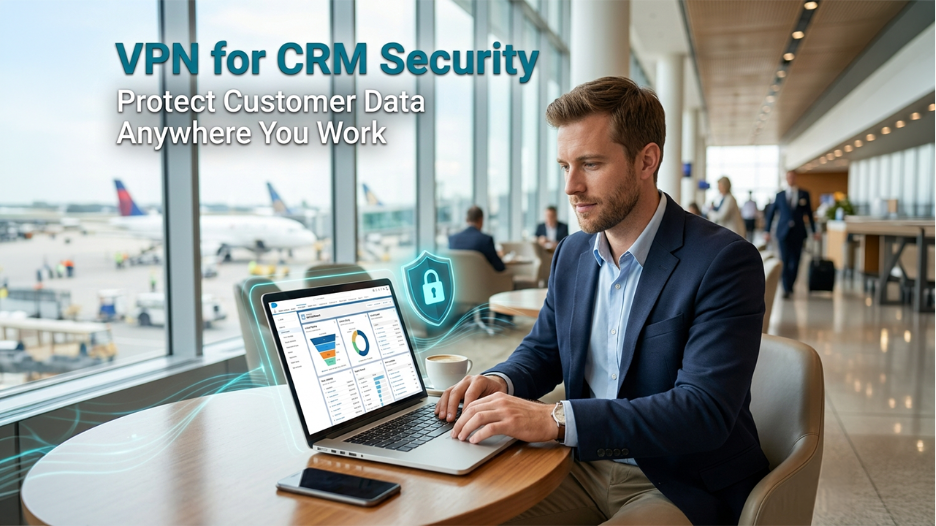






Much sales work today is now conducted from outside the office, and with this change in dynamics came the security risk attached to customer data. A manager might update a pipeline from home in the morning, respond to leads from a café after lunch, and review a contract from an airport lounge before the business day ends. At first glance, that has the ring of flexibility. In practice, it means CRM access is conducted on networks the company does not control. The danger is not always spectacular or apparent. Sometimes it is a poorly secured public Wi-Fi connection. Sometimes it is a home network with weak settings. Sometimes it is a hotel connection that routes traffic in ways the user never notices. After a CRM integrates into a mobile business, privacy does not just become an IT issue, but an entry point into regular operations.
CRM access gets riskier the moment work leaves the office
Inside an office, network rules are usually more predictable. There may be firewalls, monitored routers, internal controls, and some level of technical oversight. Outside that environment, the average sales manager often relies on whatever network happens to be available. That may be good enough for reading headlines or sending a quick message, though it is not good enough for moving through customer records, updating opportunities, or opening sensitive notes tied to active deals.
This is where vpn for privacy becomes practical rather than theoretical. A VPN creates an encrypted tunnel between the user and the internet, which makes it much harder for outsiders on the same network to inspect traffic or capture useful data. That matters on public Wi-Fi, though it also matters in more ordinary settings, including remote work from temporary locations and business travel. A sales manager does not need to think like a security engineer to benefit from that. The value is simple. If CRM traffic is being protected while someone works outside the office, the chance of exposing customer information drops.
Public networks create more problems than people realize
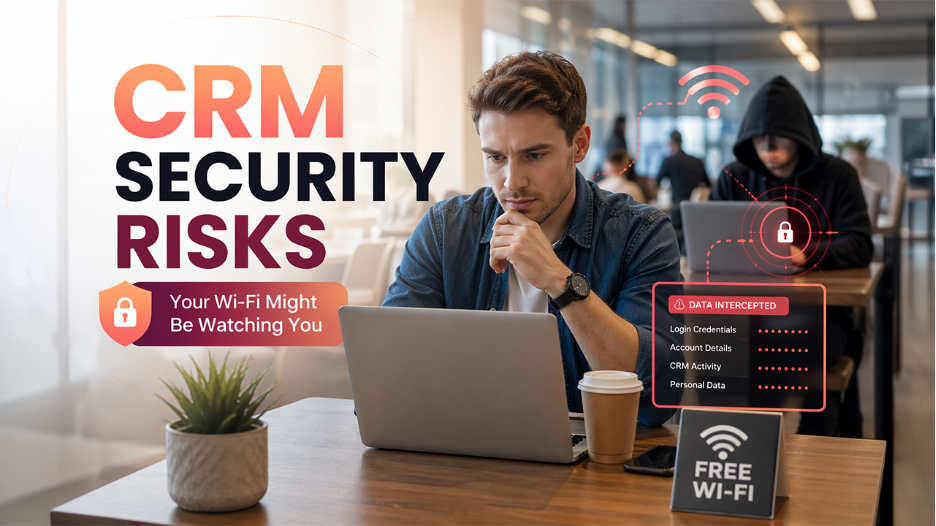
One of the biggest mistakes in remote work is assuming that a familiar-looking network is a safe one. A café Wi-Fi page can look polished. A hotel network can appear professional. An airport connection may feel official because so many people use it. None of that guarantees real protection. On shared networks, traffic can be exposed to monitoring, spoofed access points, weak encryption, or careless network management. Many people assume those risks are rare because nothing visibly goes wrong. The problem is that bad network behavior often leaves no obvious trace for the person using it.
For a sales team, that silence is part of the danger. A CRM session may seem normal while account data, session details, or browsing patterns are being exposed in the background. Even if the platform itself uses HTTPS, the broader network environment can still reveal more than a company would be comfortable with. A VPN adds a protective layer that makes those ordinary remote sessions less exposed. That does not solve every security problem on its own, though it removes one of the most common weak points in modern sales work.
Read More: Understanding Virtual Private Networks (VPN): A Complete Guide
Slow CRM performance is sometimes a network issue, not a platform issue
Security is usually the first reason people discuss VPNs, but speed matters too. Many sales teams have had the same frustrating experience. A CRM page hangs while loading. A plugin takes too long to connect. Reports refresh slowly. Large records lag for no clear reason. The first instinct is often to blame the CRM itself, but the network path can be part of the problem. In some cases, internet providers handle traffic to certain services in ways that slow performance at busy times or across specific routes.
That is where a VPN can change the experience. By routing traffic through a different server, it may bypass a poor route or reduce the effect of throttling tied to certain destinations. This does not mean a VPN magically speeds up every app in every case. It means the route between the user and the CRM matters more than many people think. If the usual route is crowded, inefficient, or poorly handled by the provider, changing that route can make the platform feel more responsive.
The server choice matters more than most users expect
A VPN is not just an on-off switch. The server location can affect both privacy and performance. For someone opening a CRM used by a team in London, routing through a nearby European server may feel much faster than bouncing traffic through a distant location for no reason. If a user is traveling, testing a closer or more stable server often improves page loading and plugin responsiveness. This matters in sales because delay adds friction to work that is already time-sensitive. Slow pages do not just annoy people. They interrupt follow-ups, waste time during calls, and make mobile work feel unreliable.
Better protection supports better sales discipline
Sales teams are often judged by speed, responsiveness, and relationship management. None of that works well if the systems behind the work are exposed or inconsistent. A VPN will not replace good passwords, access controls, or account hygiene especially in environments moving toward a zero trust security approach. It should sit alongside them. What it does offer is a cleaner foundation for remote CRM use. It protects sessions in risky places, reduces exposure on weak networks, and may improve performance when routing problems are slowing the platform down.
For the average sales manager, that is not an abstract cybersecurity argument. It is a practical decision about how to keep customer data safer while still working from real-world places. Remote work is already part of sales. A VPN helps make that reality less risky and, in many cases, less frustrating too.