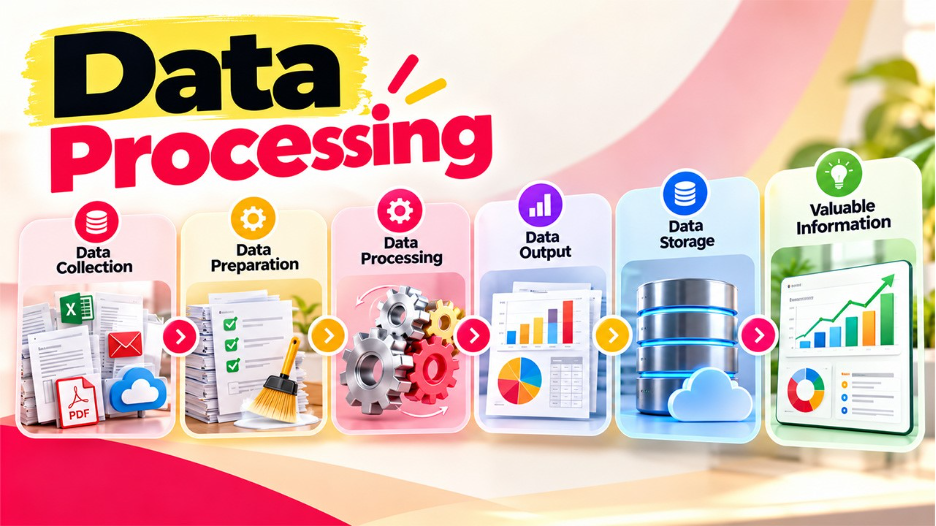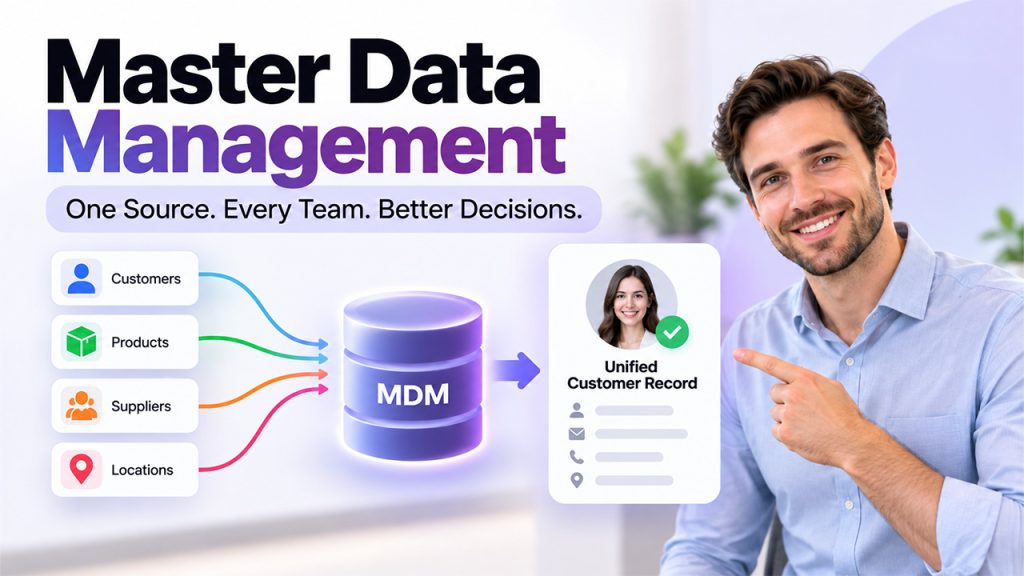






Every business operates on data nowadays. From product details, customer records, supplier data, to transaction history flow exist across dozens of platforms at once. However, when that data exists in disconnected silos, it soon becomes duplicated, outdated, and inconsistent. This is precisely the issue that Master Data Management fixes. By ensuring verified and single version of a business' most valuable data, it aids businesses to minimize errors, remove confusion, and make data-driven and confident decisions. For organizations depending on CRM solution, this discipline is closely associated with effective CRM Data Management, since customer records are generally the frequently duplicated and valuable data type of all. As organizations scale and include new platforms to their workflow, the gap between trusted records and scattered data only broadens, making this an extensively urgent priority.
What is Master Data Management?
Master Data Management (MDM) refers to the technology and process utilized to create an accurate, single, and consistent record for core business entities like suppliers, customers, products, and locations. Data collected from diverse internal and external systems is de-duplicated, cleaned, and reconciled into a single authoritative version, typically referred to as a "golden record."
In straightforward terms, Master Data Management answers one standard question: which data version can we rely on? Once that reliable record exists, it can be consistently shared across each application, department, and reporting tool in the business.
A few of the most common domains managed with MDM strategy involves:
- Customer Data
- Inventory and Product Details
- Vendor and Supplier Records
- Asset and Location Data
- Employee Records
Apart from just storing this data, Master Data Management also sets up the workflows and rules that ensure that the records remain accurate as they change. This consistent maintenance is what separates a one-time cleanup of data from an authentic MDM strategy. One is a temporary solution, while the other one is long-term discipline aligned with how the business works.
How Master Data Management Boosts CRM Data Management?
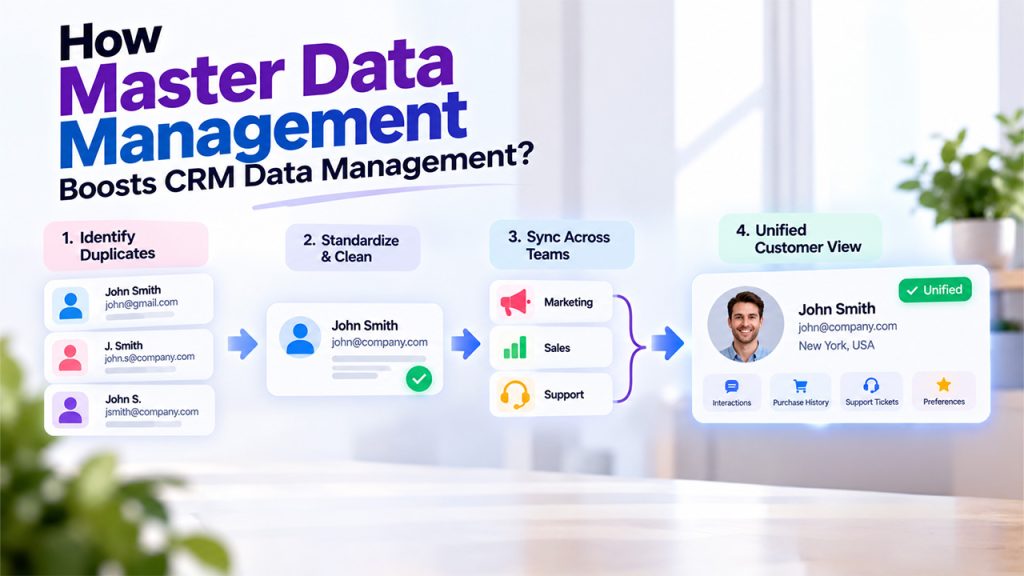
Customer relationship platforms are typically where fragmentation of data shows up first. Marketing, sales, and support teams generally ensure separate versions of the same customer, straightaway leading to ineffective CRM Data Management outcomes like mismatched addresses, duplicate contacts, or inconsistent purchase histories.
Using principles of master data management to a CRM environment assists by:
- Combining duplicate customer records into a single accurate profile.
- Standardizing formats for addresses, names, and contact details.
- Synchronization of updates across marketing, sales, and support tools.
- Generating a single customer view that each team can depend on.
This is precisely where well-organized CRM database becomes vital. It works as the operational pillar that organizes and stores the very data that MDM works to centralize and clean. Without precise core data structures, even the most effective MDM strategy can struggle to deliver you the right results consistently.
It is worth keeping note of the fact that this relationship is bidrectional. A CRM platform creates the raw customer data that feeds into the wider Master Data Management program of the organization. In turn, this makes sure that the CRM itself remains accurate over time. Neither can work at its best in isolation.
Main Components of Successful Master Data Management Strategy
A well-executed Master Data Management approach often involves numerous main building blocks operating together:
- Data Governance: Policies, clear ownership, and rule determine how data is updated, created, and verified.
- Data Quality Management: Consistent validation and cleansing processes catch problems before they can spread throughout the system.
- Data integration: Data from ERP, CRM, and other platforms extracted together in a centralized structure.
- Data Stewardship: Dedicated stewards check accuracy and fix conflicts between sources of data.
- Version and Audit Tracking: Each change is recorded, providing teams with great visibility into why and how a record was updated.
For businesses managing confidential customer data, this strategy also needs to factor in recovery and protection. Robust CRM security practices and a dependable database backup process go are closely related to CRM Data Management, making sure that the reliable records created through MDM remain recoverable, safe, and compliant over time.
Businesses that ignore these components generally see that their quality of data only briefly improves after a cleanup project, only to degrade within months again. A genuine Master Data Management program prevents this cycle by considering quality of data as a consistent responsibility instead of a one-time initiative.
Benefits of Merging Master Data Management and CRM Data Management
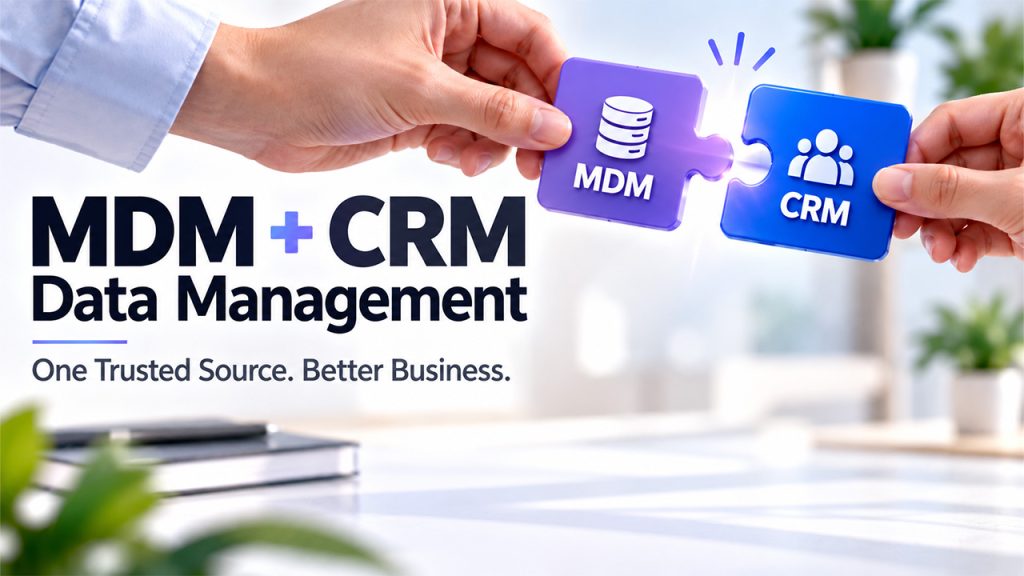
When businesses integrate Master Data Management with daily CRM Data Management, the impact goes well beyond cleaner records. Common advantages are as follows:
- Improved Decision-making: Teams work with one precise dataset instead of conflicting reports.
- Effective Customer Experience: Support and sales staff get updated and complete customer history, which they can use to maximize customer experience.
- Minimized Operational Expenses: Staff spend less time manually reconciling outdated or duplicate records.
- Robust Compliance: Centralized governance ensures regulatory reporting, and auditory trails become far simpler.
- Simplified Management of Lifecycle: A consistent data foundation provides support for each stage of the buyer journey, from first contact to lasting retention, which is directly associated with a wider customer lifecycle management efforts.
- Quicker Onboarding of New Platforms: When information is standardized already, incorporating a new analytics or marketing platform becomes less error-prone and simpler.
These benefits increase over time. As more departments and platforms adjust the same reliable source of data, the business becomes less prone and more efficient to expensive errors caused by disconnected data. Over time, this consistency establishes internal trust; teams stop double-checking the numbers against each other and instead focus on using the data to act.
Conclusion
Master Data Management is no longer a technical concern for back-office. It is a fundamental business practice that directly impacts how effectively an organization understands and caters to its customers. When combined with disciplined CRM Data Management, it provides marketing, sales, and support teams with a trustworthy version of the truth to work with. Organizations that focus on this alignment can position themselves for stronger customer relationships, cleaner reporting, and more confident decision-making across each department, no matter how much the volume of data evolves in the years to come.
Frequently Asked Questions (FAQs)
MDM refers to the process of generating an accurate, single, and consistent record known as a “golden record” for core business information such as products, customers, and suppliers.
It removes duplicate customer records, standardizes all formats, and synchronizes updates across marketing, sales, and support tools, ensuring one reliable view of customers.
Data quality management, data governance, data stewardship, data integration, and version/audit tracking all collaborate together to ensure that the records remain accurate over time.
It is a consistent discipline without continuous stewardship and governance; data quality comes down within months of a cleanup.
Enhanced customer experience, better decision-making, stronger compliance, lower operational costs, and simplified onboarding of new platforms.