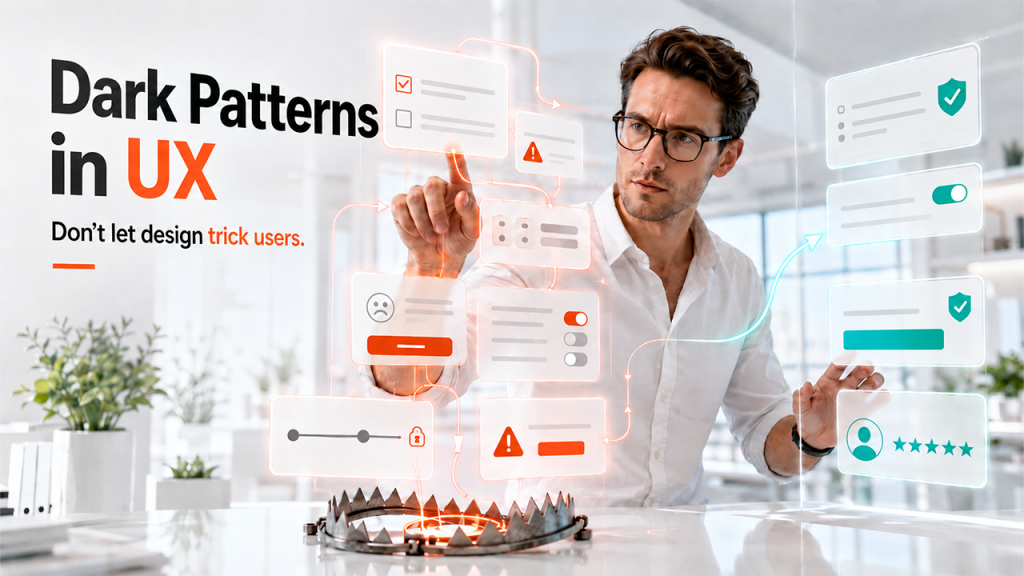






Imagine you are browsing an airline website, looking for a simple one-way ticket. You find a decent price, click through the steps, and just before you hit “confirm”, you noticed something unusual. A travel insurance has been quietly added to your cart, and what’s surprising is you never asked for it or clicked on it. It is in your cart, pre-checked, and ready to cost you extra money. This is a dark patterns in UX.
If you have ever felt tricked, confused, or trapped on a website or app, it is likely that you have encountered one before; you just did not know how to name it. If you are new to this space, brushing up on user experience basics will help you see just how far dark patterns stray from what a good UX is supposed to be.
This guide will walk you through what dark patterns are, their types and examples and best practices to avoid them.
What Are Dark Patterns in UX?
The term "dark patterns" was coined by UX designer Harry Brignull in 2010. He used it to explain user interface design choices that are crafted intentionally to trick or manipulate users into doing something that they did not intend to do like signing up for subscription, sharing more data than they wished to, or spending more money than they initially planned.
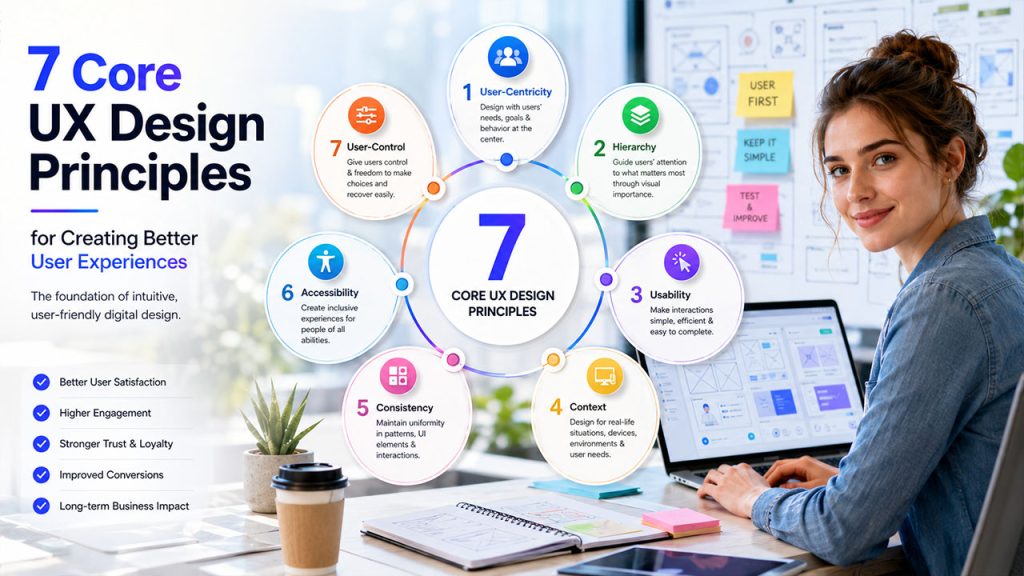
This is what makes them risky. A good UX design is supposed to make life easier for people. It is supposed to reduce confusion, build trust, and guide users towards their goals. However, dark patterns do exactly the opposite. They use the same tools, UX design principles, clear layouts, smart visual hierarchy, and persuasive copy but point them in the wrong direction entirely.
12 Common Types of Dark Patterns in UX with Examples

These are the 12 most common dark patterns in UX, each with rea-world examples, so you can recognize them next time you encounter them.
- Trick Questions
These are the fields in forms or checkboxes that are written in confusing or double-negative language so that users end up opting into something they thought they were opting out of.
For example, there’s a checkbox that says, “Uncheck this box if you do not want to receive marketing emails”. It is deliberately phrased to confuse you. What happens is that most people will either misread it or give up trying to parse it.
- Sneak into Basket
This happens when a website quietly adds an extra item or service to your shopping cart without your clear consent. The airline travel insurance example from the opening of this blog is a classic case. The item is pre-selected, and unless you are paying very close attention, you will not notice it until you have already paid. So, it literally sneaks something into your basket without you having any knowledge of it.
- Roach Motel
This refers to when the service makes it incredibly easy to get it, but later you realized that it is nearly impossible to get out of it. Let's understand this with an example: Signing up for a subscription takes thirty seconds. However, cancelling it requires you to make multiple phone calls, wait on hold, and speak to a retention specialist who will try to talk you out of leaving. You could get in quickly, but leaving is another story.
- Privacy Zuckering
This is named after Facebook’s early privacy controversies. This pattern involves confusing and complicated privacy settings that are designed to make users share more personal data about them than they actually intended to. This setting is buried deep within menus, written in complex technical language and structured, so that most data sharing options are always default.
- Misdirection
This refers to deliberately drawing your attention to one thing while doing something else in the background without you realizing it because you’re distracted by something else. Imagine a pop-up in bright colors that celebrates a “special offer” while the real action which is agreeing to terms, allowing tracking, or using your data happens in the fine print below overshadowed by the pop-up. This makes your eyes go one way, and the decision goes another.
- Hidden Costs
You must have definitely come across this either while shopping on Myntra or Blinkit. You add a product to your cart because the price looks great. Then, you go through the entire checkout process, enter your card details, and then right at the last step; you see taxes, service fees, and a “platform charge” appear which inflates the total by twenty or thirty percent. The price was never really what it seemed. This is extremely common on ticketing, travel and shopping, or grocery websites.
- Disguised Ads
These are advertisements designed to look like legitimate content such as editorial recommendations, search results, or download buttons. Users click on them thinking they are navigating the site, and instead they are clicking on a paid placement or triggering an ad. This pattern is especially common on download sites and content platforms.
- Forced Continuity
A service offers you a free trial which is fine. But when the trial ends, it automatically charges your credit card without sending a clear reminder or warning. The transition from "free" to "paid" happens silently. By the time you notice the charge on your bank statement, you have already paid for a month you did not want.
This is a common practice when you subscribe to free trials on LinkedIn, Amazon Prime, and YouTube.
- Friend Spam
An app asks for permission to access your contacts "to help you find friends." You agree, thinking it will show you which of your contacts are already on the platform. Instead, it sends invitation emails or messages to everyone in your address book without asking you first. Your contacts now think you personally recommended the app which you clearly did not.
- Confirm-Shaming
This is one of the most psychologically manipulative patterns on this list. It uses guilt-laden language on the "decline" option to make users feel bad about saying no. For example, a pop-up offering a newsletter subscription might give you two buttons: "Yes, I want to save money!" and "No thanks, I prefer to pay the full price." Clicking no is designed to feel like a personal failure.
- Urgency and Scarcity Manipulation
These are designed to instill pressure and push users into making fast and unconsidered decisions on a whim. They use fake countdown timers. Messages like “Only 2 rooms left”, or “Sale ends in 5 minutes!” that never seems to go away. Sometimes scarcity is real but most often, it is not. And users have no way of knowing that difference, so they give in to this fear of missing out (FOMO) on good deals.
- Hard to Cancel/Difficult Subscriber
This pattern is similar to the roach motel. However, it specifically applies to email unsubscribes and account deletions. When you click “unsubscribe” in an email, instead of simply removing you from the list, the site takes you to a page where you have to log in, navigate settings, select preferences, and confirm multiple times. The process is designed to exhaust you into giving up, so you don’t go through the process of unsubscribing.
How to Avoid Dark Patterns in UX Design
Avoiding dark patterns is not just the ethical thing to do; it is also the smart long-term business decision. Users who feel manipulated do not come back. And in the age of social media and public reviews, they often tell others exactly why.
In fact, using dark patterns ranks among the most damaging user experience mistakes a product team can make; not just ethically, but strategically. Here is how to design with honesty and integrity:
Start UX Design With User Goals: Every design decision should begin with one question: what does the user actually want to accomplish here? When your work is rooted in genuine user needs, covering all the core elements of user experience from structure to interaction — manipulation naturally fades away; manipulation naturally fades away.
Be Transparent About Costs and Data Usage: Show full pricing early and clearly explain what data you are collecting and why. Do not make terms of conditions dense. They should be readable. Transparency builds trust.
Make Opting Out Easy for Users: If signing up takes one click, cancelling should not take a phone call. If sharing data is a toggle, withdrawing consent should be the same toggle in reverse.
Include Ethical UX Design in the Process: Treat ethical UX design principles as a non-negotiable standard, not an afterthought. Some teams are now conducting dedicated "dark pattern reviews" before launching new features.
Final Thoughts
Dark patterns in UX are one of the clearest examples of what happens when design is treated as a tool for extraction rather than a tool for connection. They work at least in the short term, boost sign-ups, inflate revenue, and grow email lists. But they do it by borrowing trust from users without their permission.
The good news is that awareness is genuinely powerful here. When users know what dark patterns look like, they are harder to fool. And when designers understand what they are doing, they want to make things better for people, not worse.
Frequently Asked Questions (FAQs) : Dark Patterns in UX
Dark patterns are intentional design choices that trick or manipulate users into doing something they did not plan to do.
UX designer Harry Brignull coined the term in 2010 to describe manipulative interface design practices.
In some regions, yes. Regulators in the EU and US have begun taking legal action against companies that use deceptive design, particularly around privacy and subscriptions.
UI refers to the visual elements used deceptively, while UX refers to the broader flow or journey designed to mislead. Dark patterns typically involve both working together.
Slow down during checkouts and sign-ups, read pre-checked boxes carefully, look for hidden fees before confirming, and use tools like ad blockers and privacy-focused browsers.