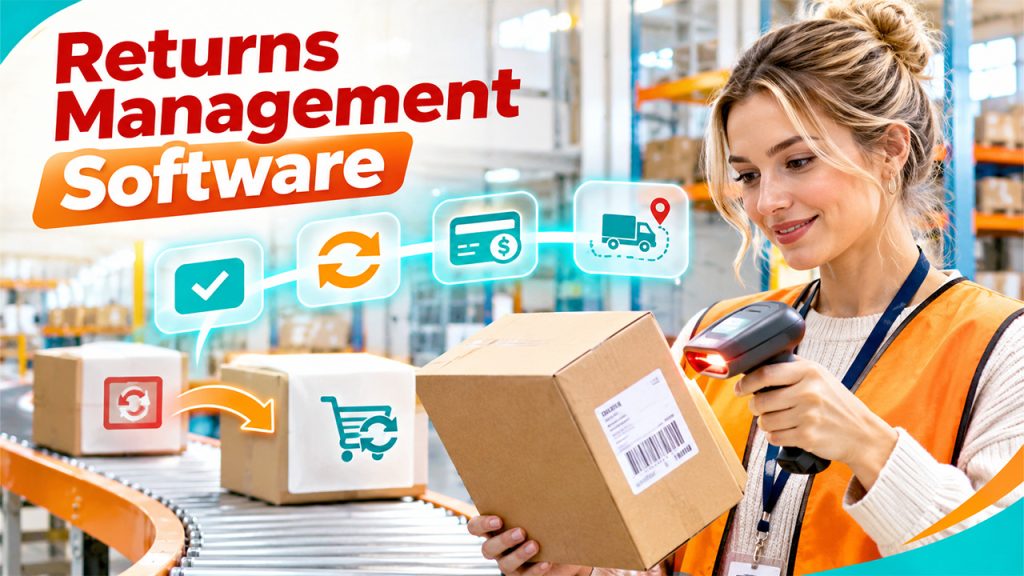






Compare the top returns management software for 2027, including ClickPost, Loop Returns, Narvar, and ReturnGO, with pricing, pros, and cons.
Most ecommerce brands start looking for returns management software when the inbox stops keeping up: return requests climb from 50 a week to 500, refunds take ten days instead of three, and the support team spends Monday mornings answering "where is my refund?" tickets.
The stakes are not small. The NRF expected US shoppers to send back about $850 billion in merchandise in 2025, and 71% say a poor returns experience makes them less likely to buy again. Nearly every returns tool now promises to "turn returns into revenue." What actually matters is whether it can automate the routine cases, nudge customers toward exchanges, catch abuse, and keep the item tracked until it's back on the shelf. Today, we're going to look at the returns platforms that actually earn a place on the shortlist, and how they stack up against one another.
The Bottom Line Up Front
For brands that ship through several carriers and want returns, exchanges, and tracking on one platform, ClickPost is the top returns management software pick, with the tradeoff that pricing is quote-based. Loop Returns is the strongest exchange-first option if you're Shopify-only. Narvar fits enterprise retailers with stores that need one returns policy across channels, and ReturnGO suits mid-market brands with complex, rules-heavy return policies on a budget. Effective logistics management software can help businesses coordinate shipment tracking, reverse logistics, inventory, and customer returns.
What to Test Before You Buy
There are four questions that separate real returns management software from a nice-looking portal.
What happens after the label prints? Many tools stop at the portal. Ask whether the return stays tracked through the carrier, whether delays trigger alerts, and whether refunds can fire automatically on pickup, delivery, or a passed quality check.
How hard does it push exchanges? Variant swaps are table stakes. Look for catalog-wide exchanges, store credit bonuses, and rules that decide when to offer a refund at all.
Does it catch abuse? Wardrobing, empty boxes, and serial returners eat margin quietly. You want flags on high-risk customers and SKUs, plus the ability to require photos or a QC step before money goes back.
What does it really cost at your volume? Several plans include only 20 or 100 returns a month, then charge per return. Price every option at last quarter's actual return count, not the headline plan.
Returns Management Software Compared
| Platform | Best for | Platforms supported | Starting price |
| ClickPost | Brands seeking personalized returns and post-purchase experiences | Shopify, WooCommerce, Magento, and custom | Custom quote |
| Loop Returns | Shopify DTC brands focused on exchanges | Shopify and Shopify Plus only | Free (shopper-funded); $155/mo Essential |
| Narvar | Enterprise omnichannel retailers | Shopify, Salesforce Commerce Cloud, enterprise OMS | Custom quote |
| ReturnGO | Mid-market brands with complex return rules | Shopify, WooCommerce, BigCommerce, Magento 2 | $23/mo Starter |
1. ClickPost
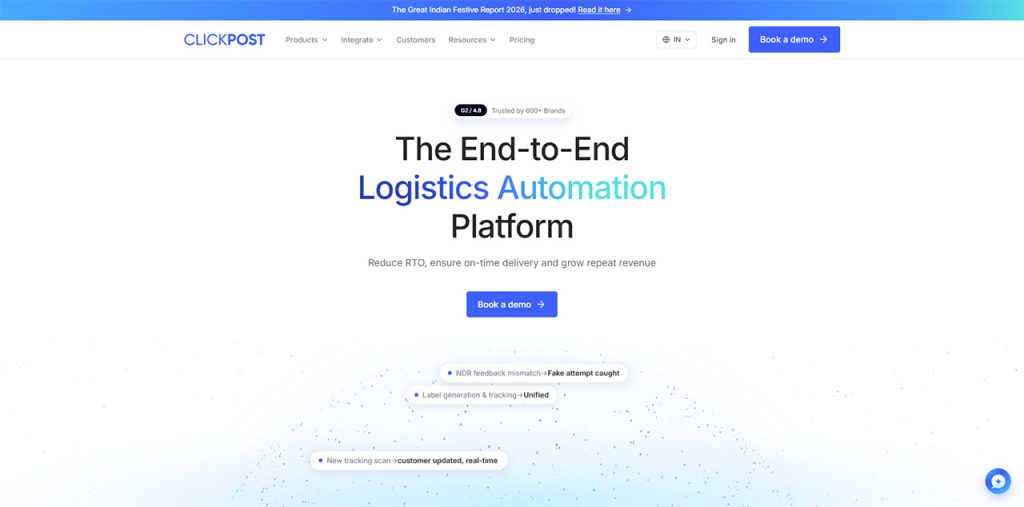
ClickPost is a post-purchase platform that combines returns and exchanges with shipment tracking, branded tracking pages, and order editing. More than 600 brands use it, including PUMA, Birkenstock, Acer, and CaratLane.The unique selling proposition of Click Post is customer segmentation, enabling brands to segment customer groups based on purchase and return behavior and apply targeted return policies and exchange offers for each.
How it works
Customers start returns or exchanges on a branded self-serve portal that implements the brand's eligibility rules based on segment, product, return reason, and return window. Click Post offers personalized nudges, automated price adjustments and give customers other options like instant gift cards or store credit to make exchanges work for the brand and shopper. Locate nearby drop-off points, and offer paid return coverage via Returns Protection at checkout. Returning is just the beginning: AI-personalized tracking pages and email continue the post-purchase experience with relevant product recommendations, brand content and offers, and shipment notifications.
Integration with over 700 carriers, 50+ storefronts including Shopify, OMS, and WMS. US-based skincare brand GoPure said that they halved their return processing time with Click Post since moving from Loop Returns.
Pricing
Custom quote based on volume of usage and returns. The Shopify app for order editing is free to install and has a free trial.
Pros
- Combines returns management and shipment tracking, with customer segmentation for tailored return policies.
- Supports multiple storefronts and carrier integrations, with responsive onboarding and customer support.
Cons
- Pricing isn't publicly listed, so brands need to request a quote.
- The breadth of features may be more than smaller brands need if they're looking only for a standalone returns tool.
Best fit: Mid-market and enterprise ecommerce brands looking to personalize returns and streamline post-purchase operations. It holds a 4.8 rating on G2.
2. Loop Returns
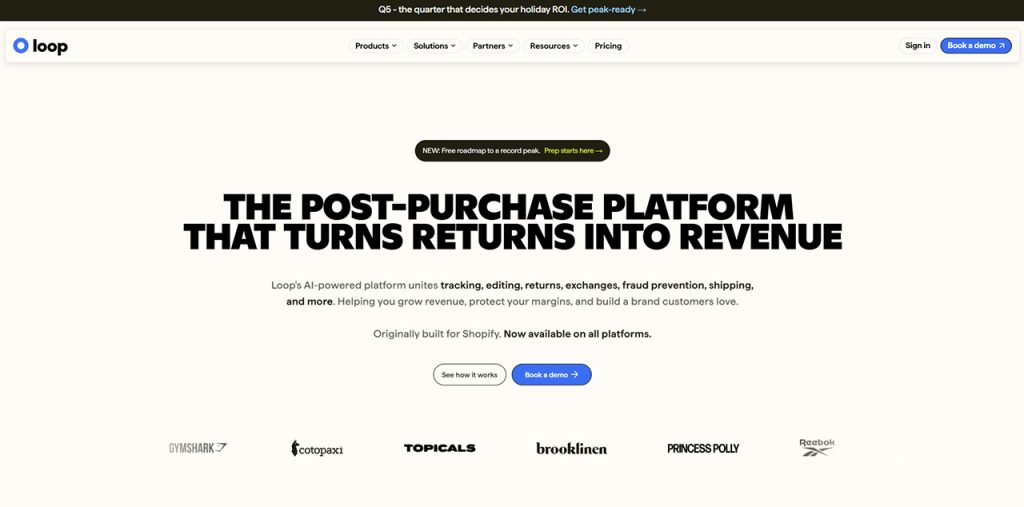
Loop Returns is an exchange-first returns platform built only for Shopify, used by more than 5,000 brands, especially in apparel, footwear, and beauty. Its whole design starts from one assumption: most returns are a size or color problem, not a lost customer.
How it works: Shop Now lets customers browse the full store during a return, Instant Exchange ships the replacement before the original arrives, and Bonus Credit rewards choosing store credit over a refund. Loop Intelligence, launched in April 2026, adds AI fraud scoring and image recognition for return photos. Loop's Checkout+ plan also plugs in Happy Returns' box-free drop-off network.
Pricing
Checkout+ is free and funded by shoppers at checkout, Essential is $155 a month, Advanced is $340, and Enterprise is custom. Instant Exchange and fraud tools sit on Advanced.
Pros
- The deepest exchange toolkit available on Shopify.
- A large merchant dataset behind its fraud and AI models.
Cons
- Shopify-only, so a replatform means migrating returns too.
- Return allowances aren't listed on the pricing page, so confirm volume terms before signing.
Best fit: Shopify DTC brands with 300+ monthly returns where exchanges drive most of the recovered revenue.
3. Narvar
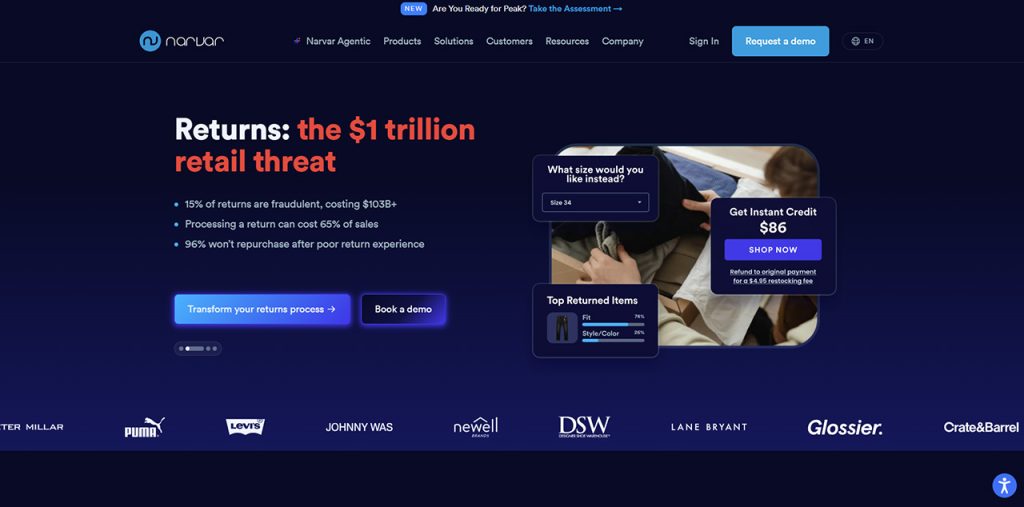
Narvar is an enterprise post-purchase suite trusted by 1,500+ brands, including Sephora, Levi's, Sonos, and Warby Parker. Most customers come to it for branded tracking and notifications, and returns is a module on top.
How it works: Narvar's returns portal supports exchanges, buy-online-return-in-store flows, and optimised return routing, all driven by its IRIS intelligence layer built on billions of consumer interactions. In January 2026 it launched NAVI, an agentic assistant that resolves returns, refunds, and delivery issues within each retailer's policy.
Pricing
Custom and modular, billed per module. Expect enterprise-level contracts.
Pros
- Strong omnichannel flows for retailers whose stores and website must share one returns policy.
- An ambitious agentic AI roadmap that's already live for returns and refunds.
Cons
- Priced and built for large retailers, which puts it out of reach for most smaller brands.
- Reviewers report long implementations and settings that are hard to customise.
Best fit: Large retailers with physical stores and significant online revenue that want returns inside a wider post-purchase suite.
4. ReturnGO
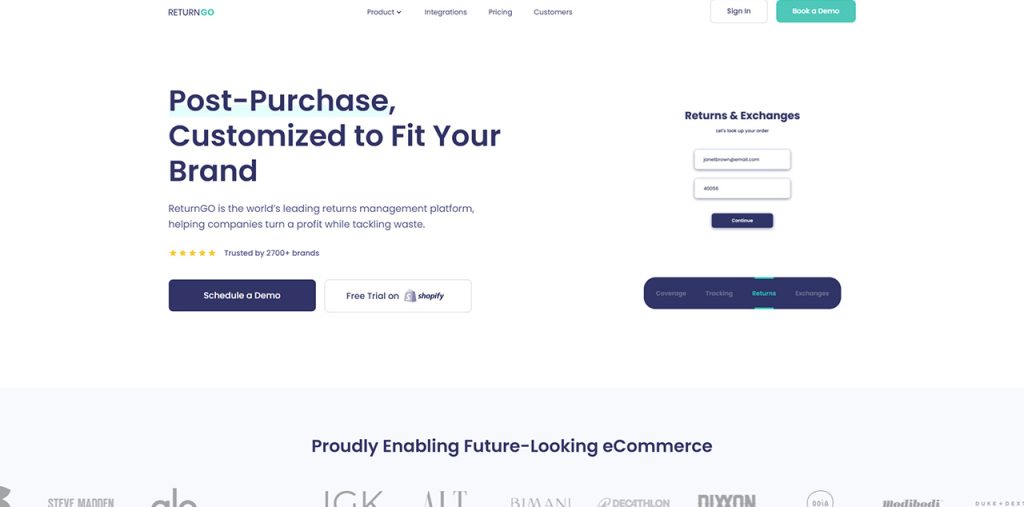
ReturnGO is an exchange-first returns platform known for having one of the most granular policy engines in the category. It holds a 4.9-star average from 362 reviews on the Shopify App Store.
How it works: Merchants set return outcomes by SKU, price, country, or product line, and rules route each request automatically to a refund, exchange, store credit, or rejection. ReturnScore AI predicts when to push an exchange instead of a refund. The platform supports multiple languages and currencies, which helps brands selling across borders through intelligent workflow automation.
Pricing
Starter is $23 a month for 20 returns, then $1.25 per extra return. Premium is $147, Pro is $297, and Enterprise is custom, with a 14-day free trial on paid plans.
Pros
- Very fine-grained, no-code rules for brands with lots of policy exceptions.
- Native support beyond Shopify, including WooCommerce, BigCommerce, and Magento 2.
Cons
- Starter overages get expensive quickly as volume grows.
- Fewer portal design options than Loop, and some reviewers found implementation testing-heavy.
Best fit: Mid-market brands with multi-country or category-specific return policies that want strong automation without enterprise pricing.
Conclusion
The best returns management software is the one whose design matches your problem. If the problem is too many tools and carriers, consolidate on ClickPost. If the problem is losing revenue to refunds on Shopify, look at Loop Returns. If the problem is keeping stores and online returns consistent, look at Narvar, and if it's a policy with more exceptions than rules, look at ReturnGO.
Whichever returns management software you choose, run a real month of returns through it before you commit. Count how many it automated, how many turned into exchanges, and how fast refunds went out. That will tell you more than any ranking, including this one.