





The guide tries to explain what is dropshipping, how the business model works, how profitable it is, its advantages, disadvantages, and how to start dropshipping.
In the recent few years, Dropshipping has grown to become one of the most popular business models, especially for aspiring entrepreneurs looking to start an online store without investing in inventory. Unlike a traditional retail business, dropshipping allows business owners to sell products without keeping products in their own warehouse.
What is Dropshipping?
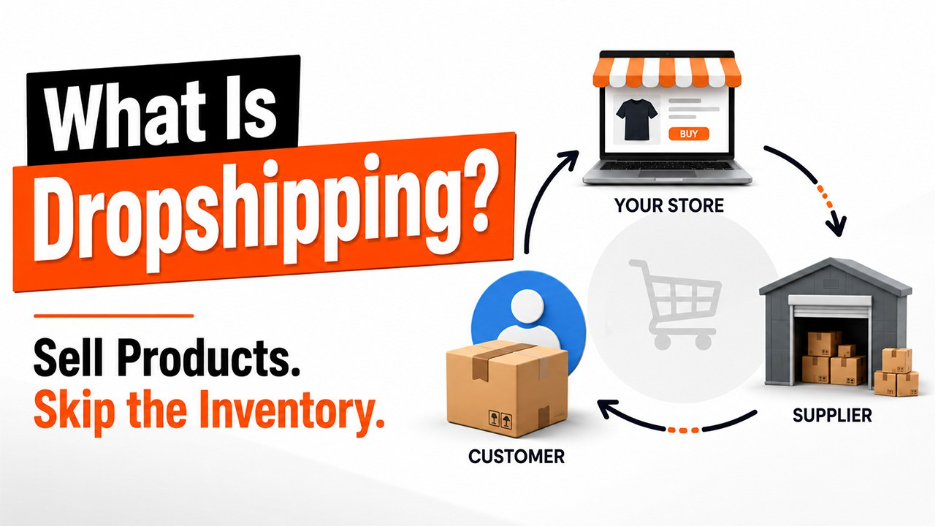
Dropshipping is an e-commerce business model in which a retailer sells their products to customers without physically stocking or storing the products. In dropshipping, instead of purchasing inventory in advance, the retailer partners with a supplier that can hold the products. The partner ships the products directly to the customers when an order is placed.
Features of Dropshipping
Dropshipping offers several key features, making it different from traditional retail. These features include:
- No Inventory Storage
One of the major features of dropshipping is that the user doesn't need to keep the products in stock. The supplier stores and handles the inventory on behalf of the seller.
- Low Initial Investment
Dropshipping generally requires lower upfront investment compared to traditional retail businesses, as the seller does not have to purchase large quantities of products.
- Wider Product Selection
Dropshipping lets the seller list a wide range of products from one or multiple suppliers in the online store.
- Location Flexibility
As dropshipping does not require any inventory, it offers sellers greater flexibility regarding where they operate their business from.
How Does Dropshipping Work?
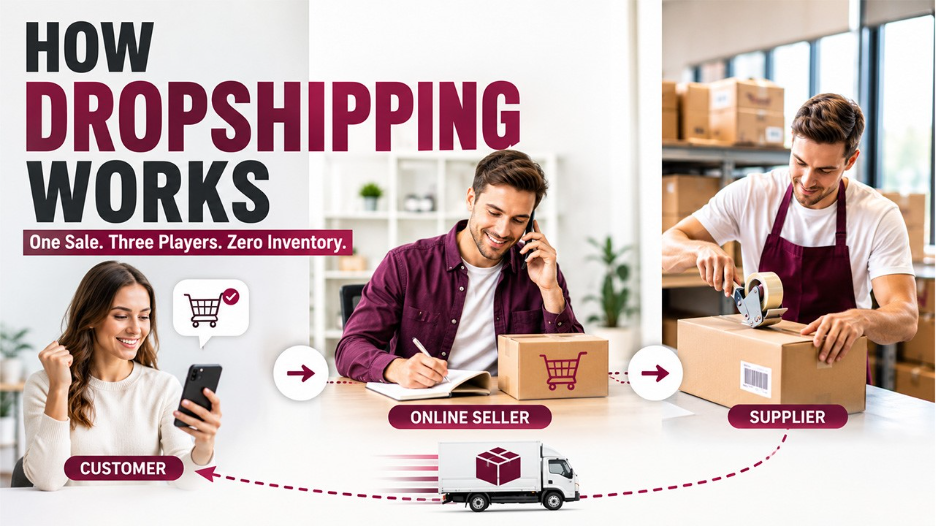
Dropshipping generally works by connecting three major parties, i.e., the customer, online seller, and supplier. The complete process of dropshipping is as follows:
- Choose Products and Find a Supplier
The first step for the seller is to select the product they want to sell and find a reliable supplier who can offer those products.
- Create an Online Store
The seller creates an e-commerce website and lists the selected products. The product images, descriptions, prices, shipping information, and other details are added to the store.
- Customer Places an Order
The customer visits the online store, chooses a product, and places an order.
- Order is Sent to the Supplier
After receiving the order, the seller places a corresponding order with the supplier and offers the necessary shipping information.
- The Supplier Ships the Product
The supplier packs the product and ships it directly to the customer.
Quick Comparison Between Dropshipping and Traditional Retail
Dropshipping and traditional retail are both ways of selling products to customers. Some of the key differences between dropshipping and traditional retail are as follows:
| Features | Dropshipping | Traditional Retail |
| Inventory | Products are usually held by the supplier. | Retailer purchases and stores inventory. |
| Initial Investment | Generally lower. | Generally higher. |
| Storage | No personal warehouse is required. | Warehouse or retail spaces are required. |
| Order Fulfillment | Supplier ships products to customers. | Retailer handles fulfillment. |
| Product Risk | Lower inventory risk. | Higher risk of unsold inventory. |
| Product Control | Less control over stock and fulfillment. | Greater control over inventory. |
How to Start Dropshipping?
Starting a dropshipping business is relatively simple, as it does not require the seller to purchase and store large amounts of inventory. However, building a successful dropshipping store requires careful research, planning, and consistent marketing. To learn how to start a dropshipping business, a seller can follow the given steps:
- Step 1: Choose a Profitable Niche
The first step for a seller is to choose a specific niche or category of products that they want to sell. For the seller, it is essential to research customer demand, competition, pricing, and potential profit margins before choosing the niche.
- Step 2: Research and Select Products
After selecting the niche, it is important to identify products that customers are likely to purchase. Before adding the product to the store, the seller can consider the quality, selling price, supplier costs, shipping costs, delivery time, competition, and potential profit margin.
- Step 3: Find a Reliable Supplier
In dropshipping, the supplier plays a major role in the success of the business. To partner with a reliable supplier, sellers need to check their product quality, pricing, shipping times, order processing, return policies, and customer support.
- Step 4: Create an Online Store
After finding a reliable supplier, users can build an e-commerce website in which customers can view the products and place orders. For an online store, the seller needs to include a clear brand name, logo, high-quality product images, detailed product descriptions, product prices, shipping information, and contact information.
As the store grows, using CRM for e-commerce businesses can help sellers organize customer information, manage interactions, and improve sales and support processes.
- Step 5: Setting the Right Prices
For dropshipping, pricing is an important part. Sellers need to calculate all relevant costs, which include product cost, shipping, payment fees, advertising, platform expenses, and return/refund costs.
- Step 6: Set up Payment and Order Processing
The seller needs to make sure that the customer can pay conveniently through the payment methods available to the target market. Before launching the product, sellers need to test the checkout process.
- Step 7: Develop Marketing Strategy
The seller can create a marketing strategy depending on the target audience. They can use social media, SEO, email marketing, content marketing, or paid advertising.
For a more personalized approach, sellers can also explore CRM and e-commerce marketing to better understand customer behavior, segment audiences, and automate marketing campaigns.
- Step 8: Launch the Product
Once the website, products, payment systems, suppliers, and marketing strategy are ready, the seller can launch the store online.
- Step 9: Monitor the Performance
After launching, the seller needs to constantly monitor website traffic, conversion rate, sales, profit margins, customer acquisition costs, and refund rates.
- Step 10: Improve and Scale the Business
Once the seller identifies marketing channels and products, they can gradually expand their business.
Disadvantages of Dropshipping
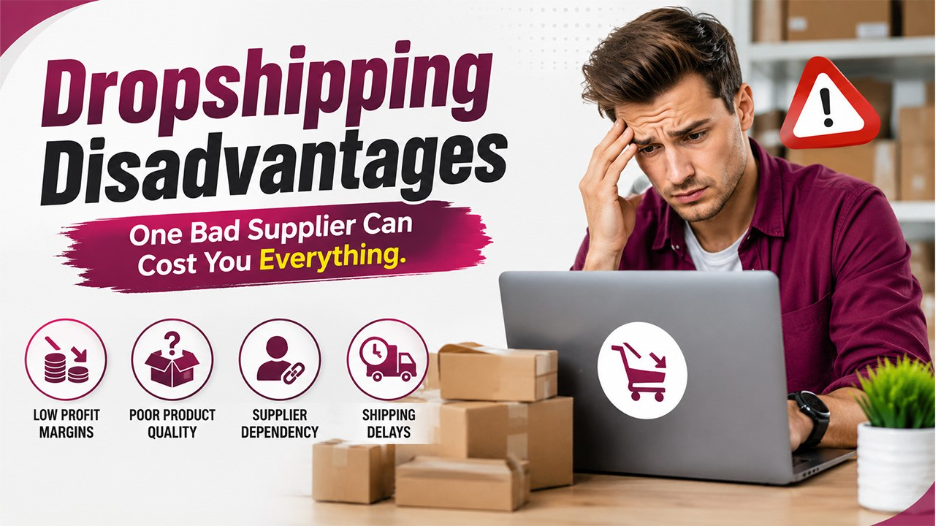
Although dropshipping can be an accessible way to start an e-commerce business, it also has several disadvantages.
Some of the key disadvantages of dropshipping are as follows:
- Lower Profit Margins
One of the major disadvantages of dropshipping is that it features lower profit margins, as the seller purchases products from a supplier instead of buying directly from a manufacturer.
- Less Control Over Product Quality
As the seller usually doesn't handle the product, they have limited control over the quality.
- Dependence on Suppliers
The business depends heavily on the suppliers. Any problems such as stock shortages, delayed shipping, incorrect orders, or sudden price changes can directly affect the customers and profits.
- Shipping Delays
Some dropshipping suppliers may have long processing or delivery times, particularly when products are shipped internationally.
Common Dropshipping Mistakes to Avoid
Some of the common mistakes that the seller needs to avoid are as follows:
- Choosing Products Without Proper Research: One of the most common mistakes is selecting products simply because they are trending or look interesting. Choose products that offer genuine value rather than relying entirely on short-term trends.
- Choosing an Unreliable Supplier: A supplier that provides poor-quality products, ships orders late, or frequently runs out of stock can seriously damage your reputation.
- Ignoring Product Quality: Poor-quality products can result in negative reviews, refunds, and lost customers.
- Focusing Only on Low Prices: Competing solely on price can result in very small profit margins and make it difficult to cover marketing and operating expenses.
Conclusion
Dropshipping is among the most popular and accessible modes of selling products online. Dropshipping offers an accessible way to enter the e-commerce industry without taking any risk of inventory. By understanding how dropshipping works sellers can build a strong foundation for their online business. The success of a dropshipping business mainly requires careful planning, consistent effort, and a customer-focused approach. With careful research, realistic expectations, and a strong focus on customers, you can build a foundation for a sustainable e-commerce business.
Yes, dropshipping can be profitable, but profitability is not guaranteed. Results depend on factors such as product selection, supplier costs, pricing, and marketing expenses.
No, you do not need inventory for dropshipping. One of the main characteristics of dropshipping is that the supplier holds the inventory.
Yes, the basic setup can be easy and accessible for beginners but running a successful dropshipping business requires extensive planning.
Yes, it is possible to sell through certain online marketplaces or social-commerce channels, depending on their current rules and your location.