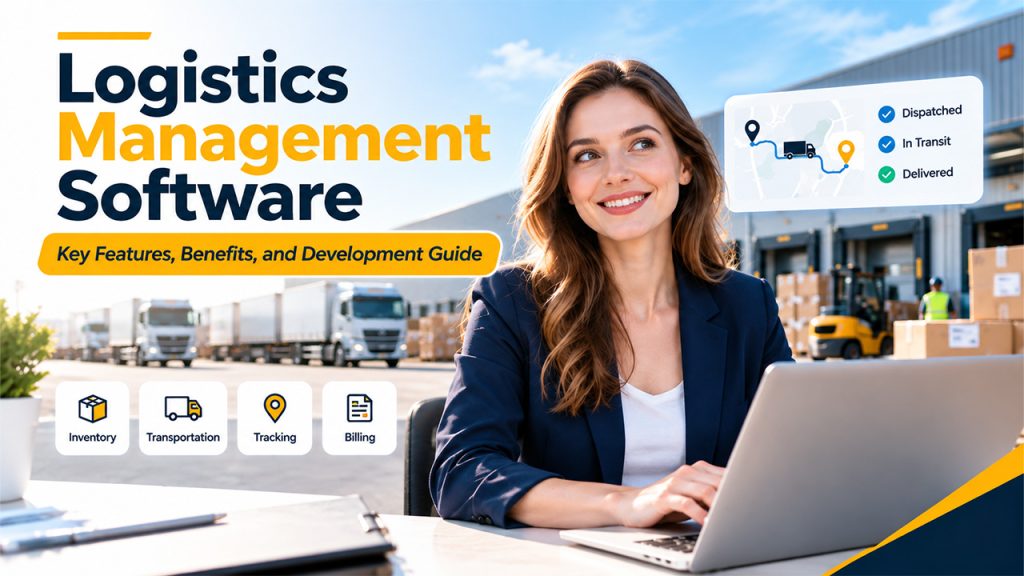






Moving the goods from a supplier to a customer involves numerous connected steps, including dispatch, storage, billing, tracking, and returns. Management of such steps through phone calls, spreadsheets, and disconnected platforms typically causes errors and delays. Logistics management software unifies such activities into a single digital platform, so teams can plan, keep track of, and administer operations with higher accuracy.
In this article, let us understand what is logistics management software, its main features and advantages, and how logistics management software development aids businesses that require a personalized solution.
What Is Logistics Management Software?
Logistics management software is unified digital platform leveraged to plan, manage, keep track, and optimize logistics processes from a single system. It replaces fragmented tools and processes with structured workflows, automation, and real-time visibility.
A logistics management system mainly manages outbound and inbound transportation, fleet management, warehouse management, order processing, inventory control, supply and demand planning, and third-party logistics (3PL) providers. To learn more about how the two flows differentiate with one another, refer to our guide on Inbound vs Outbound Logistics for clearer explanation.
The software provides support to both reverse and forward logistics:
- Forward logistics: Order booking, sorting, and delivery of goods to customers.
- Reverse logistics: Managing customer returns, so damaged or rejected goods can be reprocessed in the same system.
Companies that have an in-house logistics division, and 3PL providers both utilize this software. It often comes down to three variations:
- Enterprise Resource Planning (ERP) systems
- Warehouse management systems
- Integrated suites for supply chain management.
Main Characteristics of Logistics Management Software
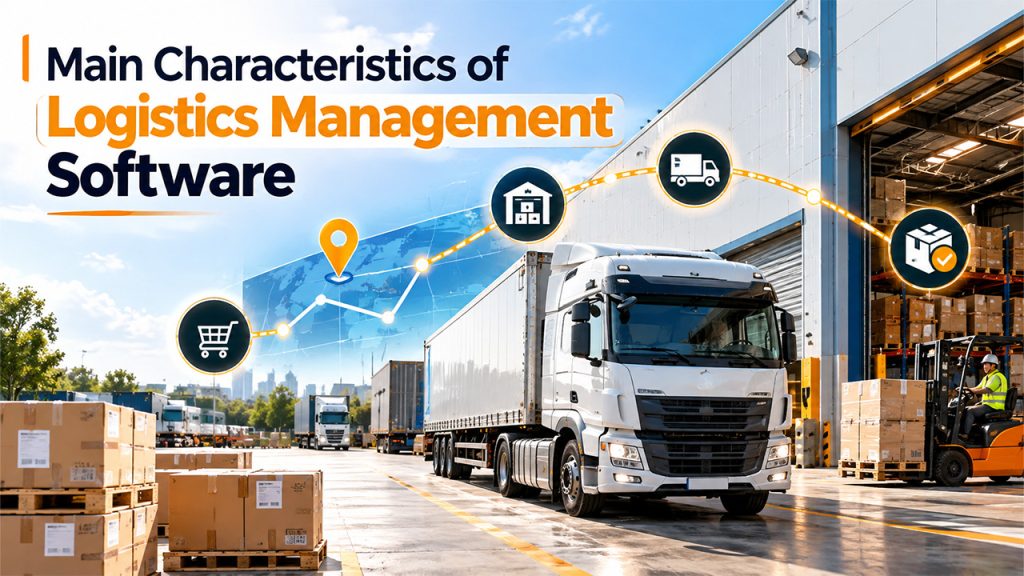
A reliable logistics management software solution must encompass such core areas:
- Order management: Keeps track of each order from placement to delivery, including processing, scheduling, and shipping.
- Freight Dispatch and Visibility: Provides support to pre-planning freight movement and leverage precise data to enhance shipment conveyance and route mapping.
- Real-time Tracking of Shipments: Updates and automated notifications powered by GPS allow teams to respond to unexpected disruptions or delays.
- Route Planning: Automates planning of routes for different deliveries and assignment of routes for drivers.
- Warehouse and Inventory Integration: Ensures real-time inventory updates and streamlines packing and choosing.
- Demand Prediction: Leverages historical sales data to plan for stock levels and prevent ordering too little or too much.
- Billing and Online Payments: Provides electronic payment and invoicing to minimize manual errors. Tethering the module with accounting software ensures financial records remain consistent with shipment activity.
- Reporting Dashboards: Showcases operational data like inventory turnover, fleet fuel efficiency, and customer satisfaction.
- Security controls: Secures data through access restrictions, backup systems, and protection against unauthorized changes.
- Mobile access: Allows drivers to update real-time driver delivery status and provides support to features like geotagging and barcode scanning.
Advantages of Logistics Management Software
Adjusting logistics management software enhances how teams manage storage, transportation, and delivery. The key benefits involve:
- Lower Costs of Transportation: Automated route planning minimizes operational expenses and fuel consumption.
- Quicker Deliveries: More effective planning and carrier selection aid in minimizing shipping delays.
- Lesser Manual Errors: Automation minimizes mistakes that happen when huge volumes of data are processed by hand.
- More Effective Coordination: Drivers, dispatchers, partners, and warehouse teams work from the same data in real-time.
- Enhanced Customer Experience: Proactive communication, tracking, and precise delivery estimates ensure that the customers remain informed.
- Scalability: The system can manage greater shipment volumes without any reduction in efficiency.
- Data-backed decisions: Analytics aid in recognizing inefficiencies and strategizing enhancements.
The software also aids in addressing common challenges of logistics, like growing transportation costs, poor coordination between different parties, delivery delays, sudden spike in demand, and warehouse errors such as wrongly chosen or misplaced products.
Logistics Management Software Development
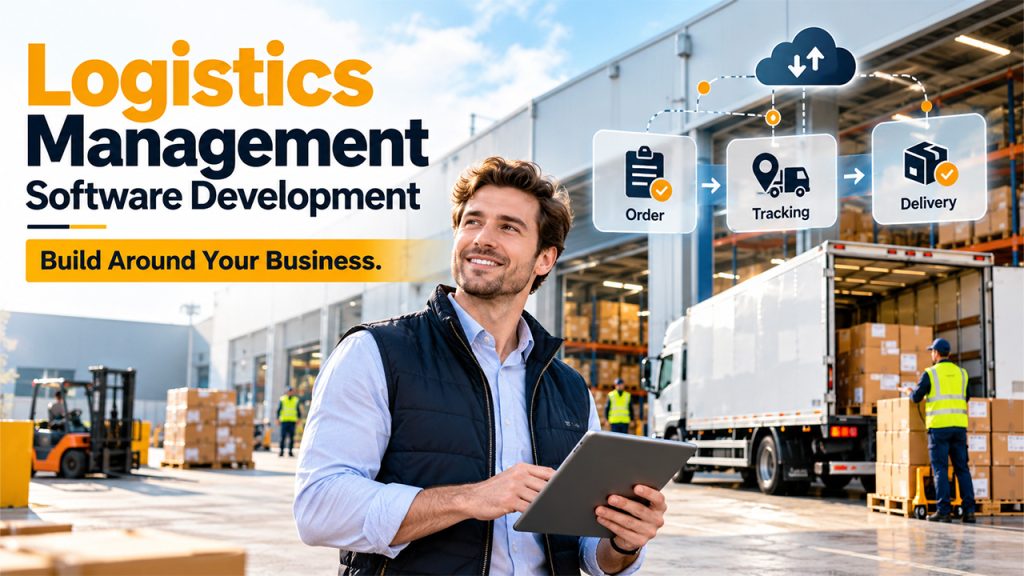
Businesses can either purchase a ready-to-deploy product or go for a logistics management software development for a customized solution. The development process starts with an analysis of business processes, needs, and challenges. The solution is then developed around such findings.
A customized solution provides numerous benefits:
- It addresses the particular problems your business essentially faces, not only issues related to general logistics.
- Custom software can be incorporated with your current tech stack.
- Such software is also scalable and modifiable with the change in your needs.
- It can comprise capabilities that ready-to-use products do not provide.
When you are planning for logistics management software development, such elements need attention:
- Core modules: Dispatch, order management, tracking, billing, and reporting.
- Integrations: API connections with other third-party systems and ERP.
- Driver Mobile App: Real-time delivery confirmation and status updates from the field.
- Role-driven access: Separate permissions for managers, administrators, and staff.
- Cloud Deployment: Cloud-driven SaaS models provide flexibility, minimum upfront costs, and the capability of on-demand scale.
Worldwide businesses already depend on centralized business management software for finance, CRM, and routine processes. Planning how the logistics platform will connect with it from the beginning ensures that the data remains consistent across different departments.
Whether you purchase or create, look for the solution that involves the below essentials:
- Demand forecasting
- Multi-client architecture
- Inventory tracking
- Finance integration
- A streamlined and customizable interface.
- Capabilities of CRM
- Bill of lading creation
Companies must also prepare for common problems, including limited knowledge of digital tools, a lack of IT skills for data security concerns, training, and unclear expectations of returns on digital investment. A comprehensive plan for each facilitates smooth rollout.
Conclusion
Logistics management software provides businesses with a single solution to manage dispatch, orders, tracking, billing, and inventory. It minimizes manual work, enhances visibility, and provides support to more reliable and faster deliveries. For organizations working with particular workflows, logistics management software development provides a personalized and scalable option that tethers with existing platforms. Determining your needs, selecting the right characteristics, and carefully planning integrations will allow you to derive maximum benefits from your investment.
FAQs About Logistics management software
A- Logistics management software refers to a unified digital platform used to plan, handle, monitor, and streamline logistics operations from a single system. It replaces manual processes with real-time visibility and automation.
A- Main features entail real-time shipment tracking, order management, routine planning, inventory and warehouse integration, reporting dashboards, and digital billing.
A- Organizations having third-party logistics (3PL) providers and an in-house logistics division both utilize it. Retailers, manufacturers, e-commerce businesses, and retailers can also benefit from it.
A- Logistics management software development is the overall process of developing a custom solution after assessing the requirements, operations, and challenges of the business. As a result, you get software personalized to the particular workflows of your business.
A- Custom software focuses on your specific business requirements, incorporates with your existing platforms, and scales as your needs evolve. It can also include functionalities and capabilities that ready-made products do not have.