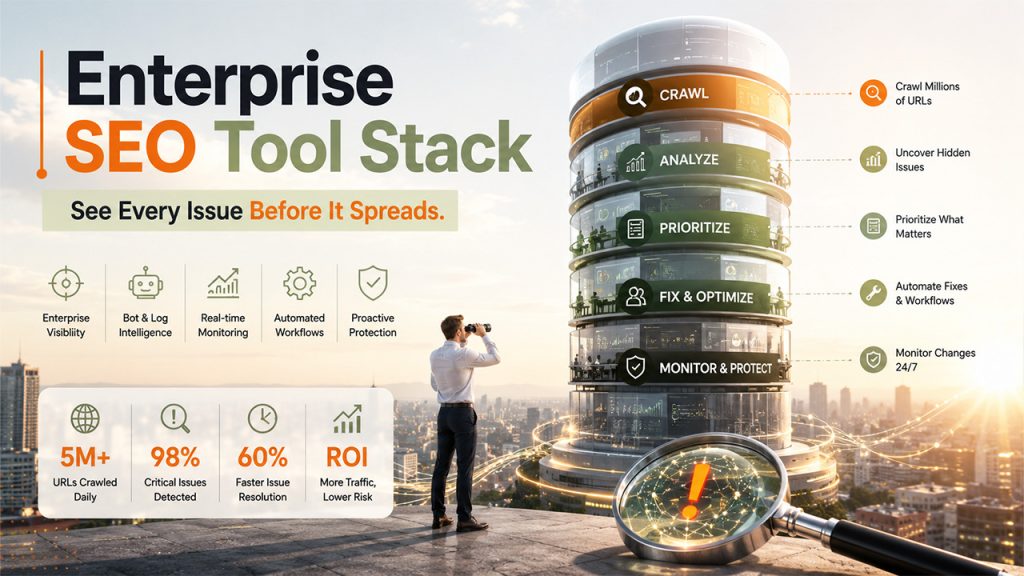





Crawling a 500-page site is a solved problem. Crawling five million URLs with JavaScript rendering, log file correlation and change monitoring is a different discipline entirely. At enterprise scale, tool choice affects not just what you can see but how fast you can react and whether your dev team ever trusts your tickets. This guide ranks thirteen tech SEO tools through an enterprise lens: scale, speed, log analysis, workflow automation and total cost of ownership.
1. Semrush
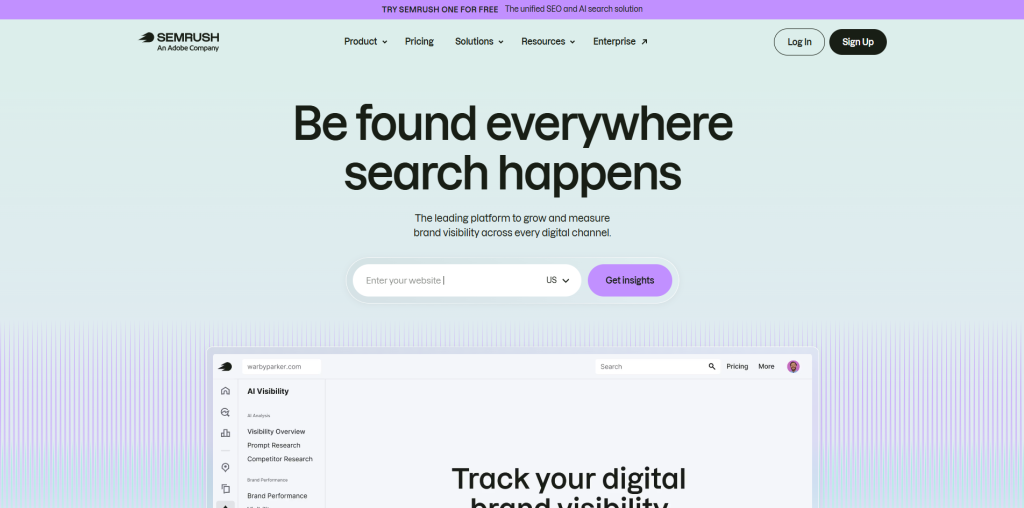
Even at the enterprise level, Semrush earns the top spot for completeness. Site Audit handles JavaScript rendering, custom crawl configurations and scheduled recrawls, while the surrounding platform delivers what dedicated crawlers cannot: keyword intelligence, competitive research, content optimization and PPC data in the same login. For enterprise teams whose remit spans more than technical SEO, having the crawl bundled into an already essential subscription simplifies both procurement and workflow. The enterprise tier adds API access with substantially higher limits. Many organizations also evaluate dedicated SEO automation tools to streamline technical audits, reporting, and recurring optimization tasks.
2. Ahrefs
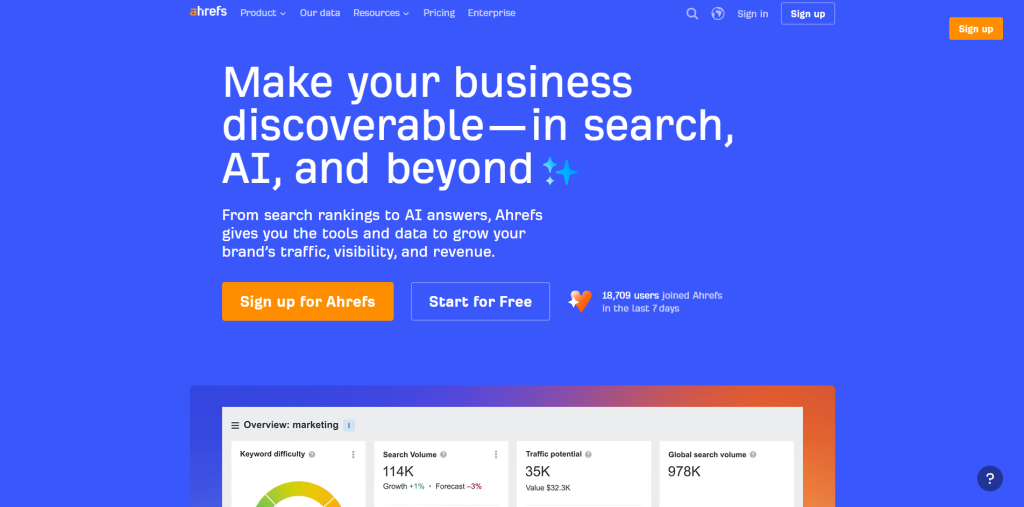
Ahrefs is one of the best tech SEO tools on the market. It pairs the industry-standard backlink index with a fast cloud-based Site Audit that renders JavaScript and tracks site health across crawls. Enterprise plans raise crawl credits substantially and the killer argument mirrors SEMrush's: your team almost certainly needs Ahrefs anyway for link and keyword work, so the technical crawl comes along at no incremental cost. For many large sites that is enough, at least until crawl depth and log analysis requirements exceed what any bundled tool can reasonably deliver.
3. JetOctopus
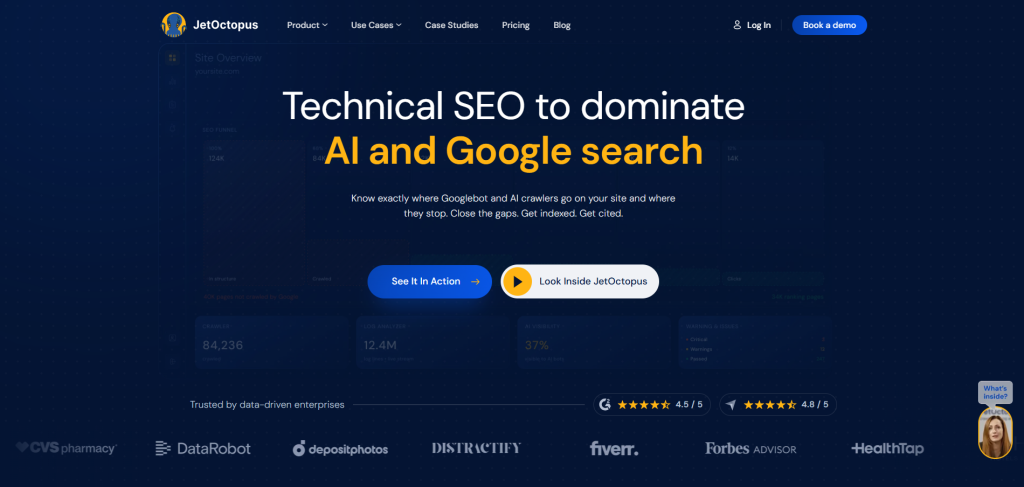
JetOctopus is where this list shifts from SEO platforms with crawlers to crawlers built for scale. It is the best value in that category by a wide margin. It crawls up to 1 million pages per 24 hours with JavaScript rendering, making full recrawls of huge sites routine. Its seo log analysis covers Googlebot behavior, crawl budget waste and dedicated AI bot dashboards for GPTBot, ClaudeBot and PerplexityBot. Add the MCP integration for conversational data access, an AI SEO recommender, an AI internal linker and configurable alerting. It delivers the core enterprise SEO functions, at a fraction of competitors’ cost, backed by fast, client-oriented support.
4. Screaming Frog SEO Spider
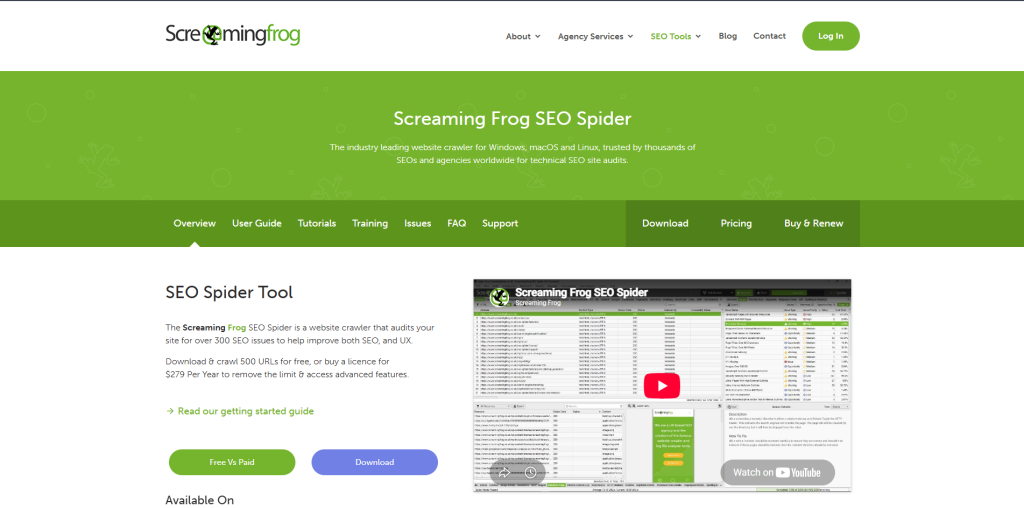
Yes, the desktop tool makes the enterprise list. With enough RAM or database storage mode, Screaming Frog handles multi-million-URL crawls and virtually every enterprise SEO keeps a licence around for ad hoc jobs, scraping and validation work. Custom extraction remains a secret weapon for pulling structured data and template elements at crawl time. It will not replace a scheduled cloud platform for continuous monitoring, but as the analyst's bench tool, it has no equal at any scale.
5. Botify
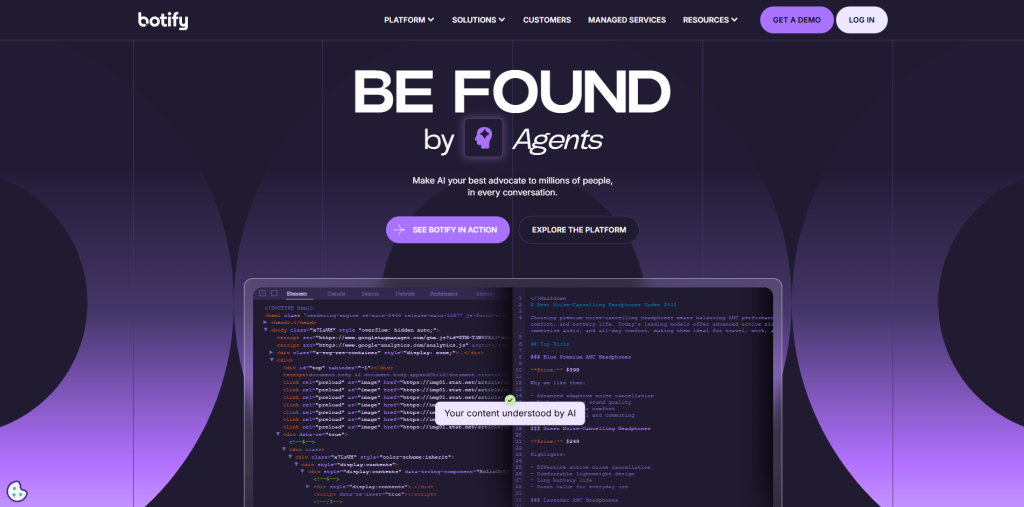
Botify is the incumbent heavyweight: unified crawl, log and keyword data with strong activation features, including automated internal linking and indexing acceleration. It is genuinely powerful for the largest websites on the internet and its data model rewards organizations with dedicated analysts. Onboarding takes commitment and contracts sit at the top of the market, which is precisely why it appears here rather than higher: capability is outstanding, but so is the barrier to entry for most teams.
6. Lumar (formerly Deepcrawl)
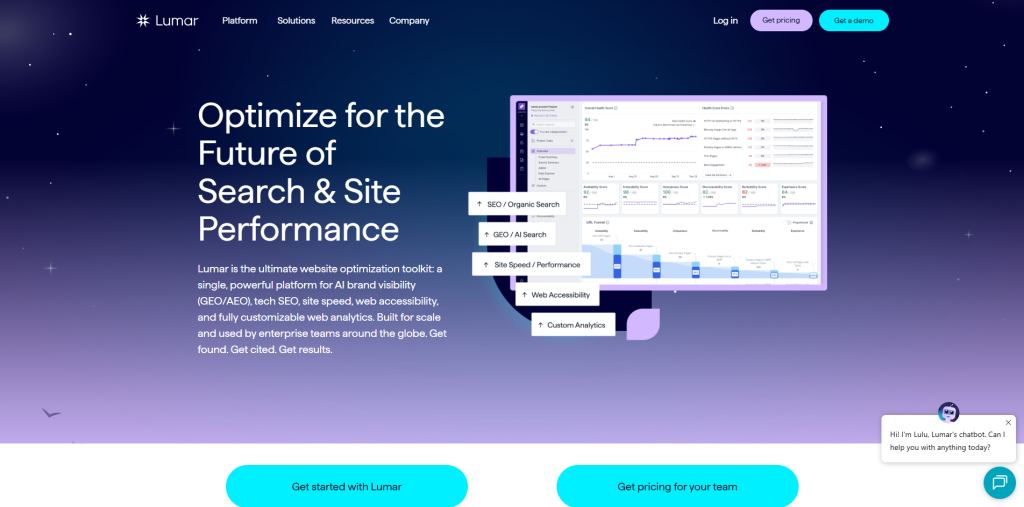
Lumar focuses on website intelligence: scheduled enterprise crawls, SEO QA automation via its Protect product and strong governance features for organizations where many hands touch the site. Regression testing baked into release cycles is its signature move and catches template accidents before they reach production. It is an excellent fit for enterprises with formal release processes and dedicated platform teams, sitting alongside Botify in the top tier of both capability and commitment.
7. Oncrawl
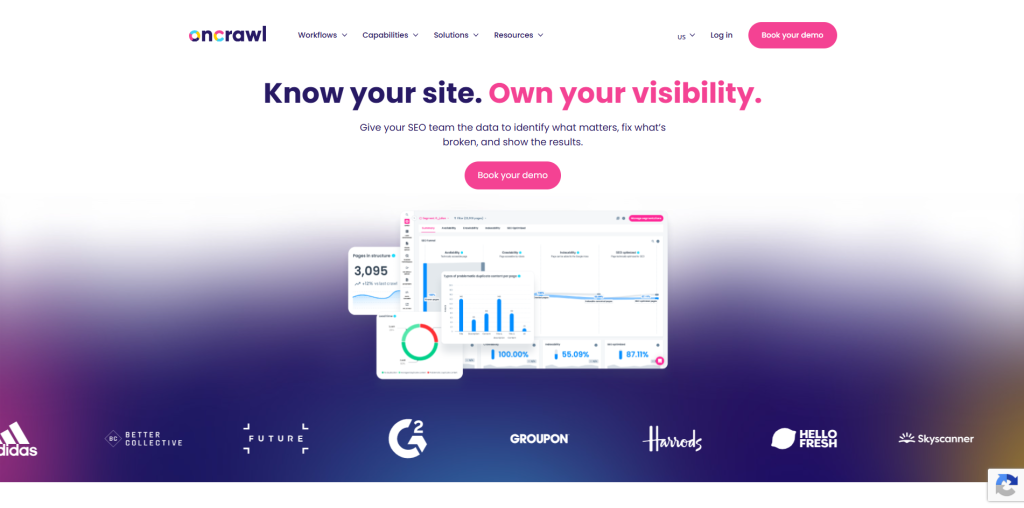
Oncrawl brings a data-science approach to enterprise crawling: segmentation, crawl-log cross analysis and BI dashboards that let teams join datasets and answer questions prebuilt reports cannot. It undercuts the big two enterprise players while covering most of the analytical ground that matters day to day. For data-mature teams that want serious cross analysis without a top-tier procurement cycle, it is a solid middle path and a popular one across European enterprises in particular.
8. Seo Clarity
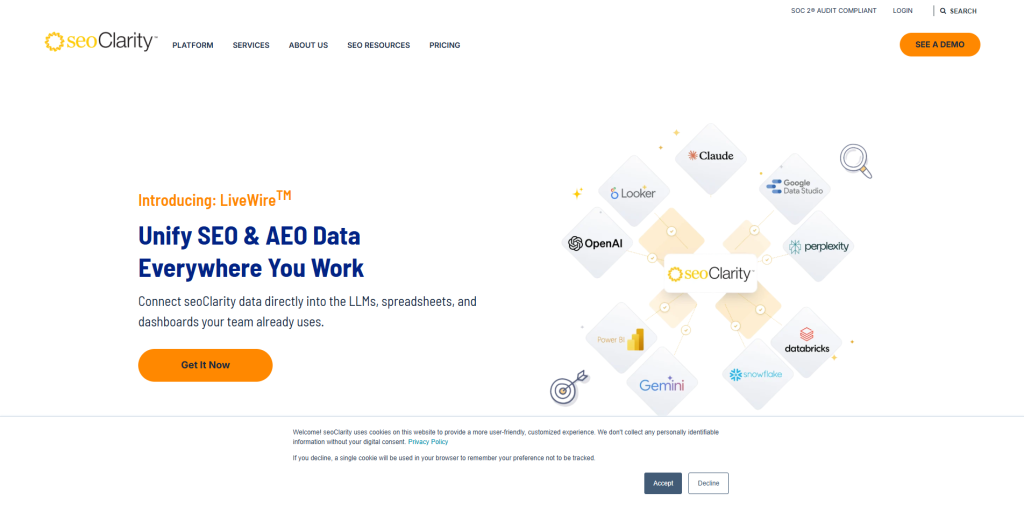
seoClarity is an enterprise SEO platform with built-in crawling, rank intelligence at very large keyword scale and AI-assisted analysis features. Its strength is unification: rankings, content and technical data in one system so large organizations stop reconciling exports from three vendors. The crawler itself is capable and the surrounding platform is the argument. For enterprises whose pain is coordination across huge keyword portfolios rather than raw crawl depth, it deserves a place on the shortlist.
9. Conductor
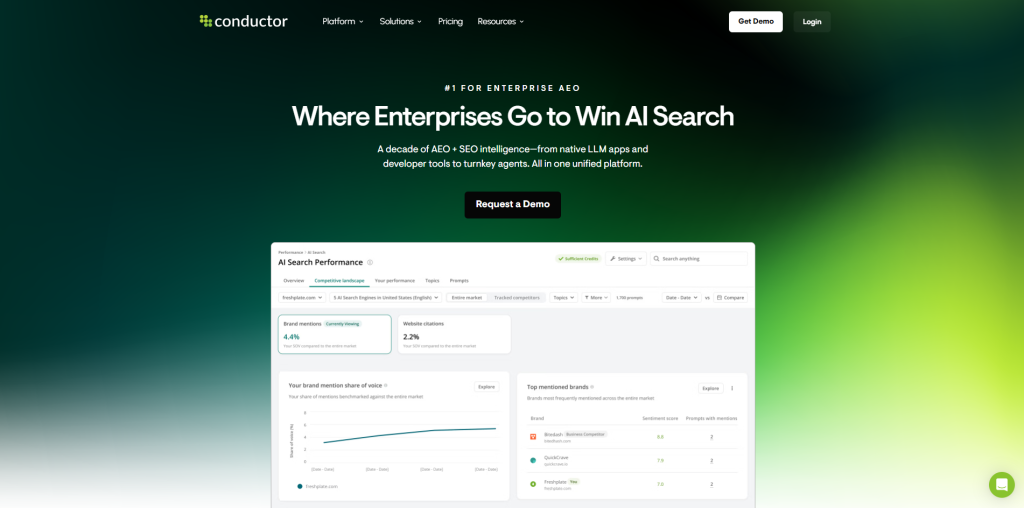
Conductor is one of the most underrated tech SEO tools. It pairs enterprise content and keyword workflows with real-time technical monitoring inherited from its ContentKing acquisition. It's always-on change tracking alerts you to accidental noindexes and template changes within minutes rather than at the next crawl, which is a materially different operating model from scheduled crawling. For organizations where the biggest technical risk is unannounced change shipped by other teams, that real-time layer alone can justify its seat in the stack.
10. Audisto
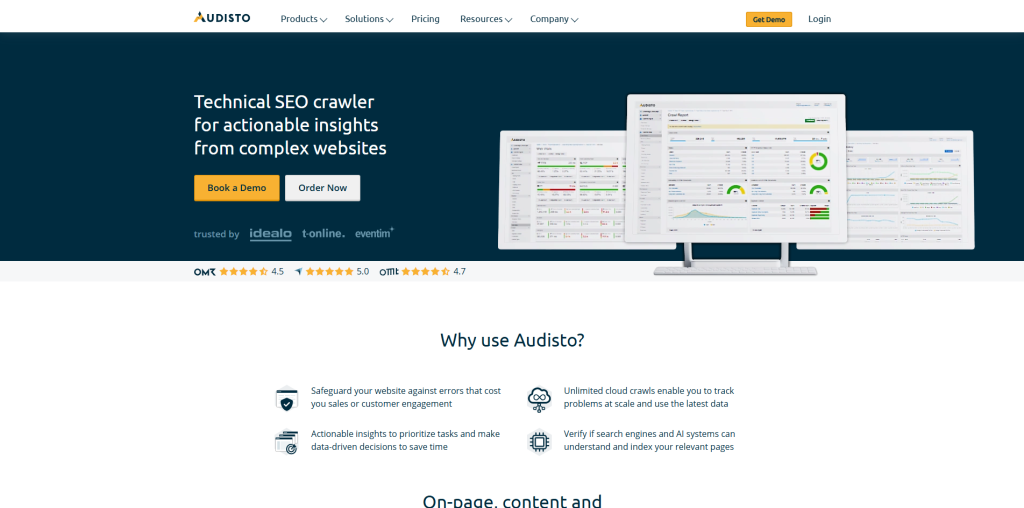
Audisto is a German engineering favorite: precise structural analysis, PageRank-flow diagrams and monitoring built specifically for very large sites. It is less flashy than its competitors and deeply rigorous where it counts, with clustering and structural metrics most tools simply do not compute. Teams with strong technical ownership who want engineering-grade measurement of architecture and internal linking will find capabilities here that are hard to source anywhere else in the market.
11. Ryte
Ryte combines crawling with quality assurance and Core Web Vitals monitoring, plus robots.txt change tracking that has quietly saved many sites from self-inflicted deindexing. It is particularly popular in the DACH enterprise market and its QA framing suits organizations that treat website health as an operations discipline rather than a marketing checkbox. As a monitoring-first complement to a heavier crawl platform or a primary tool for mid-large sites, it holds its ground well.
12. Sitebulb
Sitebulb Cloud brought the tool's celebrated issue explanations and visualizations to server-scale crawling. It is newer to the enterprise segment than the incumbents but its report quality is arguably the best in the industry for communicating findings to mixed audiences of developers, marketers and executives. For enterprises that struggle less with discovering issues than with getting them fixed by other teams, Sitebulb's explanatory depth is a genuine operational advantage.
13. Fandango SEO
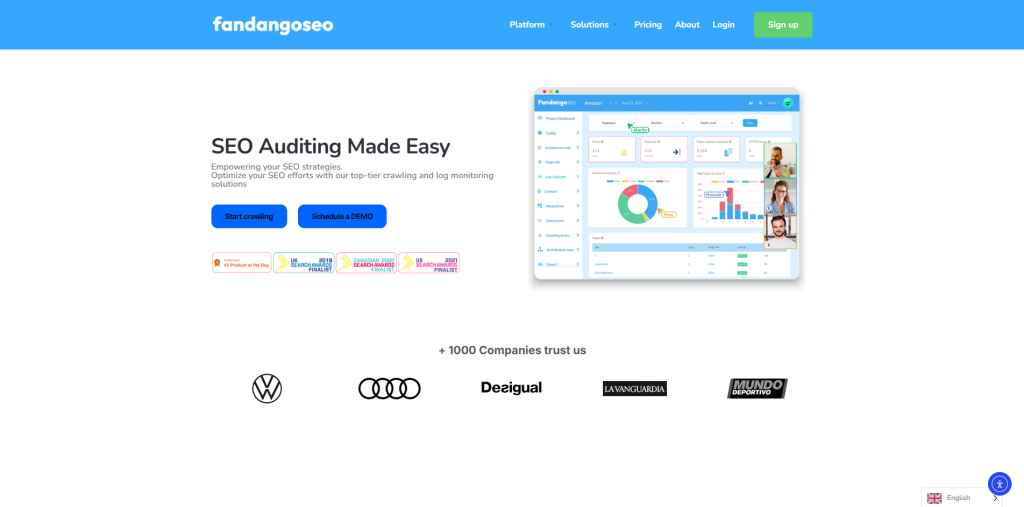
FandangoSEO is a lighter enterprise option with pagetype segmentation, log integration and competitor crawling. It covers the essential crawl-plus-logs combination that defines serious technical work without the procurement weight of the category leaders. For mid-large sites that want log insight and segmentation on a modest commitment, it is a reasonable entry point to enterprise-style analysis and a name worth including in evaluations more often than it currently is.
The bottom line
Enterprise crawling in July 2026 comes down to three questions. Do you need keyword and competitive data in the same platform? Take SEMrush or Ahrefs, whose crawls are bundled into subscriptions you will pay for regardless. Agencies that lack an in-house technical team often complement these platforms with White Label SEO services to deliver enterprise SEO without expanding internal resources. Do you need serious crawl scale, JavaScript rendering and log analysis, including AI bot visibility, without a top-tier invoice? JetOctopus is the clear price-performance winner. Is procurement no obstacle and full-suite activation the goal? Botify and Lumar remain the established heavyweights. There is no universal answer to which SEO tools are the best. The right tech SEO tools depend on your business needs.
How to run a proof of concept
Enterprise tool selection goes wrong when it is decided in demos rather than data. Before committing, run the same three-part POC on every shortlisted platform. First, crawl your hardest section - not the homepage but the JavaScript-heavy, parameter-riddled corner your dev team apologizes for - and compare rendered output, speed and URL normalization. Second, connect logs for two weeks and inspect the intersections: indexable pages Googlebot never visits, bot traffic on supposedly blocked pages and what share of content AI crawlers reach. Third, test support deliberately by sending a technical question through normal channels and timing the response. Then calculate cost per crawled page rather than sticker price. The differences are usually eye-opening.