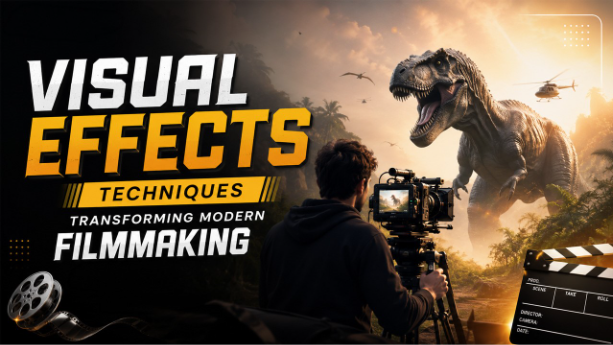






In the dynamic world of filmmaking, VFX or visual effects are vital to realizing creative vision on screen. Visual transformation has transformed the way audience experience stories and storytelling, bringing gorgeous landscapes and magnificent animals to life. In this article, we will explore different visual effects techniques that are revolutionizing the business of motion pictures.
What Is VFX?
VFX stands for Visual Effects. It implies creating or adding visuals that are impractical to capture during live filming. It adds details that make the scene more visually enthralling and captures the internet and imagination of the audience. Let us see a few examples of VFX effects in popular shows and films.
- Time dimension in the film Interstellar.
- A dragon flying in Game of Thrones.
- Spaceships in Star Wars.
- It can be even as simple as changing the color of the sky in a commercial.
All such moments are generated through CGI (Computer Generated Imagery) and other visual effects techniques that smoothly blend with real footage. In simple terms, VFX allows storytellers to bring imagination to life.
Why Is Visual Effects Techniques Used?
VFX is not just for big-budget Hollywood blockbusters. Any filmmaker can use it. In the industry, it is extensively used in advertising, OTT series, games, and even YouTube videos. Creators can also use it in making Reels or YouTube Shorts if the need arises.
Let us see why creators use it extensively:
- To Deliver the Impossible: It is not practical to film space travels, dinosaurs, or time jumps. VFX can make the impossible possible.
- To Save Time and Cost: Suppose if you want to capture an action sequence where you are blowing up the hospital or setting up the explosively. Creating a set for this and capturing short on a camera can be expensive. VFX can help you achieve that digitally.
- To Improve Storytelling: Even smaller scenes such as changing lightning or adding background rain can make a lot of difference to the overall mood and tone. So, VFX is not only useful in fantasy settings; VFX can also help add realism to the scene.
Different Visual Effects Techniques
Digital Manufacturing:
Due to the advancement of real-time rendering, virtual production has become greatly popular. Filmmakers now have better flexibility and creative freedom in the production stage since they can create entire landscapes and universes in a virtual area. Directors can visually create intricate scenes in real-time, complex landscapes, and even impossible physical worlds using LED walls and virtual cameras, which enhances the complete filmmaking process.
Performance Capturing:
The ability of the performers to manifest virtual avatars to life has been changed by the performance capture technology. VFX artists can seamlessly integrate facial emotions and body movements of actors into CGI (computer generated imagery) by meticulously recording performance subtleties. The difference between performance and imagery is often blurred by the extensive usage of this method in movies such as Planet of the Apes Series and Avatar.
Deep Learning Methodologies:
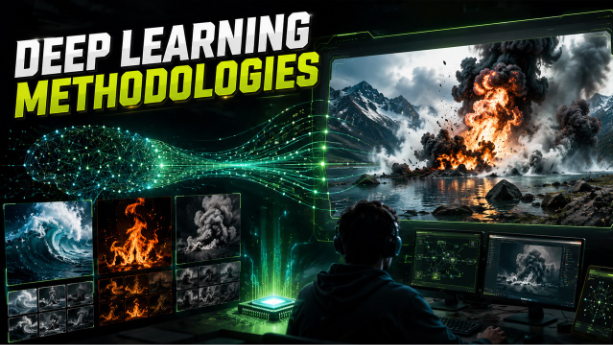
Deep learning algorithms have paved way for the new landscape of digital realism and advanced visual effects techniques. Such algorithms are able to recreate natural events such as water, fire, and smoke with unparalleled accuracy by utilizing quality data in high-volume. While doing so, filmmakers can push the limits of what is feasible on-screen aesthetically and create immersive visual experiences that were unattainable previously.
Tools such as Freepik AI Image Generator showcase how machine learning can create in-depth visuals from standard text prompts, greatly minimizing production time for designers and artists.
Creation of Procedurals:
Artists may create intricate textures and geometry utilizing techniques of procedural generation, which greatly minimizes the time and effort required to build in-depth materials. This technique especially works well for developing realistic natural features, detailed cityscapes, and large-scale landscapes. Filmmakers may now develop cinematic quality on scale never seen before courtesy of the cinematic generation.
Physics-based Rendering:
Visuals built by PBR (Physically driven rendering) are extremely lifelike since it represents light behavior in a physically accurate way. PBR provides the capability to create realistic imagery that pulls viewers into the story by accurately simulating the interactions between light and surfaces, settings, and materials. This method has improved the visual quality standard in movies and has become a standard for mainstream visual effects.
Augmented Reality Integration:
Filmmakers are progressively integrating the technology of Augmented Reality into their work, which allows them to smoothly merge virtual features with real-time actual settings. This opens up new avenues of creative opportunities by enabling actors to interact with characters and artificial objects as if they were present physically. Industry insights suggest that cast and crew also enjoy a more effective on-set experience when AR (Augmented Reality) is used. It fosters creativity and better teamwork.
Adaptive Models:
Lifelike animations of physical phenomena such as hair, fabric, and fluid dynamics are created via the use of dynamic simulations. VFX artists may create real-time interactions and movements in their behavior by modeling the behavior of such objects based on real-world physics. Whole cinematic experience of the audience is improved dynamic simulations, which provide greater depth and authenticity of visual effects.
Upscaling Through Machine Learning:
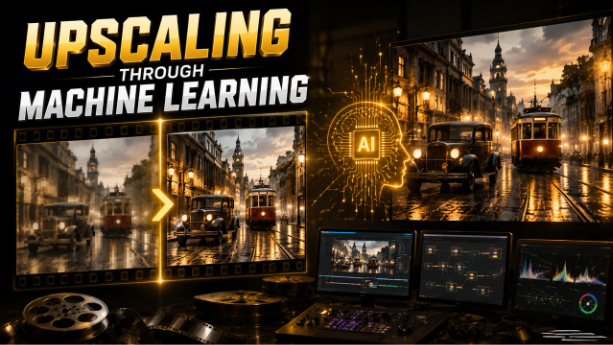
Filmmakers can leverage AI to enhance quality and resolution of low-resolution footage by implementing upscaling algorithms powered by machine learning. Such algorithms smartly add missing details, create graphics that are crisper, and finely detailed, by assessing the textures and patterns of the image. Upscaling as per machine learning is very valuable for re-mastering older movies and enhancing the visual clarity of archival material.
AI is also enhancing transformation workflows and image enhancement beyond filmmaking. Solutions like PixExact Image-to-Image Search Generator allow creators to develop high-resolution visual assets while ensuring consistency across screen sizes and multiple formats.
Virtual Reality Previsualization:
Before beginning production, filmmakers may test as well as refine their concepts in a comprehensively realistic scenario with virtual reality (VR) previsualization. Directors can simplify the process of pre-production and save money and time by experimenting with blocking, camera angles, and real-time visual effects by developing settings and virtual sets in virtual reality (VR). Filmmakers can more accurately envision their projects and make creative decisions early on in the process courtesy of VR previsualization.
Cloud-based Graphic Design:
With cloud-driven rendering technologies, filmmakers may utilize massive processing power to generate intricate visual effects shots. Studio may enhance productivity and extensively minimize rendering times by migrating rendering jobs to the cloud. In addition, cloud-based rendering makes it easy for artists who are geographically spread-out to collaborate, which enhances scalability and efficiency of workflow.
Visual Effects Methods:
Visual effects methods are ensuring consistent evolution in the motion picture business. Such modern techniques, which vary from virtual techniques to machine learning-driven upscaling, are transforming on-screen storytelling and elevating the envelope in terms of immersion and creativity. You can explore a few AI tools as well to learn how you can create advanced visual effects methods.
The potential for visual narrative is limitless as technology develops further. The future looks promising as filmmakers try out more creative narrative techniques and visualize more complex and creatively rich worlds.
Conclusion
Visual effects techniques have foundationally transformed modern filmmaking, transforming creative ambitions into tremendous on-screen realities. From physics-driven rendering to AI-driven upscaling and virtual reality previsualization, such techniques continue to push storytelling boundaries across different industries. As technology advances, VFX will only become more advanced, providing filmmakers with unprecedented platforms to create visually rich and immersive narratives that capture the audience’s attention around the world.
Apart from conventional VFX pipelines, AI-driven video creation tools are transforming production of content at scale. The article on AI video editing economics explains how automation is minimizing editing costs while allowing creators to create visually-compelling content at scale.
Frequently Asked Questions : Visual effects techniques
VFX (Visual Effects) are digitally created in post-production. SFX (Special Effects) are practical effects that are created with a camera on the set such as real explosives, rain machines, or prosthetic makeup.
Realism often boils down to aligning with the physical environment. Exactly align color grading, lightning angles, and camera grain to the live action plate always. Blend practical elements with digital improvements to make your shots more grounded.
For 3D models and animation, use Blender and Autodesk Maya. For Rotoscoping and Compositing, you can use Adobe After Effects and The Foundry Nuke. For Simulations, you can utilize SideFX Houdini.
Rotoscoping refers to manual tracing (frame-by-frame) of actors or objects in a shot. It isolates an actor from the background so they can be added to a different scene or enables artists to remove unwanted elements.