





The Rise of the Distributed Workforce in Australia
The modern Australian workforce has undergone a profound transformation, driven by technological advances and shifting cultural attitudes towards work. More than 30% of Australians reported working from home at least some of the time in 2023, a figure that has steadily increased since the onset of the COVID-19 pandemic. This seismic shift to remote work has created new opportunities for flexibility, improved work-life balance, and access to a broader talent pool. However, it has also introduced significant security challenges for businesses across industries.
The distributed workforce model is no longer a temporary response to a crisis but a permanent fixture of the Australian labour market. As such, the need for resilient home office environments is critical. Unlike traditional centralised office settings, home offices often lack enterprise-grade security infrastructure, exposing both employees and companies to cyber threats, data breaches, and operational disruptions that can severely impact business continuity. This new reality demands a comprehensive approach to home office security that addresses technical vulnerabilities, human factors, and organisational policies.
Understanding the Security Landscape of Home Offices
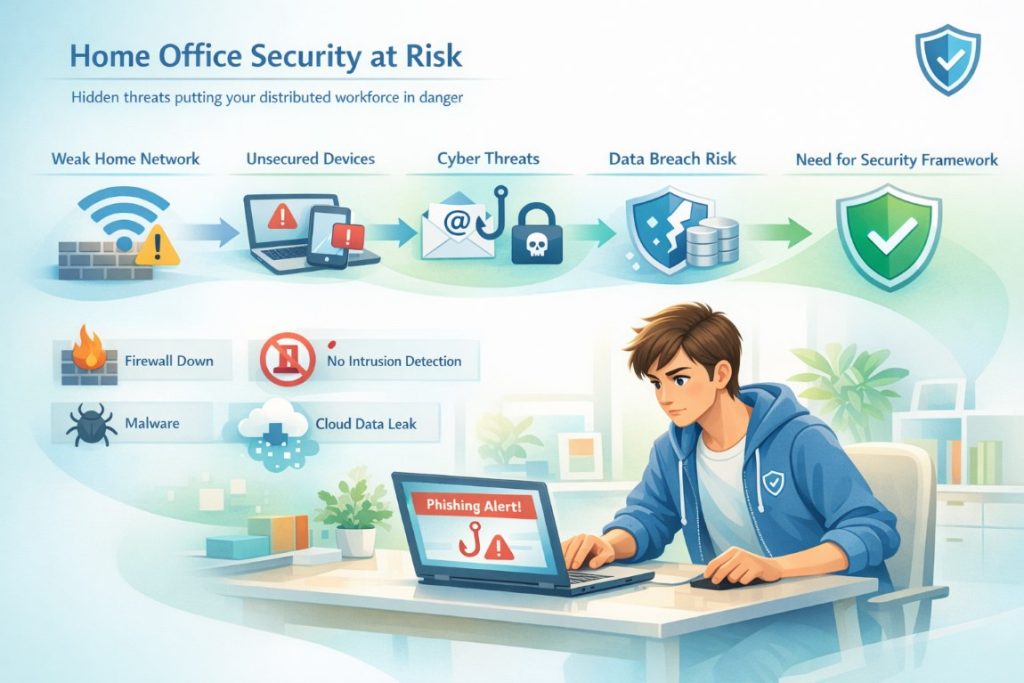
Cybersecurity threats targeting remote workers have escalated sharply in recent years. According to a 2023 report, cyberattacks on home office environments increased by 45% year-over-year, with phishing and ransomware being the most prevalent attack vectors. These alarming statistics highlight the urgency of implementing robust security measures tailored to the unique characteristics of home offices.
Home networks are often less secure than corporate networks, lacking advanced firewalls, intrusion detection systems, and continuous monitoring. Many employees use personal devices or unsecured Wi-Fi connections, increasing the attack surface significantly. Cybercriminals exploit these weaknesses to gain unauthorised access to sensitive corporate data, intellectual property, and customer information, resulting in costly breaches and loss of trust. Moreover, the blending of personal and professional activities on shared devices can inadvertently expose corporate resources to malware or accidental leaks.
Given the distributed nature of modern workforces, these risks are compounded by the challenges of managing and securing a diverse array of endpoints across multiple locations. Organisations must therefore adopt adaptive security frameworks that extend protection beyond the traditional office perimeter and into every remote workspace.
Essential Security Measures for a Resilient Home Office
To build a resilient home office environment that supports the distributed Australian workforce, businesses and employees must adopt a multi-layered security approach. This involves integrating technology solutions, employee training, and best practices that collectively mitigate risk.
Deploying Enterprise-Grade VPNs and Endpoint Security
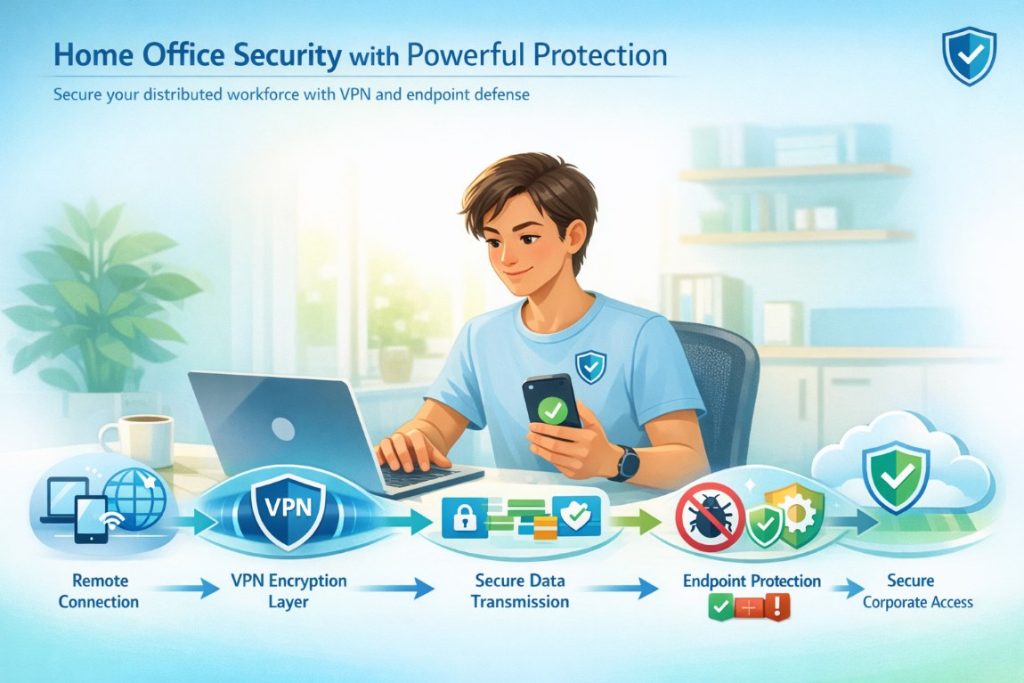
One of the foundational steps is ensuring that all remote connections are routed through secure Virtual Private Networks (VPNs). VPNs encrypt data transmissions, protecting sensitive information from interception by malicious actors. This is particularly important when employees access corporate resources over public or home Wi-Fi networks, which may be vulnerable to eavesdropping.
Complementing VPNs with comprehensive endpoint security solutions, including antivirus, anti-malware, and regular patch management, helps defend against diverse cyber threats. Endpoint protection platforms can detect and isolate suspicious activities on devices before they escalate into full-blown incidents. In addition, organisations should enforce strict device compliance policies to ensure that only secure, updated devices can connect to corporate networks.
Many companies partner with specialised IT service providers to implement and manage these technologies effectively. For example, organisations looking for reliable support can consider TrustSphere IT for businesses in Tampa, which offers tailored cybersecurity solutions designed to safeguard remote work environments.
Businesses can further strengthen their home office security by following the Essential Eight cybersecurity framework, which provides proven strategies to mitigate common threats.
Enhancing Network Security with Firewalls and Monitoring
Securing the home network itself is equally important. Installing hardware firewalls and configuring routers to support strong encryption protocols (such as WPA3) can significantly reduce unauthorised access risks. WPA3 is the latest Wi-Fi security standard that offers enhanced protection against brute-force attacks and improves data confidentiality.
Additionally, continuous network monitoring tools can detect unusual activities early, enabling prompt incident response. These tools can alert IT teams to anomalies such as unexpected login attempts, unusual data transfers, or the presence of unknown devices on the network. Early detection is critical to minimising damage and preventing lateral movement by attackers within a network.
Engaging expert tech firms can accelerate this process. Businesses in need of advanced IT infrastructure support may find value in consulting Tuminto, the tech firm, the tech firm known for delivering customised solutions that enhance network resilience.
Implementing Strong Authentication and Access Controls
Robust authentication mechanisms, such as multi-factor authentication (MFA), are critical in verifying user identities before granting access to corporate resources. MFA adds an extra layer of protection beyond passwords, making it more difficult for attackers to compromise accounts through phishing or credential stuffing.
Furthermore, applying the principle of least privilege-granting employees access only to the data and systems necessary for their roles-minimizes potential damage from credential theft or insider threats. Role-based access controls (RBAC) help enforce this principle by systematically limiting permissions, reducing the risk surface.
In addition, organisations should regularly review and update access rights, especially when employees change roles or leave the company. Timely revocation of access is vital to preventing unauthorized data exposure.
Promoting Cybersecurity Awareness and Training
Technology alone cannot guarantee security. Human factors remain a significant vulnerability, especially with threats like phishing that exploit user trust and curiosity. Regular cybersecurity training programs help employees recognise potential risks and adopt secure behaviours, such as avoiding suspicious links, using strong passwords, and reporting incidents promptly.
Surveys reveal that organisations with comprehensive employee training experience 70% fewer security breaches related to human error. Training should be ongoing and include simulated phishing exercises, updated threat briefings, and clear communication channels for reporting concerns.
Building a culture of security awareness is an indispensable component of a resilient home office strategy. Encouraging employees to take ownership of their cybersecurity responsibilities strengthens the overall defence posture of the organisation.
The Business Case for Investing in Home Office Security
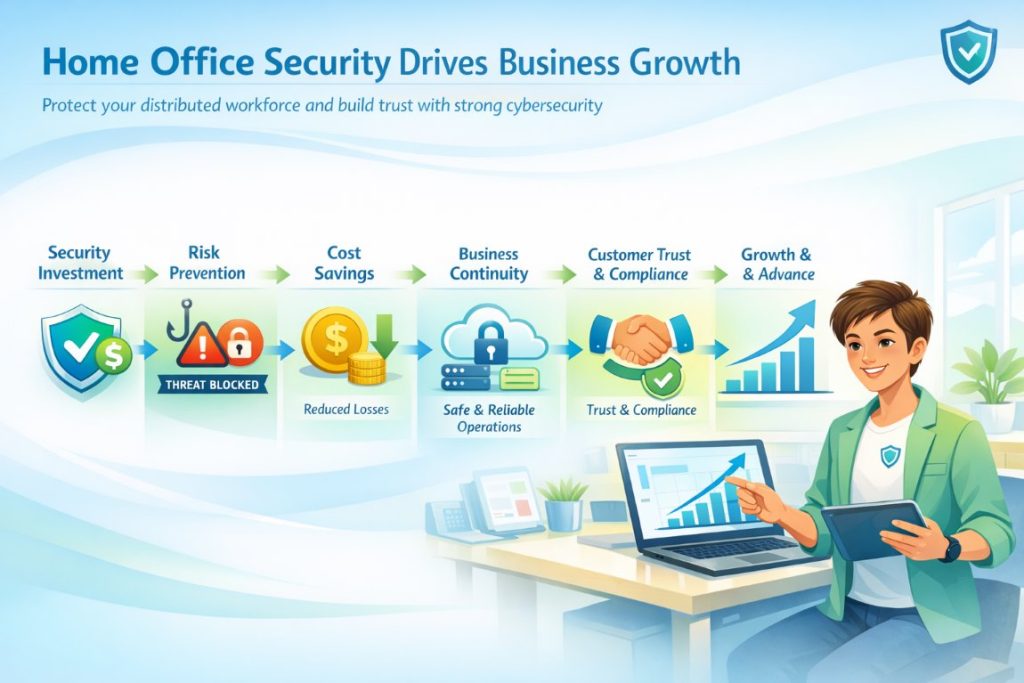
Investing in home office security is not just a technical imperative but a strategic business decision. Security breaches can result in costly downtime, regulatory penalties, reputational damage, and loss of customer trust. The average cost of a data breach in Australia reached AUD 3.35 million in 2023, emphasizing the financial stakes involved.
Beyond direct financial losses, breaches can disrupt operations, delay projects, and erode employee morale. Customers and partners increasingly expect organisations to demonstrate strong cybersecurity practices as part of their trust and compliance frameworks. Failure to meet these expectations can lead to lost business opportunities and diminished market position.
By proactively securing distributed work environments, organisations enhance operational continuity and create a competitive advantage. Employees can work confidently, knowing that their devices and networks are protected, which in turn supports productivity and engagement. Furthermore, well-secured home offices contribute to resilience against emerging threats, ensuring that businesses can adapt swiftly to changing conditions.Organisations must also consider data sovereignty in Australia, ensuring sensitive information is stored and managed in compliance with local regulations.
Looking Ahead: Building a Future-Ready Home Office Ecosystem
As the distributed workforce model matures, businesses must continuously evolve their security practices. Emerging technologies such as zero-trust architecture, AI-driven threat detection, and secure access service edge (SASE) frameworks offer promising avenues to further fortify home offices.
Zero-trust models operate on the principle of “never trust, always verify,” requiring strict identity verification for every user and device attempting to access resources, regardless of location. This approach is especially suited to distributed environments where traditional network perimeters no longer apply.
AI-driven tools enhance threat detection by analysing behavioural patterns and identifying anomalies in real time, enabling faster and more accurate incident response. Similarly, SASE frameworks combine networking and security functions into a unified cloud service, providing consistent protection regardless of where employees connect.
Moreover, collaboration between IT service providers, cybersecurity experts, and organisational leaders will be critical in designing adaptable, resilient solutions that scale with workforce needs. Regular security audits, policy updates, and investment in employee education will remain essential components of a robust home office security strategy.
Conclusion
The shift to a distributed workforce presents both challenges and opportunities for Australian businesses. Building a resilient home office equipped with essential security measures is vital to safeguarding corporate assets and enabling seamless remote work. By integrating advanced technology, adopting best practices, and fostering cybersecurity awareness, organisations can mitigate risks and thrive in the evolving digital landscape. Embracing this proactive approach will ensure that the Australian workforce remains productive, protected, and future-ready.