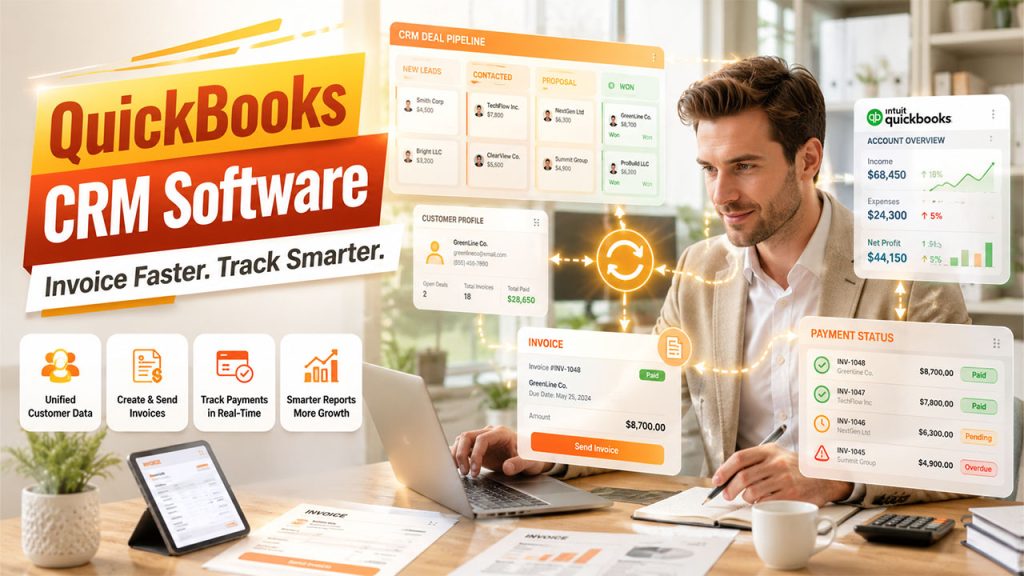






CRM platforms are important tools for businesses looking to effectively handle their interactions with present and potential customers. However, to completely utilize the potential of a CRM platform, incorporating it with other business applications and platforms is important. This article goes deep into the diverse advantages of CRM integration, the distinct types of available integration, and how you can integrate CRM with other third-party tools-
What Is CRM Integration?
CRM integration can be defined as the process of integrating CRM (Customer Relationship Management) software with other business platforms and third-party applications and automate data flow and workflows. Such integration focuses on creating a centralized platform where customer information from diverse systems like social media, email, e-commerce, customer support platforms, and other sources of data is simplified and accessed within the CRM. Doing so improves the functionality of CRM, providing businesses with a complete view of customer conversations and history.
The main objective of the CRM integration platform is to organize data, improve operational efficiency, enhance accuracy, and ensure a smooth experience for both employees and customers. It makes sure that all customer data is updated and accessible across diverse departments.
Furthermore, it provides support to customized marketing efforts, sales processes with greater efficiency, and enhanced customer service by rendering relevant and up-to-date data. CRM integration can deal with a wide range of connections, including API-driven integrations and pre-defined connectors. Here, each connects to diverse data sources and systems and turns them into an efficient and cohesive system.
Advantages of CRM Integration
Incorporating CRM platforms with other business software systems introduces how businesses handle internal processes and customer interactions.
Here are some important benefits of CRM integration:
Improved Accuracy of Customer Data and Consistency:
By incorporating CRM with other platforms, businesses make sure that customer information is updated automatically across all platforms. This removes errors related to manual data entry and ascertains consistency. When data from marketing, sales, and support teams is centralized in one location, it ensures a dependable and accurately integrated data source.
Enhanced Customer Experience:
A platform for CRM integration ensures a complete view of the CRM journey by consolidating data from diverse touchpoints like customer service interactions and emails. The overall overview of clients’ data allows businesses to ensure customized customer experiences, forecast customer requirements, and promptly respond to inquiries, improving overall satisfaction of the customers.
Enhanced Efficiency in Operations:
Automating workflows between other platforms and customer relationship management simplifies business processes. For example, incorporating CRM with email marketing tools enables automatic synchronization of contact lists, audience segmentation as per CRM data, and campaign performance monitoring. This minimizes manual work and enables employees to prioritize other tasks.
Higher Sales Performance:
CRM integration renders a wide range of benefits for sales teams as it delivers crucial insights into customer preferences and behavior. Combining CRM with inventory management platforms or e-commerce software can provide insights on customer purchase history and product availability. This leads to more effective upselling and cross-selling strategies.
Improved Effectiveness in Marketing:
Marketing departments can leverage integrated CRM information to design targeted campaigns more effectively. By integrating customer relationship management systems with marketing automation systems, businesses can monitor experiences of customers across diverse channels, more effectively segment audiences, and track the ROI of marketing efforts. This leads to higher success rates in campaigns and data-driven decision making.
Also Read - Best HubSpot Integrations
Greater Communication and Collaboration:
CRM integration facilitates a higher level of collaboration between distinct departments. For instance, when support and sales teams have accessibility to same customer data, they can easily coordinate better to more efficiently close deals and fix issues.
Versatility:
As businesses develop, their technological requirements also develop. CRM integration ensures flexibility to include new applications and systems without impacting present workflows. This makes sure that businesses efficiently continue to operate as they evolve and adjust to new challenges.
Data-based Decision-Making:
With CRM platforms, businesses have accessibility to reporting platforms and complete analytics. This powers data-based decision-making as managers can create insights on customer trends easily. They can also get deep knowledge of operational efficiency and sales performance. By utilizing all this data, businesses can recognize opportunities for enhancement and make crucial adjustments to improve their performance.
CRM integration provides considerable advantages that enhance customer satisfaction, efficiency of operations, and overall growth of business. By creating a smooth connection between diverse business platforms, businesses can enhance the CRM software’s functionality. This naturally leads to strengthened customer relationships and more intelligent decision-making.
When Do You Require CRM Integrations?
Businesses generally require integration of CRM systems at diverse stages of their growth and operational development, specifically when they face particular challenges or look to streamline their processes.
Let us closely see when businesses might need CRM integration as per their business stage:
Startup:
When businesses are at the startup stage, they generally utilize standard tools to handle customer relationships. However, as businesses get more exposure in the market and start to expand their customer base, they require a more powerful system that will allow them to more efficiently operate.
When a startup experiences a growth in data volume and customer engagement, combining CRM with marketing, sales, and communication systems can simplify processes and make sure that data is accurate.
Growth:
When businesses grow, they expand their operations and naturally the volume of customer data increases considerably. The volume of data becomes so large that managing it manually becomes unfeasible. CRM integration is pivotal to automate data synchronization across diverse systems like customer support systems, social media, and email marketing platforms. This makes sure that all departments have accessibility to the latest data. This improves team communication, coordination, and efficiency.
Expansion:
When a business chooses to spread its footprints, it decides to enter new markets or introduce new services or products. This needs more personalized marketing efforts and advanced customer management. Combining CRM with ERP tools, e-commerce systems, and sophisticated analytics tools to aid in managing the growing complexity. It enables businesses to handle inventories, monitor customer behavior, and effectively customize marketing campaigns.
Mature Stage:
Mature businesses emphasize streamlining their businesses and boosting their customer loyalty. At this phase, if you can add customer loyalty programs, customer service platforms, and feedback tools to your CRM, then it can help you get better outcomes and avoid stagnation.
What Are the Different Types of CRM Integrations?
As there are different types of CRM systems, CRM integrations also differ in type. CRM integration can connect software with other business applications and systems in diverse ways. The main types of CRM integrations are described as follows:
Marketing CRM Integrations:
Marketing CRM integration connects CRM platforms with diverse platforms like social media management tools, email marketing systems, and advertising tools.
Key tools that you can incorporate with the CRM platforms involve:
- Email Marketing Tools: Segment audiences, automate email campaigns, and monitor metrics of engagement.
- Social Media Management Tools: Schedule and track social media posts and collect insights on social media interactions.
- Advertising Systems (e.g., Facebook Ads, Google Ads): Synchronize customer information to create personalized customer campaigns and monitor ad performance.
This CRM integration is crucial for implementing and monitoring marketing campaigns. By incorporating CRM with marketing platforms, businesses can easily:
- Automate campaigns: Trigger email campaigns automatically as per customer segmentation and behavior.
- Monitor Engagement: Track how businesses converse with customers across distinct channels.
- Assess Performance: Gain key knowledge into effectiveness of campaigns and ROI (Return on Investment).
- Customize Marketing Efforts: Leverage CRM data to create customized marketing messages and offers, improving conversion rates and customer engagement.
Also Read - HubSpot Salesforce Integration Made Easy
E-commerce CRM Integrations:
Businesses can integrate CRM platforms with payment gateways and digital store platforms. This integration is crucial for businesses that sell online services and products, as it aids in handling orders, customer data, and inventory smoothly.
Key platforms involve:
- Digital Store Platforms (e.g., WooCommerce, Shopify)- Synchronize purchase history, customer profiles, and preferences.
- Payment Gateways (e.g., PayPal)- Incorporate payment information to simplify transactions processes.
- Inventory Management Platforms- Ensure that inventory levels remain updated in real-time and efficiently handle stock.
Advantages of e-commerce integration involve:
- Centralized Customer Profiles: All customer-related details including preferences, purchase history, and behavior are centralized and easily accessible from one platform.
- Enhanced Customer Experience: Businesses can deliver customized recommendations and tailor promotions as per browsing behavior and past purchases.
- Inventory Management: Inventory levels across CRM and e-commerce platforms are synchronized to avoid overselling and stockouts.
- Order Management: Fulfillment cycle and order processing are simplified courtesy of integration of CRM platform with order management tools.
Customer Care CRM Integration:
Businesses can tether CRM software platforms with helpdesk platforms and customer support. This type of integration is quite crucial for providing top-quality customer support and service.
Customer service tools that you can easily integrate with your CRM involve the following:
- Helpdesk Software: Monitor communication, handle support tickets, and access customer interaction history.
- Live Chat Platforms: Integrate chat logs and ensure real-time support with customer records.
- Call Center Solutions: Log recordings and details and connect with CRM data.
Key benefits are as follows:
- Complete Customer View: With an integrated CRM, businesses have accessibility to comprehensive customer interaction histories, including communication logs and support tickets.
- Efficient Resolution of Issues: Tickets are automatically assigned to designated agents with the data needed for efficient resolution.
- Improved Communication: Integration of CRM platform with diverse communication channels (chat, email, phone) makes sure that responses timely and consistent.
Sales CRM Integration:
You will need Sales CRM integration if you want to connect CRM with sales systems, including sales enablement systems and lead generation systems. This integration is vital for streamlining sales processes, driving sales, and enhancing team productivity.
Key platforms for sales representatives include the following:
Lead Generation Systems (e.g., LinkedIn Sales Navigator): Automatically collect and handle leads from diverse sources.
Enhanced Visibility of Sales Pipeline: CRM renders key insights in real-time into sales pipeline, empowering sales teams to prioritize and effectively handle deals.
Automation of Quote and Proposals: CRM aids in quickly creating proposals and quotes, minimizing administrative tasks and expediting sales cycles.
What Are the Methods of CRM Integration?
You can integrate a CRM platform with a wide range of apps and services in a multitude of ways. One of the first steps in the integration process is to consider which applications will be connected and how much technical expertise will be required.
In-built Connectors:
Numerous CRM vendors either involve pre-built connectors or provide them with off-the-shelf solutions that can be easily downloaded, installed, or maintained with minimum expertise. Such “native integrations” are often extremely reliable since they were engineered for a specific system or for integration with a specific app. However, the downside is that they are less versatile than other connectors.
Connector Apps:
When native integrations are not available, you can go for connector apps available for connecting CRMs to other applications and platforms, like Workato and Zapier. Since they are independently created from CRM or other applications, they are generally designed to be more versatile and are more suitable for multi-platform integrations. In the market, you will find these connectors as low-code or no-code platforms, implying that a developer is not required for configuration and generating automated processes.
iPaaS Platforms:
CRM integration can be easily ensured with an iPaaS solution (Integration-Platform-as-a-Service). It is basically a suite of cloud-based systems and solutions utilized to incorporate data from diverse applications hosted in distinct IT environments. The iPaaS platforms can greatly help in enhancing organizational flexibility, ensuring the integration between diverse applications and platforms, irrespective of wherever they are hosted. The iPaaS allows enterprises to develop and deploy integration flows that connect applications and data hosted in private and public clouds between on-premises and cloud data centers.
Custom-built Connections:
If you have in-house expertise, you can instruct your developers to write you a code for your own custom-build integrations. This custom development can give you the tailored functionalities and enhancements you need for your business. CRM technology integration can help connect CRM systems with other applications and platforms through customized solutions. However, this also comes with continuous responsibility to manage this system well. Any changes to the CRM or integrated applications might impact their functioning.
The Role of AI in CRM Integration
The AI has transcended CRM capabilities, making it more automated, secure, and intelligent. To learn more about AI in CRM, check out our dedicated blog. AI-powered integrations can accelerate and boost customer service, marketing efforts, and sales. For instance:
Conversational AI: It can power virtual agents and chatbots to easily respond to customer requests and allow them to collect the information they need. This improves the overall customer experience.
Generative AI: Generative AI can create personalized communications and smart notifications such as texts and emails to efficiently and quickly maintain a conversation with customers.
An integrated CRM platform is known for accumulating or generating a copious amount of data. Through simple data analysis, generative AI platforms like Julius AI are changing the way CRM platforms work nowadays.
Predictive AI: Predictive AI can assess datasets to score leads, identify trends, predict sales, and strategize for future campaigns.
Conclusion
CRM integration has become vital for modern businesses looking to streamline customer relationships and operational efficiency. By integrating CRM platforms with e-commerce platforms, marketing platforms, customer support software, and sales applications, businesses can automate workflows, centralize data, and ensure top-level customer experiences. Irrespective of whether through iPaaS solutions, native connectors, or custom integrations, businesses at any phase of their growth can utilize CRM integration to drive data-based decisions, improve collaboration, and effectively scale operations. With AI-driven capabilities greatly transforming the functionality of CRM, integrated platforms are changing how businesses interact with customers and get long-term growth.
Also Read
CRM Examples Across 10 Industries: Automotive, Retail, Manufacturing & More
Top 10 Steps for Effective CRM Implementation
FAQs for CRM Integration
A- CRM stands for customer relationship management software, which is an advanced system for storing and handling all your interactions with existing clientele and future prospects.
A- Small businesses can make Excel function as a CRM, but it is not designed to be a CRM tool. It lacks scalability, automation, and real-time collaboration features.
A- Imagine a system where an order is placed on the website of the company. Then, automatically, the order, customer, and product data are transferred to a CRM data warehouse or Enterprise Resource Planning software. All of this happens through automation without any level of human intervention or manual data entry. This is achieved through CRM integration.
A- The distinct types of CRM integrations include marketing CRM integration, e-commerce CRM integration, customer care CRM integration, and sales CRM integration.
A- You can easily connect to a third-party tool or an internal application with the help of an API. When it is done, you can synchronize the data across both platforms.