






Some websites seem to have become successful and gain traffic faster than others. Same niche, similar content and yet one climbs search rankings while the other barely moves. The difference isn’t just backlinks or keywords; it’s visibility infrastructure. It consistently signals search engines that a page is worth noticing. Social bookmarking is one of those signals. It is underestimated, and frequently misused but when handled with good intention, it is genuinely effective.
What is Social Bookmarking?
Social bookmarking is the practice of saving, organizing, and sharing web links on public platforms, so others can discover, vote on, or engage with that content. Unlike browser bookmarks that sit privately on your device, social bookmarks are visible, searchable, and shareable.
Platforms like Reddit, Mix, Diigo, Scoop.it, and Pocket have built entire communities around this idea. Users tag content by topic, upvote what resonates, and essentially curate the web collaboratively. For marketers, it's more than digital filing. It's a distribution channel with SEO implications.
How Social Bookmarking Works in SEO: Backlinks, Indexing & Traffic
Users can bookmark a URL on a social bookmarking site. This creates a backlink that points back to your content. Google and other search engines see these as indicators of trustworthiness and relevance. The more quality signals pointing to a page, the more authority it builds over time.
It is not just limited to backlinks. Social bookmarking also helps with indexing speed. Search engine crawlers scan high-authority bookmarking sites continuously. When your URL shows up there, it gets discovered and indexed faster, sometimes within hours of publishing. Additionally, a well-placed bookmark on a niche-specific community can drive targeted visitors directly to your site, independent of Google entirely. This is where forum backlink strategies complement social bookmarking. Sharing links in relevant forum discussions helps build contextual backlinks and brings in targeted traffic.
How to Do Social Bookmarking the Right Way (Best Practices)
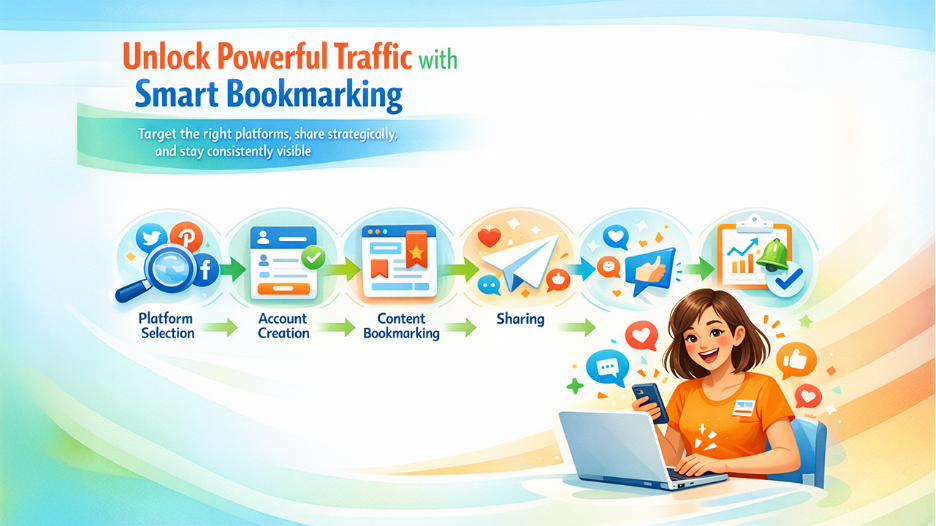
- Select the right platforms: Not every bookmarking site will suit your niche. Choose platforms that are relevant to your website's topic or industry, so your content reaches the right audience.
- Create your account: Register on the platforms you've shortlisted. A complete, credible profile adds legitimacy to every bookmark you submit.
- Start bookmarking your content: Once your account is live, begin saving and submitting your website pages or blog posts. Be selective and prioritize your best, most valuable content.
- Share with your network: Don't let your bookmarks sit idle. Share them with your followers, friends, or community groups to maximize reach and engagement.
- Monitor and update regularly: Revisit your bookmarks periodically. Keeping them current and relevant improves your chances of sustained traffic and visibility over time.
Top Benefits of Social Bookmarking for SEO & Traffic
- Quality backlinks that contribute to domain authority over time.
- Faster indexing of new content by search engine crawlers.
- Direct referral traffic from active and targeted communities.
- Brand visibility beyond your existing audience.
- Keyword enforcement through anchor text and tags
- Cost effective as most platforms are free to use.
Why Use Social Bookmarking for SEO and Website Growth?
Social bookmarking won’t transform your rankings overnight. However, as a part of a broader off-page SEO strategy, it builds a layer of consistent signals that search engines eventually notice. It keeps your content discoverable, your crawl rate healthy, and your brand visible across communities where your audience already spends time. For new websites, social bookmarking accelerates the early trust-building phase when organic authority is still developing.
Limitations of Social Bookmarking in SEO
Social bookmarking isn’t without challenges. Many of the backlinks generated are no-follow, which means that they don’t pass direct link equity to your site. While the SEO value is real but it’s indirect. Additionally, low-quality or spammy bookmarking sites can actually harm your backlink profile if Google flags them as manipulative.
This is where guest posting comes into the picture. Guest posting fills gaps that social bookmarking leaves open. When you contribute an original article to reputable websites in your industry, such as Write for us + technology, health write for us, submit a guest post, or digital marketing write for us; you earn a do-follow backlink from an authoritative domain. That single link often carries more SEO weight than dozens of bookmarks. It builds relationships, brand credibility, and long-term referral traffic.
Conclusion
Social bookmarking isn't a shortcut, rather it’s a discipline. When used carelessly, it is no more than a background noise. However, when used strategically with the right platforms, meaningful engagement, and clean execution; it becomes a steady engine of visibility that quietly compounds over time. Every bookmark placed thoughtfully is used by search engines, and real users to follow back to your content.
Pair it with guest posting for a backlink strategy to balance volume with authority. Guest posting brings the heavyweight do-follow links while social bookmarking brings consistency and reach. When combined together, they cover what neither can achieve in isolation. Start with social bookmarking as your foundation, then use guest posting as your amplifier, and watch your visibility grow with purpose and momentum.
Related Post