





Suppose a family bought their home a few years ago at a price that made sense at the time. Then life happened: the sole breadwinner lost a job, medical bills piled up, and maybe just a stretch of bad luck with expenses piling up faster than income. Now they owe more on their mortgage than the house is actually worth, and they can’t keep up with the payments anymore. Selling seems like the best option; however, there’s a problem. Even if they sell at the current market price, the money won’t cover what they still owe the bank.
This is where a short sale comes into the picture. It's not a scam or a secret real estate loophole. It is a real thing and a way out for homeowners who are stuck in a tricky situation. It offers unique opportunities to buyers who are patient enough to go through it.
What Is a Short Sale?
A short sale refers to when a homeowner sells their property for less money than what they still owe the mortgage, and the lender accepts the lower amount instead of the full balance. The sale falls “short” of the loan and that’s where the name comes from. Many people confuse it with a foreclosure. However, they are not the same. In a foreclosure, the bank takes the home back, whereas in short sales, the homeowner is the one who’s selling, just with the lender’s approval and oversight guiding the process.
How Does a Short Sale Work?
If you think that in a short sale, it’s the homeowner who’s making the final call, you couldn’t be more wrong. They do list the home, might even negotiate with buyers, or sign the final paperwork. However, the lender holds the real power because he is the one who approves the sale price before anything becomes official.
Think of it like this: the homeowner and buyer can agree on a price, but that agreement is really just a proposal until the bank says yes. The lender will usually order its own valuation of the property to make sure the offer is reasonable and not wildly under market value. If the numbers don't add up in the bank's eyes, they can reject the offer, ask for a higher price, or request the seller to cover part of the gap. This is why a short sale process takes longer than regular home sales.
Step-by-Step Short Sale Process
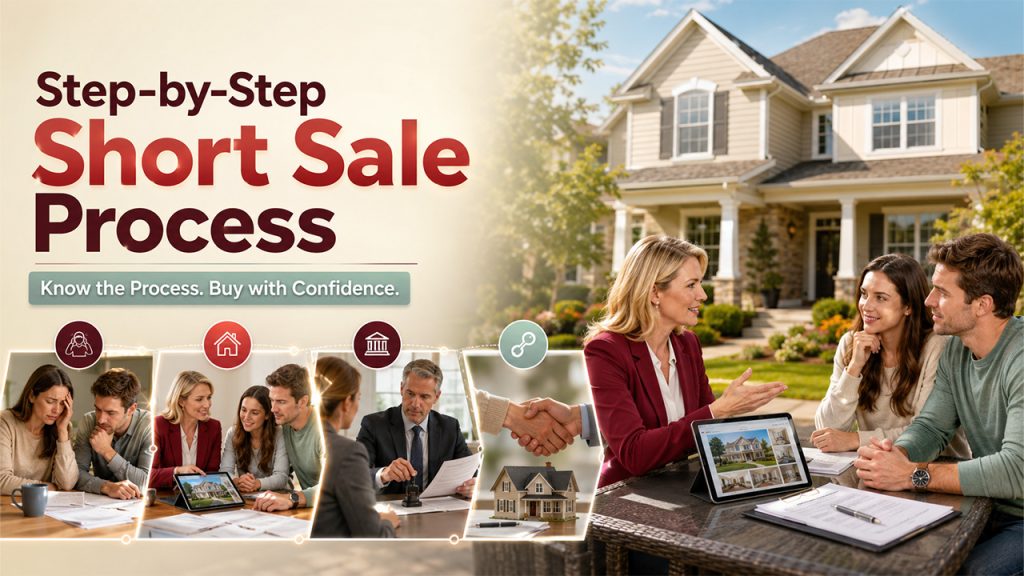
All short sales vary depending on the lender and the state; however, they almost follow the same general path. Here's what actually happens, step by step, and why each stage takes the time it does.
Homeowner Faces Financial Hardship: When a mortgage payment becomes too high, the value of the home drops, or a life event has thrown the budget off completely; the homeowner realizes they can no longer afford the mortgage and owe more than the house is worth. This is often called “underwater” on loans.
Homeowner Contacts the Mortgage Lender: The homeowner explains the problem to the lender and asks whether they will consider a short sale instead of moving toward foreclosure.
Lender Reviews Financial Hardship Documentation: Now, homeowners must provide proof of income, bank statements, a hardship letter, and sometimes even tax returns to prove that they are actually facing problems paying mortgage.
Property Is Listed for Sale: The homeowner lists the home with a real estate agent who has enough experience in handling short sales because these deals need extra paperwork and patience.
Buyer Submits an Offer: First, the offer is sent out to the seller, but that’s just to stall for time as it is really being prepared for lender review. Lender calls the shots here.
Lender Reviews and Evaluates the Offer: The bank checks the offer against the home's appraised value and decides whether to accept, counter, or reject it.
Lender Approves or Rejects the Short Sale: If approved, the bank agrees to accept less than what's owed and release the lien on the property.
Short Sale Closing Process: The buyer completes the purchase just like a standard home sale, though the paperwork trail is longer, so one needs to be patient.
Remember that each of these steps can be repeated or extended if the lender asks for more documents, if multiple offers come in at once, or if the paperwork gets delayed due to the bank’s internal review.
How to Buy a Short Sale Home Successfully

Buying a short sale isn’t a complicated task; however, it does ask for a lot of patience. Here's how to actually approach it as a buyer.
Get Pre-Approved Before House Hunting: The first thing you have to do is get pre-approved for a mortgage. Do not wait till after you’ve found a house you like.
Work With an Experienced Short Sale Agent: Pick an experienced real estate agent who has handled short sales before, as it comes with extra paperwork and slower timelines. An experienced agent won’t be caught off guard by the delays and sudden document demands.
Many agents now use virtual tour tools to walk buyers through vacant short sale listings remotely.
Inspect the Property Carefully: These homes are usually sold in the same condition without any renovation or repair, so check for liens and assess the condition early. It saves you from getting stuck in a home with hidden problems.
Submit a Competitive Offer: It's tempting to aim low, but lenders usually reject offers too far under market value. A realistic offer actually moves faster.
Be Patient Throughout the Approval Process: Get a professional inspection done while you wait, and don't put your life on hold. Approval can take weeks or months, so keep your options open and explore in the meantime.
At the end of the day, the buyers who do well here aren't the fastest ones; they're the ones willing to wait it out.
Read More: Agents managing multiple short sale listings and buyer inquiries often rely on real estate CRM software to stay organized through the process.
Key Benefits of a Short Sale
A short sale can create meaningful advantages for both homeowners facing financial hardship and buyers looking for the right opportunity.
Benefits of a Short Sale for Sellers
- Less Credit Damage Than Foreclosure: A short sale still shows up on a credit report, but it causes far less damage than a foreclosure, which can haunt a credit score for years.
- Faster Eligibility for a Future Mortgage: Homeowners who go through a short sale often qualify for a new home loan sooner than those who go through foreclosure.
- Greater Control Over the Selling Process: This keeps sellers a part of the whole process from listing to negotiating the sale rather than having the home simply taken by the bank.
- Potential Mortgage Debt Forgiveness: Depending on the lender and the state, the remaining balance owed after the sale may be forgiven entirely, wiping the slate clean.
- Avoid the Public Stigma of Foreclosure: A short sale is a private, negotiated transaction, while foreclosure is a public legal process that can feel far more damaging to a family's reputation, if you care about societal stereotypes.
Benefits of Buying a Short Sale Home

- Opportunity to Buy Below Market Value: Short sale homes are often listed lower than comparable homes. This saves money for a patient buyer.
- Access to More Affordable Neighborhoods: With a discounted price, you can get access to areas or home sizes that would normally be too expensive or out of your budget.
- Less Competition from Other Buyers: As discussed above, short sales are a time-consuming process and demand a lot of patience. That's why many buyers skip them entirely, which can mean less bidding pressure for those who are actually willing to wait.
- Clearer Property Condition Disclosures: Since these homes are sold as-is, buyers usually get a clear picture of the condition of the property upfront, without the seller trying to mask problems.
- Potential for Long-Term Property Appreciation: Buying below market value in a decent neighborhood can mean solid appreciation potential once the home is fixed up and the market recovers.
Drawbacks of a Short Sale for Buyers and Sellers
Nothing about a short sale is entirely smooth, though. Both sides give something up in exchange for what they gain.
| Aspect | Sellers | Buyers |
| Timeline | Process can drag on for months while waiting on lender approval | Long wait times can cause buyers to lose interest or lose other opportunities |
| Credit impact | Still shows up on credit report, though less severe than foreclosure | Not directly affected, but financing pre-approvals may expire during delays |
| Property condition | Limited ability to make repairs before selling | Homes are sold as-is, often needing repairs or updates |
| Control over sale | Lender has final say over accepted price | Offers can be rejected or countered by the lender, not just the seller |
| Cost | May still owe the difference unless lender forgives it | Additional inspection and due-diligence costs recommended |
Conclusion
A short sale is not a short cut or a trap. It’s a legitimate, structured, and lender-approved way for a homeowner to remove themselves from the situation where they have to pay a mortgage that they can no longer afford. Moreover, this is also an opportunity for a buyer to score a property at a fair, sometimes discounted, price. However, the trade-off on both sides is time. Sellers trade time for relief from an unmanageable debt, and buyers trade time for a potential, affordable deal. Once you see a short sale as a negotiated exit, not a fire sale, the entire process starts to make a lot more sense.
FAQs About Short Sale
A short sale does affect your credit score, but usually less severe than a foreclosure. It stays on your report for several years, but recovery tends to be faster.
Short sales typically take two to four months, sometimes longer, since the lender must review and approve the sale price before closing.
Yes, but remember the lender has final approval. Offers too far below market value are usually rejected or countered.
Often, yes. These homes are sold as-is, so a professional inspection before purchase is strongly recommended to avoid surprises later.
It depends on the lender and state laws. Some lenders forgive the remaining balance, while others may pursue the difference afterward.