





Most companies that invest in video put nearly all of their budget into the shoot: the camera crew, the location, the talent. Then the footage lands on someone’s laptop, gets trimmed in an afternoon, and goes live. The result looks fine, yet the ad is skipped after three seconds and the product video sits on the landing page with a completion rate nobody wants to report.
The problem is rarely the footage. It is what happened to it afterwards.
Editing is where the message is made
A shoot produces material. The edit produces meaning. The same ten minutes of footage can become a slow product tour or a sharp thirty-second spot, depending on which shots are chosen, how long each one stays on screen, and what the viewer hears while watching.
Three decisions matter most:
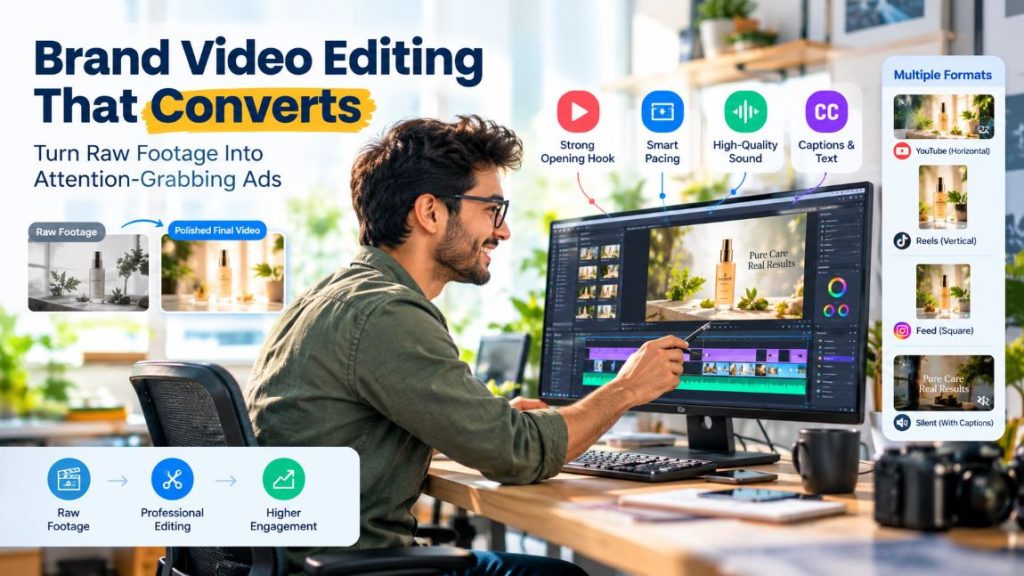
- The first three seconds. On social platforms and pre-roll, the opening decides whether anyone sees the rest. A strong edit leads with the hook, not the logo.
- Pacing. Every shot that stays a beat too long gives the viewer a reason to leave. Tight cutting keeps attention without feeling rushed.
- Sound. Clean voice, balanced music and well-placed sound design make a video feel expensive. Poor audio makes even beautiful footage feel amateur.
One shoot, many formats
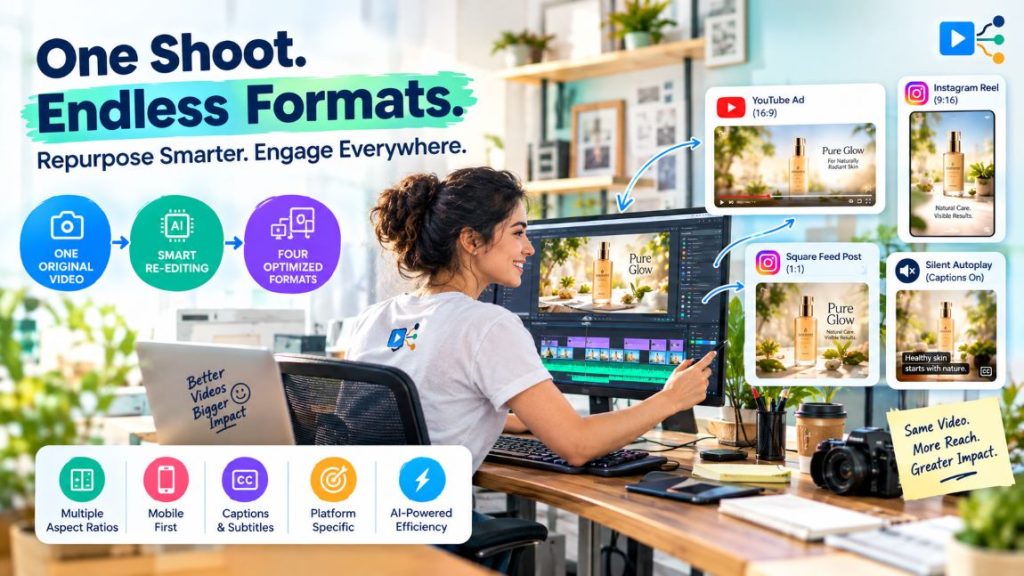
A single commercial now has to work as a horizontal YouTube ad, a vertical Reel, a square feed post and a silent autoplay clip with captions. Each needs its own framing, length and text placement. Cropping the main version is not enough; each format should be re-cut for how people actually watch it. AI-powered tools are making video production faster and more accessible for businesses. By exploring AI video platforms, marketing teams can simplify content creation, adapt videos for different channels, and develop engaging brand videos more efficiently.
In-house or outsourced?
An in-house editor makes sense when you publish video every day. For most businesses, the volume is uneven: a campaign this month, nothing next month. Paying a salary for that pattern is hard to justify, and asking a marketing manager to edit on the side usually costs more in lost time than it saves.
That is why many brands hand post-production to a specialist. A team focused on commercial video editing works with advertising formats every day, knows the platform requirements, and can turn one shoot into a full set of deliverables while your team stays on strategy.
What to prepare before you brief an editor
- The goal of the video and the one action you want viewers to take.
- The platforms and formats you need.
- Brand assets: logo, fonts, colours, music licences.
- Two or three reference videos you like, with a note on why.
- A realistic deadline and the number of revision rounds you expect.
A clear brief shortens the process and improves the result more than any amount of feedback afterwards.
The bottom line
Video budgets are wasted when footage is treated as the finished product. Put as much care into the edit as into the shoot, and the same material will work considerably harder for you.