





Usually, before you start building a startup product, you must make a hard decision, which is how much you should build before the marker tells you that the idea is worthy of more investment. An MVP focuses on the smallest, useful product that becomes easily accessible to users, generates evidence, and guides the next round of development.
What Startups Need from an MVP Partner
When founders compare options, the value of a startup MVP development service depends on more than programming capacity because discovery, feature prioritization, UX design, testing, and launch planning all influence what the first release actually teaches. The right partner should help a startup define the problem, challenge unnecessary scope, and build enough functionality to test the core business assumption.
Top 10 MVP Development Companies for Startups
1. Freshcode
Freshcode offers to develop MVP for startups, starting from discovery through launch and iteration. It does market research for you, select features, develop UX/UI prototypes, user testing, analytics, and provides post-launch support with mobile, web, cloud, and AI capabilities that are available for different product types. The company informs that MVP projects commonly take six to twelve weeks, which usually depends on the scope of the product and how complex it is going to be.
2. Thoughtbot
Thoughtbot offers product strategy, design, and engineering for early-stage software. Its MVP Shaping Sprint focuses on validating assumptions, speaking with target users, choosing architecture and technology, and building a roadmap before larger development begins. The company also works with founders who already have AI-generated or -code prototypes and need to turn them into maintainable production software.
3. Netguru
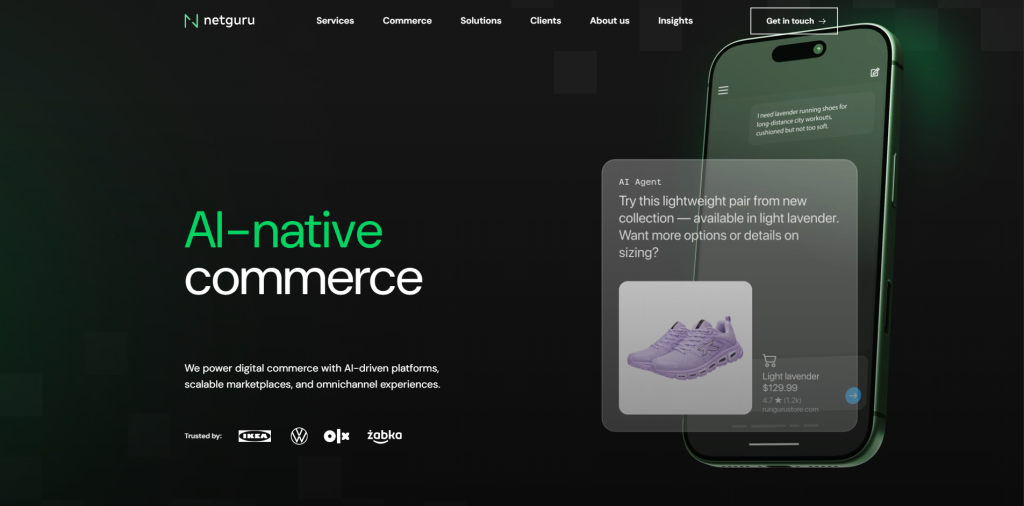
Netguru offers everything from discovering, designing, and prototyping to agile development, testing, and product expansion as part of its MVP process. Its published technology options include React, Flutter, React Native, Firebase, Webflow, and serverless architectures.
Netguru is particularly relevant when a startup needs design and engineering under one delivery model. It is also good for businesses that expect an MVP to evolve into a larger web, mobile, or SaaS product.
4. Designli
Designli focuses strongly on startups and software-driven businesses, including nontechnical founders. Its SolutionLab discovery process helps shape project requirements and prototypes before development, while its startup offering covers MVPs, mobile apps, SaaS products, and custom software.
The company also supports code takeovers. This matters when a founder has an existing product that needs stabilization or continued feature development.
5. ScienceSoft
ScienceSoft offers MVP planning, development, and post-launch evolution for startups, software product companies, and enterprises. It offers services that cover architecture, UX/UI, coding, quality assurance, security configuration, deployment, and later product expansion.
It is one of the most practical candidates for MVPs on the list as it also works across cloud, AI, data, IoT, and cybersecurity. It offers substantial infrastructure, integration, security, or compliance requirements.
6. BairesDev
BairesDev provides MVP development alongside broader software engineering services for startups. Its current offering includes market research, requirements gathering, feature prioritization, analysis, QA, support, and maintenance, while its startup practice covers new MVPs and the stabilization of existing early products. Its nearshore model is especially relevant to North American startups that want significant working hour overlap with external engineers.
7. Intellectsoft
Intellectsoft structures MVP development around idea validation, feature prioritization, design, engineering, testing, and refinement. The company emphasizes Agile delivery so scope and priorities can evolve as information changes.
Its broader experience includes web, mobile, cloud, backend, and data related development. This gives startups access to multiple disciplines without assembling separate vendors for each part of the first release.
8. Purrweb
Purrweb focuses on MVPs for startups and businesses. Its services cover product discovery, UX and UI design, development, QA, release, support, and later improvements.
The company’s technology focus includes React, React Native, and Electron, and the company publishes a typical MVP timeline of roughly three to four months. This approach suits founders looking for a compact product team that handles both interface design and implementation.
9. 10Clouds
10Clouds combines product discovery, UX and UI design, development, QA, and product delivery management. The company has a structured mobile MVP offering built around a 40-day delivery target, and its broader work includes web applications, fintech, AI, and product design. It is worth considering for startups that value a defined delivery framework and want design, product, and engineering disciplines represented in the same engagement.
10. Altar.io
Altar.io takes a product-focused approach to startup development, with considerable emphasis on defining the value proposition and reducing unnecessary scope before coding. Its published MVP process starts with product scoping and user understanding, then moves toward design and development. That emphasis makes the company relevant to founders who need help translating a business idea into a focused product.
How to Compare MVP Providers Before Signing
Start With the Question Your MVP Must Answer
An MVP should test a specific assumption, such as whether users will adopt a workflow, pay for a service, or trust an automated process. Ask each provider how it would reduce the first release to that learning objective. A team that immediately accepts a long feature list without challenging priorities may be treating the project as ordinary software delivery rather than product validation. Effective feature prioritization helps founders focus the MVP on the functionality that delivers the most value and supports the core business objective.
Examine What Happens After Launch
The first release is only useful if the startup can learn from it and respond. Ask who configures analytics, how user feedback is captured, how bugs are prioritized, and whether the same team can continue development.
Also clarify source code ownership, documentation, cloud access, intellectual property terms, and the process for transferring the product. This will allow you to build an internal engineering team as your business grows.
In a Nutshell
There is no single best provider for every startup. Every startup has different priorities or preferences. A fintech founder may want stronger security and compliance experience. On the other hand, the founder of a consumer app may focus more on rapid prototyping and product design. A technical founding team must be equipped with engineering capacity, while a non-technical founder may benefit more from discovery, product management, and structured decision-making.
A disciplined selection process also makes it easier to compare proposals that package discovery, design, engineering, and support in different ways. Compare companies against the problem you need to validate and not against a generic list of features. The strongest engagement is one that controls scope, preserves future options, collects useful evidence, and gives the next investment decision a stronger foundation.