






Many MSPs will have referral-based and relationship-based sales, or maybe the occasional lead from their website. However, this can make it difficult to know how much new business you will get.
To maintain a consistent pipeline of new customers, MSPs need to target companies with genuine IT service requirements. Building relationships with key decisionmakers and converting qualified leads into clients helps create a more predictable customer acquisition process.
A structured lead generation funnel can help MSPs achieve this by connecting marketing activities with lead qualification, nurturing, and sales conversion. This approach creates more opportunities to generate recurring revenue.
What Is an MSP Lead Generation Funnel?
An MSP lead generation funnel is a structured process that guides potential customers from discovering a managed IT provider to signing up for its services.
As an MSP doesn’t normally sell low-cost items, the buying process can be quite complicated. Potential clients might need to consider what they need for their Cybersecurity, compare service contracts, look at their current infrastructure, and get approval from management.
A good funnel will take these into account and ensure your leads stay interested.
The Main Stages of an MSP Lead Generation Funnel
The IT services sales pipeline will typically have 5 stages:
Raising Awareness
Businesses find your Managed Service Provider via search, word of mouth, marketing, or professional connections.
Lead Capture
Those interested in your business will give you their details, ask for an evaluation, or book a consultation.
Qualifying
You will evaluate if your potential client fits into your ideal customer persona.
Nurturing
Marketing and sales will provide useful information.
Conversion
Qualified leads will be converted and become managed service clients.
Having distinct stages within the sales pipeline will make it easier to see where your potential clients are losing interest or may need extra support.
Attract the Right Prospects Through Search and Digital Marketing
The first step to generating quality leads for your MSP is to target the right businesses.
A local accountancy firm will have different needs to a large manufacturer looking at cyber security monitoring. Ensuring your marketing is tailored will improve effectiveness.
Don’t just try to generate traffic to your site. Focus on attracting the right companies within your area, offering the right services and working with your ideal industries.
Use SEO to Reach Businesses Searching for IT Support
SEO will help you attract organizations who are currently researching technology services.
Using the right keywords such as ‘managed IT services for law firms’, ‘outsourced IT support’ or "cybersecurity services in Chicago."
Your service pages should clearly state what you offer, who you offer, and how to get help. Using industry-specific content will help you provide content to answer common questions like regulations, migrating to the cloud, and business continuity.
If you don’t have any in-house SEO knowledge, then you can use an expert MSP SEO service to ensure your keywords, technical improvements, and tracking of quality organic leads are all in place.
Ensure your website is technically optimized so it’s easy to navigate, crawlable, mobile-friendly, and easy to access. This will help search engines and potential clients understand your site.
Support Organic Search with Other Marketing Channels
SEO can be used in conjunction with LinkedIn outreach, referrals, and targeted paid marketing.
If you specialize in healthcare IT, then you can provide some cybersecurity tips and connect with healthcare administrators on LinkedIn.
This will help you target the right decisionmakers using multiple appropriate channels.
Turn Website Visitors into Leads
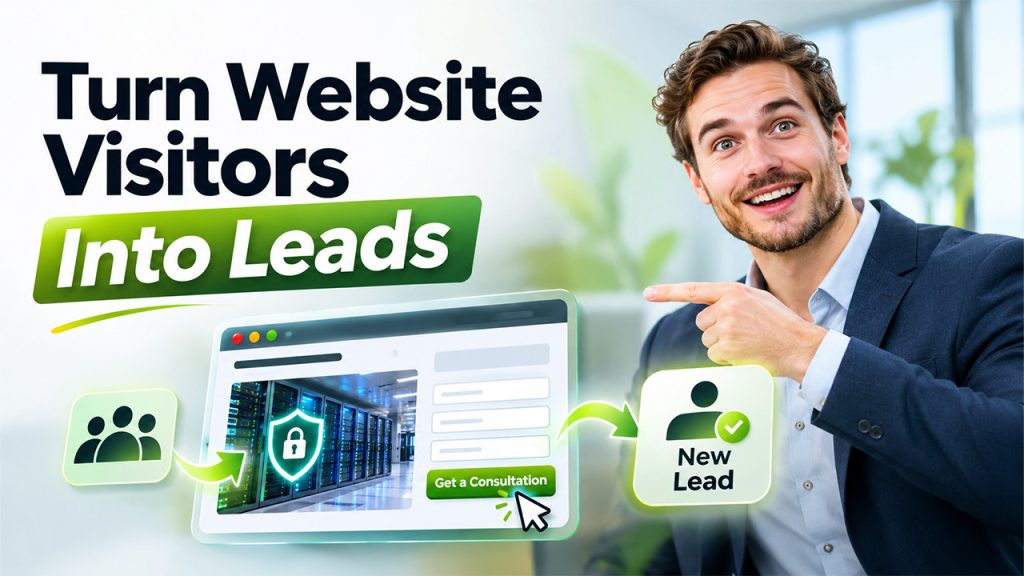
Generating traffic is great, but you need a good reason for people to get in touch.
Creating specific landing pages can help turn website traffic into leads. This could be a page specific to your Cybersecurity offering and highlighting common issues faced with security to prompt them to book a consultation.
Good pages will have a clear description of what you offer, evidence to show you have experience in the area, and a clear CTA.
The contact form should collect enough information to enable you to follow up without putting up barriers. Don’t ask for too much technical information to begin with, as this can put people off.
The contact form should collect enough information to enable you to follow up without putting up barriers. Don’t ask for too much technical information to begin with, as this can put people off. You can use lead capture forms to collect essential prospect details without overwhelming visitors.
Offer a Relevant IT Assessment or Consultation
Not everyone will want to request a proposal.
Offering them an initial Cybersecurity assessment, infrastructure review, or IT discovery call can be a more approachable way to move forward.
If they are a growing business facing regular network outages, they may appreciate an infrastructure review first.
By matching your offering to what they are concerned about now, it makes the transition from website to potential customer feel more natural.
Qualify Leads Before Sending Them to Sales
Not every inquiry represents a suitable sales opportunity.
A business seeking occasional computer repairs may not match an MSP focused on long-term managed services contracts. Similarly, an organization outside the provider's service area might be difficult to support.
MSP lead qualification helps identify which prospects deserve immediate sales attention.
Useful qualification criteria include company size, industry, geographic location, required services, decision-making authority, and expected purchasing timeline.
An MSP might prioritize a 75-employee company planning to replace its IT provider over an inquiry from someone seeking a one-time software installation.
Track Lead Qualification in Your CRM
A customer relationship management (CRM) system helps organize inquiries and track their progress.
A practical CRM for managed service providers can distinguish between:
- Initial inquiries: Contacts who have expressed interest but have not been evaluated.
- Marketing-qualified leads: Prospects matching relevant criteria and demonstrating meaningful interest.
- Sales-qualified leads: Prospects whose requirements, fit, and purchasing intentions justify direct sales engagement.
Each qualified lead should have an assigned owner, documented requirements, and a clear next action.
Consistent records make handoffs easier and reduce the likelihood of promising opportunities being overlooked.
Nurture Prospects With CRM and Marketing Automation
Businesses rarely choose an MSP based on a single website visit or email.
Switching IT providers can involve reviewing contracts, assessing security risks, coordinating employees, and planning service transitions. Even interested prospects may postpone their decisions until existing agreements expire or budgets become available.
Lead nurturing keeps communication relevant during this period.
MSPs can share cybersecurity guidance, industry-specific case studies, service explanations, and practical advice about IT planning.
CRM segmentation helps make these communications more useful. A manufacturing company exploring network monitoring should receive different information from a professional services firm concerned about cloud security, supported by effective CRM data segmentation.
Automate Follow-Ups Without Losing Personalization
MSP marketing automation can simplify repetitive tasks, including consultation confirmations, meeting reminders, and follow-up scheduling.
For example, a prospect requesting an IT assessment might receive an automatic confirmation followed by a personalized message from a sales representative.
If the prospect isn't ready to proceed, the CRM can schedule a later follow-up based on the agreed timeline.
Automation works best when it supports genuine conversations. Messages that acknowledge a prospect's specific infrastructure challenges or business priorities are more useful than generic sales sequences.
Convert Qualified Leads Into MSP Clients

Converting qualified prospects requires understanding their current IT environment and explaining how the MSP can address their needs.
Discovery calls should explore existing systems, recurring problems, security requirements, internal resources, and expectations for ongoing support.
This information helps sales teams prepare proposals that reflect actual business requirements rather than generic service packages.
A proposal might cover help desk support, endpoint management, cybersecurity monitoring, response commitments, onboarding responsibilities, and service pricing.
Prospects may also worry about downtime or disruption when changing providers. Explaining the transition process, responsibilities, and communication plan can help address these concerns.
The conversion stage typically ends with a managed services agreement and an agreed onboarding plan. Successful onboarding then establishes the foundation for a longer-term customer relationship.
Measure and Improve Your Lead Generation Funnel
To ensure your lead generation funnel is working effectively, you will want to assess how well your marketing activities are generating high-quality opportunities and clients.
While website visits and lead generation volumes are useful pieces of information, they don’t necessarily tell you if your marketing activities are attracting the right businesses.
More insightful metrics include:
Number of qualified leads
Number of leads that match your customer criteria.
Number of Meetings Set
Number of high-quality prospects that have booked in some form of sales conversation.
Conversion Rate
The percentage of leads within a specific set of leads that have converted to paying customers within a set period of time.
Cost per Customer
Overall sales and marketing costs associated with acquiring a customer. Divide by the number of new paying customers in the reporting period.
Pipeline Value
Value of all current sales opportunities. This should be based on a set metric like annual contract value.
New Customer MRR
Monthly recurring revenue generated by new managed services customers. Excludes one-off setup or project fees.
Ensure that metrics are calculated using the same definitions in each reporting period. Be aware of the lag between marketing activity and signing clients.
CRM reporting can also help determine where potential customers are getting lost.
If you have a high amount of website traffic but few consultations, then your landing pages may not be performing well. If you are having lots of discovery calls but aren’t signing any deals, then you may be having issues with qualifying, pricing, or sales pipeline optimization.
By identifying trends like this, you can improve your funnel at each stage.
Next Steps
The first step to having a reliable lead generation funnel for your MSP is to understand which businesses are most likely to benefit from your services.
Create an ideal customer profile, review your current sources of leads, and make sure your service pages address the correct IT issues. Ensure it is easy for interested visitors to ask for assessments or consultations.
Ensure there are clear stages for qualifying in your CRM and who is responsible for following them up. If possible, automate processes to reduce admin.
Track high-quality opportunities, conversions, and recurring revenue. By improving each stage of your funnel, you can create a more repeatable process for acquiring new customers for your MSP.