





Your sales rep closes a deal from a hotel lobby. Your account manager pulls up the CRM at a coffee shop. Your ops lead logs into the pipeline from an airport. Each of those moments is a potential exposure point, and a VPN (virtual private network) is what stands between your customer data and whoever else is on that network.
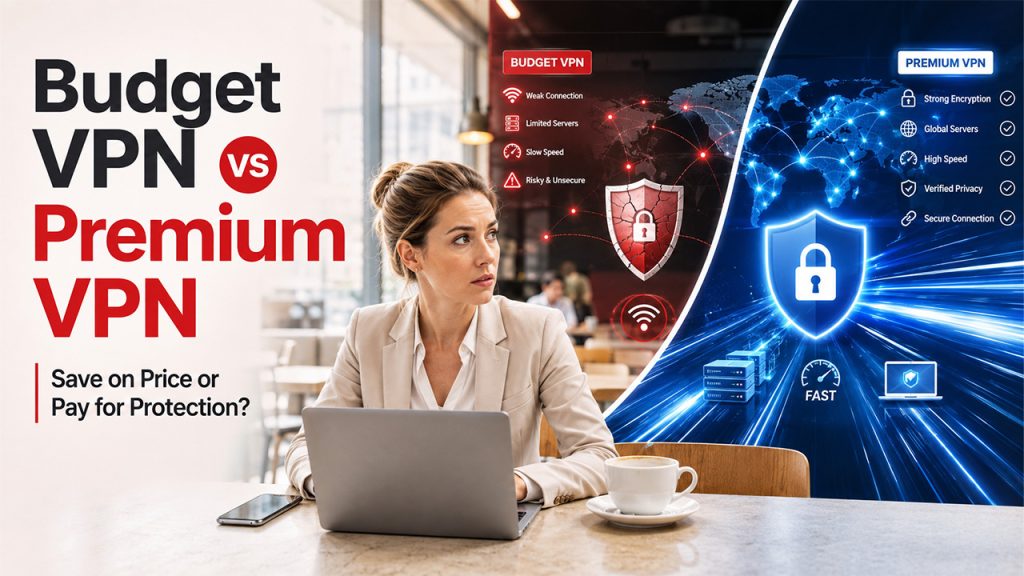
When evaluating Budget VPN vs Premium VPN options, businesses need to look beyond monthly subscription costs. Security, privacy, performance, and long-term reliability all play a major role in determining which solution delivers the best value.
A VPN encrypts data, enables remote employees to work safely on unsecured connections, and allows for strict access management. But choosing the right VPN for your business can be difficult with so many budget and premium options. Budget VPNs may be affordable for SMBs, but they carry real risks. Premium VPNs offer a secure service with extensive features to maintain privacy.
Understanding what you can expect for your money will help you make an informed decision that benefits your business.
Budget VPN vs Premium VPN: Understanding the Key Differences
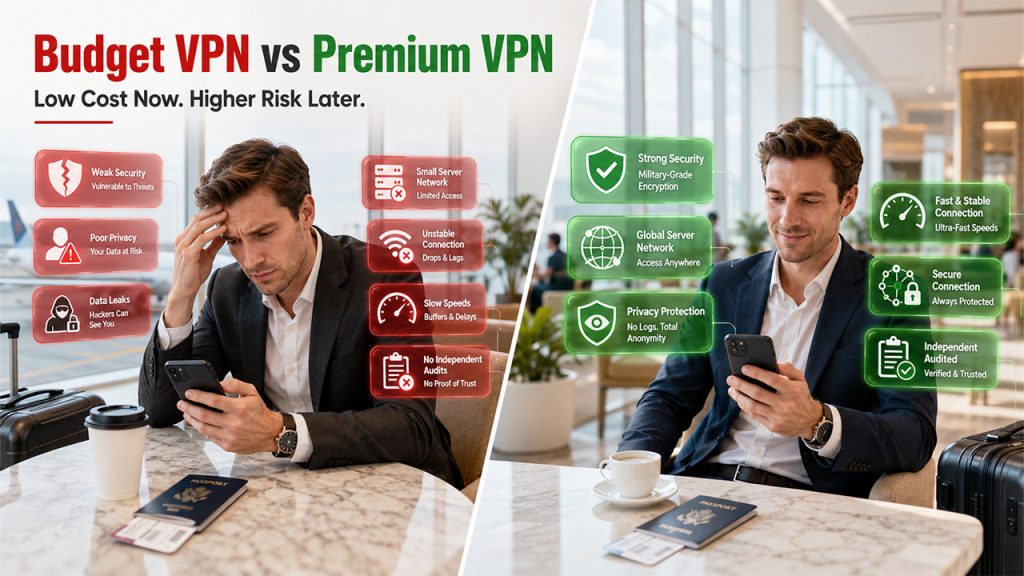
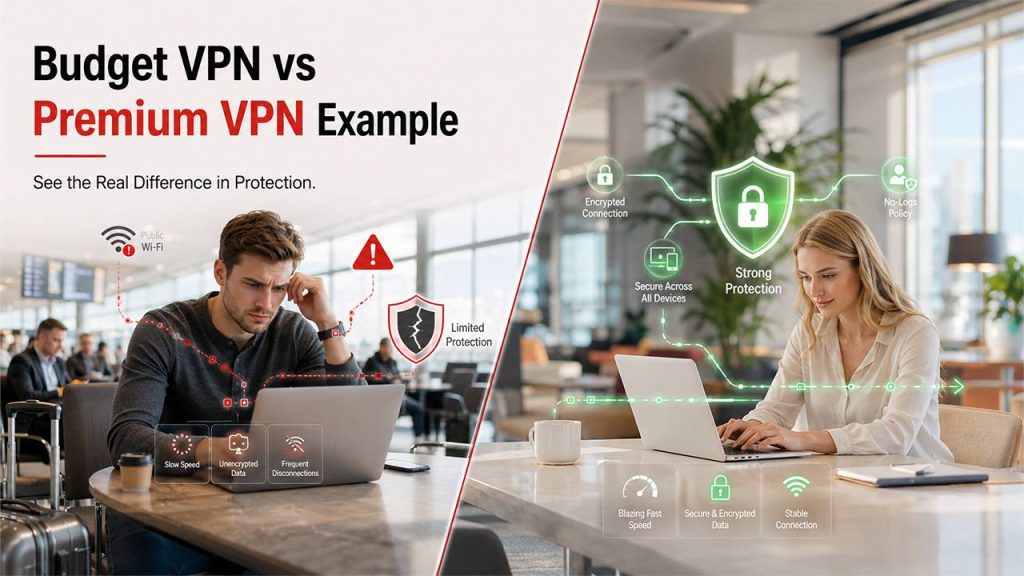
The debate around Budget VPN vs Premium VPN isn't just about price. While budget services reduce upfront costs, premium VPNs invest in stronger security, larger server networks, and advanced privacy protections that many businesses rely on.
Budget VPNs: What Sacrifices Do They Make for a Cheaper Service?
In a Budget VPN vs Premium VPN comparison, lower-cost services often achieve affordability by limiting infrastructure, security investments, or privacy features.
Budget VPNs appeal to businesses looking for the most competitive option. But providing a cheap service requires sacrifices to keep costs down, creating several serious drawbacks.
Weak Security
According to Zimperium zLabs’ 2025 study of 800 free mobile VPNs, a “substantial share” of the apps have security and privacy issues. Common problems include permission abuse, risky behaviors and APIs, and misleading and missing labels.
Low-cost VPN providers may rely on outdated encryption protocols, which can leave your network vulnerable to breaches.
The cost of addressing malware infections, ransomware, and other attacks would far outweigh the price of a premium subscription. But a security breach can also negatively affect brand reputation, leading to lost business over time.
Unreliable Privacy
Zimperium zLabs’ study found that 25% of the free mobile VPNs lacked valid privacy manifests. Budget VPNs may provide less transparency than premium alternatives around how they handle your data. Some may sell data to marketers to compensate for their low-cost subscriptions.
If your data is sold, you may be bombarded with repetitive targeted advertising. But a bigger problem is the potential security risk. Sold data often contains identifiable information, which could threaten your security if stolen.
Smaller Server Networks
Smaller VPNs typically have weaker infrastructures with fewer servers. As low pricing can draw users in high numbers, budget VPN services are likely to become overcrowded.
Overwhelmed servers can have a negative impact on connection quality, and your productivity and efficiency could suffer. That would cost you time and money in the long run.
Lack of Independent Audits
VPN companies should schedule independent audits to verify that they provide a secure service that matches their claims. Audits demonstrate that operators comply with federal and state regulations, providing users with peace of mind. But some low-cost VPNs may bypass audits due to the expense involved.
As such, you have no idea whether a VPN will handle your data with care and keep your connection safe.
Premium VPNs: What Investments Do Leading Brands Make for Quality?
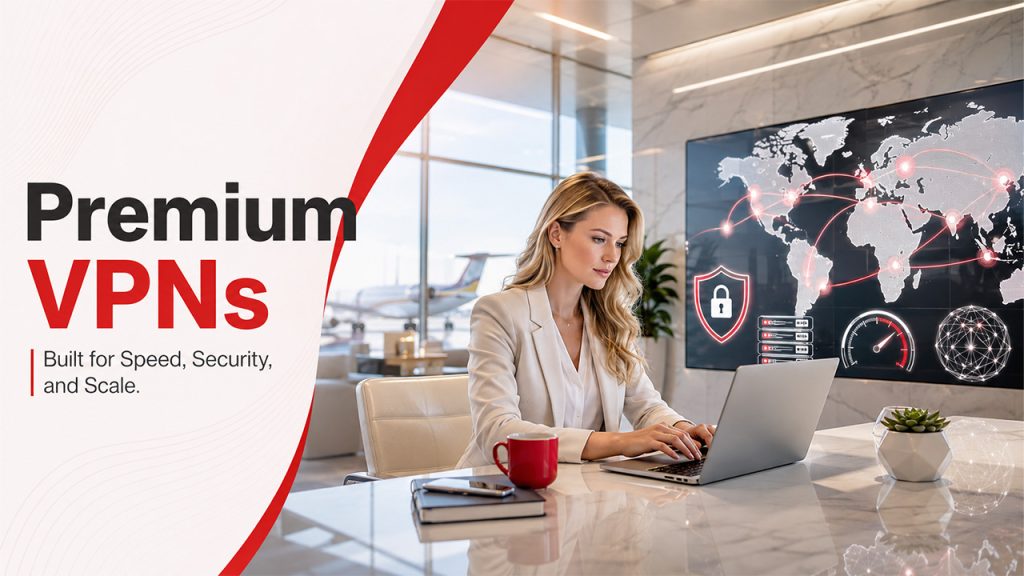
A Budget VPN vs Premium VPN comparison shows that premium providers generally invest more heavily in encryption, independent audits, threat protection, and global server infrastructure.
Leading VPN companies channel money into providing a high standard of service. Their premium subscriptions allow them to invest in key areas and offer users greater value than budget alternatives can match.
Maintaining a Global Server Infrastructure
Premium VPN services have thousands of servers all over the world. Cheap VPNs typically maintain a smaller set of servers, meaning that users may connect to one thousands of miles away.
Connecting to a VPN server closer to your current location can deliver the fastest speeds and signal strength. Whether streaming media in presentations or working remotely, connecting to a larger server infrastructure will provide a smooth experience.
Building Advanced Security Features
According to the Pew Research Center 2025 report, 73% of U.S. adults have experienced an online attack or scam. Almost half of these individuals had credit or debit card details stolen, which led to fraudulent charges. Other cases involved ransomware and unauthorized account access.
Premium VPNs implement military-grade encryption to safeguard user data. They also use security features to prevent malware infections and other common threats. For example, a kill switch will block internet access to prevent accidental data leaks if your VPN connection drops.
Premium VPN companies invest in research and development to identify new ways to minimize security risks. Budget VPNs often lack the resources to innovate new solutions.
Commissioning Audits to Verify No-Log Policies
Premium VPNs embrace a no-log service to improve user privacy. Subscribers want to know that they aren’t being spied on while they browse and handle sensitive data.
Premium VPNs commission independent auditors to review their service and verify that no logging takes place. Regular audits are required to maintain long-term trust and a strong reputation.
Budget VPN vs Premium VPN Example: Why NordVPN Stands Out Premium VPN Example: NordVPN
To understand the practical differences in a Budget VPN vs Premium VPN comparison, consider NordVPN, one of the industry's most established providers.
You can choose from multiple types of VPN services, including personal VPNs. NordVPN is one of the most well-known and trusted personal VPNs on the market.
NordVPN has passed multiple independent no-logs audits to verify its reliable privacy, and it uses next-generation encryption to maximize security.
Its next-gen antivirus tool blocks ads, trackers, and unsafe domains, preventing potential fraud. The Dark Web Monitor continuously monitors your assets (e.g., email address) to detect possible data leaks.
NordVPN’s Prime plan is an all-in-one solution to help you stay safe online, with anti-malware and browsing protection. The Prime plan also includes email monitoring, scam call protection, tracker blockers, and cloud storage.
Choosing the Right VPN for Your Operational Goals and Budget
Consider your budget carefully when exploring VPNs, but don’t let pricing be the sole reason for choosing a service. It is also worth evaluating different VPN alternatives to determine which solution best aligns with your organization's security requirements and operational goals.
Budget VPNs have competitive pricing, but a lower rate comes with major tradeoffs. Your sensitive data may be compromised by ineffective security, and your browsing activities could be sold to multiple marketers.
But premium VPNs deliver service of a higher standard, safeguarding your information while you browse with deep security features. You can take advantage of multiple types of threat identification and protection, allowing you to work in confidence.
Conclusion
For organizations handling customer information, financial data, or remote workforces, choosing a premium VPN can reduce cybersecurity risks and deliver better long-term value than relying solely on a lower-cost alternative in the Budget VPN vs Premium VPN debate.