





Running a successful e-commerce operation in 2026 means managing an increasingly complex visual content pipeline. Product images need to work across multiple channels — your own storefront, marketplaces, paid social campaigns, email marketing — each with different format requirements, aesthetic contexts, and audience expectations. Maintaining visual consistency across all of these touchpoints while producing content at the volume modern e-commerce demands is one of the most resource-intensive challenges that growing online businesses face.
The traditional answer has been to hire designers or agencies to handle visual adaptation — taking a core set of product images and producing the variations needed for each channel and campaign. That approach works, but it doesn't scale gracefully. Every new product launch, seasonal campaign, or channel expansion multiplies the production demand, and the cost and timeline of traditional design workflows multiply with it.
AI image-to-image generation addresses this challenge at the production level, and for e-commerce businesses and the CRM-driven marketing operations that support them, the practical implications are significant.
What AI Image to Image Generation Means for E-Commerce Teams
The core capability is using an existing image as both a visual anchor and a creative starting point — directing the AI to preserve the key elements that matter (the product, the brand's visual character, the compositional logic) while transforming the surrounding context, style, or aesthetic treatment. This is fundamentally different from generating images from scratch, because it works with what you already have rather than requiring new creative production from the ground up.
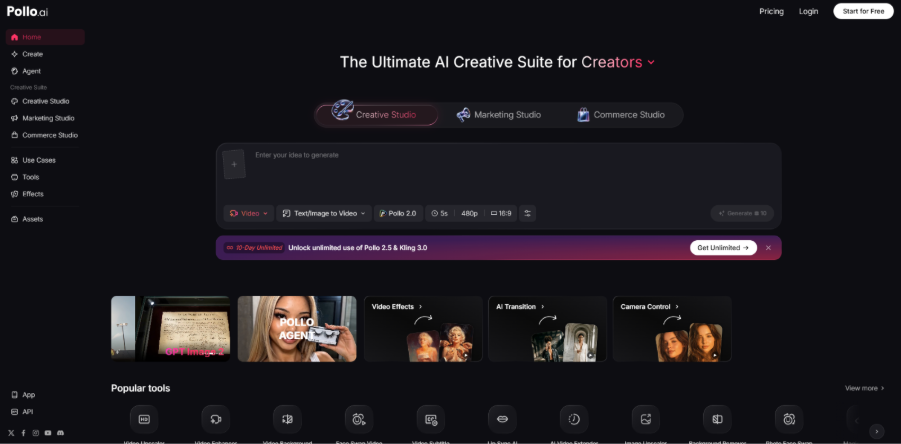
Pollo AI's dedicated AI image to image generator inside its Creative Studio brings this capability into a multi-model environment that matters practically for e-commerce applications. Different generation models have different strengths — some handle product imagery with reflective surfaces more accurately, others excel at lifestyle context generation, others produce more controlled style transfers across varied input types. Having access to multiple models within one platform on shared credits means e-commerce teams can route different transformation tasks to the model best suited for each product category and output type rather than being constrained by a single tool's limitations.
For businesses using CRM data to personalize marketing content across customer segments, this capability connects directly to campaign execution. The same product can be presented with different background treatments, lifestyle contexts, or visual aesthetics for different customer audiences — generating those variations through AI transformation rather than separate photoshoots makes segment-specific visual personalization operationally viable for the first time for most mid-market e-commerce businesses.
Style Consistency Across Customer Touchpoints
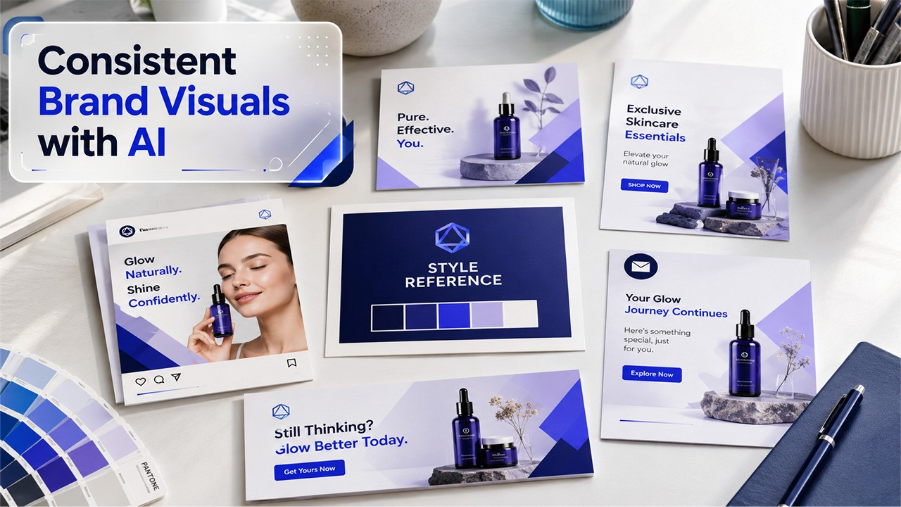
One of the most direct applications of AI image-to-image generation for CRM-driven marketing is visual consistency management across the customer lifecycle. When a customer's journey takes them from a social media ad to a product listing to an email campaign to a retargeting ad, the visual experience at each touchpoint shapes their perception of the brand's coherence and professionalism.
Maintaining that consistency traditionally requires either very disciplined asset management — ensuring every piece of content is produced from the same source materials with the same style guidelines — or significant design oversight across every content production step. AI image transformation offers a different path: using a consistent style reference as the transformation anchor across all content types ensures that assets produced for different channels and at different times share a coherent visual language, regardless of when or how the original source images were created.
For e-commerce businesses managing large catalogs with products added regularly, this is particularly valuable. New products can be transformed to match the established visual language of existing catalog photography automatically, rather than requiring a dedicated photoshoot for every new SKU that matches the brand's aesthetic standard.
Commerce Studio: Connecting Transformation to Full Product Visual Production
AI image-to-image transformation sits within a broader product visual content workflow that Pollo AI's Commerce Studio supports end to end. Beyond style transformation, the studio handles product image enhancement, background generation, lifestyle placement, and e-commerce poster creation — the complete range of product visual content types that a professional online store requires.
For e-commerce teams that have historically managed separate tools for each of these production tasks, the consolidation under one platform with shared credits changes the operational complexity significantly. A product image can move from enhancement through background generation to style transformation to promotional poster creation within a single platform session, with each step feeding naturally into the next. The Marketing Studio extends this further, connecting the product visual production pipeline to advertising and promotional video content within the same environment.
Pixlr AI and Understanding the Broader Toolkit
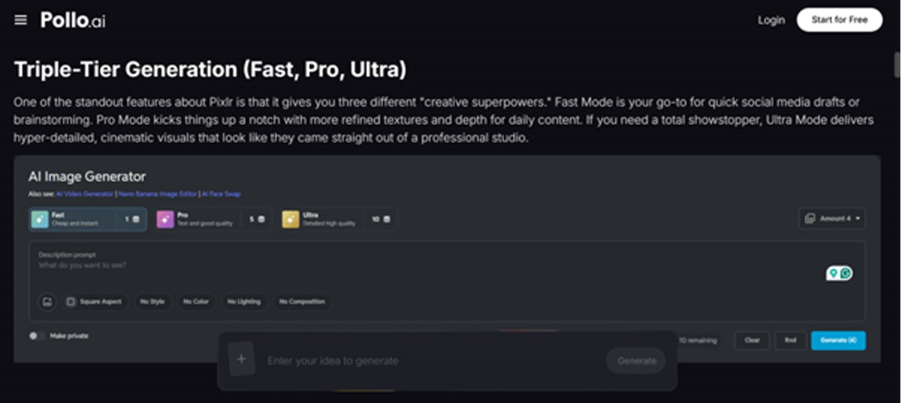
Building a complete view of available AI image tools helps e-commerce and marketing teams make more informed decisions about which capabilities belong in their workflow. Pixlr AI has established a strong position in accessible AI image editing, with a user-friendly interface that handles background removal, generative fill, and design-oriented image editing particularly well. For teams whose primary visual content need is editing and retouching individual images rather than applying systematic style transformations across asset sets, it's a legitimate option worth evaluating on its specific strengths.
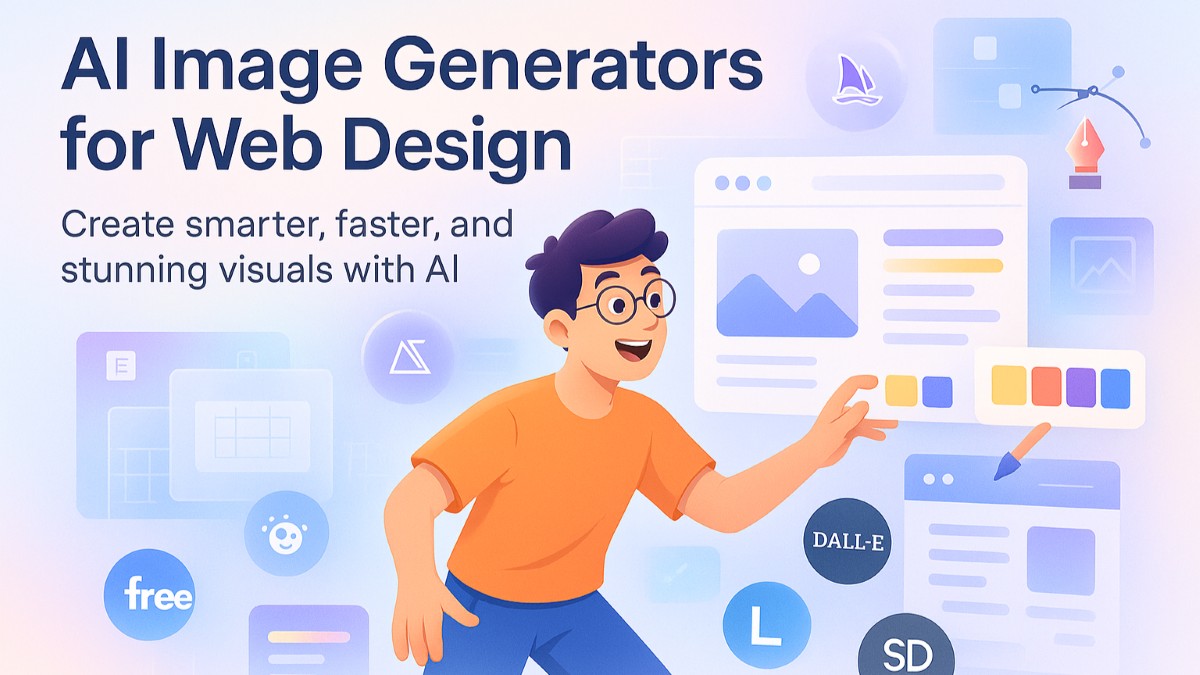
For businesses using CRM data to personalize marketing content across customer segments, this capability connects directly to campaign execution. The same product can be presented with different background treatments, lifestyle contexts, or visual aesthetics for different customer audiences — generating those variations through AI transformation rather than separate photoshoots makes segment-specific visual personalization operationally viable for the first time for most mid-market e-commerce businesses. AI image generators for web design have evolved well beyond basic filters — modern tools now handle style transfer, background generation, and product-specific transformations within a single workflow.
Connecting Visual Content Production to CRM-Driven Marketing
The intersection of AI visual content generation and CRM-driven marketing is where some of the most interesting efficiency gains are emerging for e-commerce businesses. CRM data identifies which customer segments respond to which types of visual content — lifestyle imagery versus clean product shots, aspirational contexts versus practical demonstration. AI image transformation makes it practical to produce the segment-specific visual variations that this insight calls for, An Higgsfield AI Image Generator makes it practical to produce the segment-specific visual variations that this insight calls for rather than producing one set of campaign visuals and hoping it resonates across all audiences.
For businesses using SuiteCRM, SugarCRM, or similar platforms to manage customer relationships and marketing campaigns, the ability to connect customer segment data to visual content production decisions — and to execute those decisions quickly through AI generation — represents a meaningful step toward genuinely personalized visual marketing at scale.
Building a Scalable Visual Content Operation
The e-commerce businesses getting the most consistent value from AI image generation tools in 2026 have made a structural shift in how they think about visual content production — treating it as a systematic workflow rather than a series of individual design projects. That means defining which asset types and transformation tasks are suited to AI generation, establishing quality review criteria before assets go to publication, and building prompt and style reference libraries for recurring content formats.
For teams already applying systematic thinking to CRM operations and marketing automation, this workflow design approach is familiar territory. The generation capability is the new variable; the operational discipline around it draws on exactly the kind of process thinking that effective CRM-driven marketing already requires. In 2026, the e-commerce businesses that connect these two capabilities — CRM-driven audience insight and AI-powered visual content production — into a coherent operation are building a compounding advantage over those that manage them separately.