





Online privacy has become something that most people care about, but not everyone can afford to pay for it every month. VPN subscriptions can add up, and if you only need basic protection, committing to a paid plan feels unnecessary. The good news is that you don't have to. Because the free VPN space has now expanded. There are several free VPN alternatives available that protect you instead of exploiting you. However, there are also a lot of bad ones. So, before you download whatever first shows up in your app store, it helps to understand what a VPN actually is, what it does for you, and how to tell the good ones from the dangerous ones.
That is exactly what this blog covers.
What Is a VPN and How Does It Work?
VPN stands for Virtual Private Network. To put it more simply, it is a tool that creates a secure, encrypted connection between your device and the internet. When you use a VPN, your internet traffic gets routed through a server in a different location. This adds an extra layer to your real IP address, which makes it much harder for hackers, your internet provider, advertisers, or government agencies to track your activities online.
It is like a tunnel. Your data travels through it privately and stays hidden from the outside world. Sales teams and remote professionals accessing VPN for CRM understand this risk better than most. Businesses using a NordLayer VPN gateway can securely connect employees to internal systems and company resources while maintaining encrypted communications across distributed teams. What happens when you don’t have a VPN? It basically means that your connection is open and easy to attack. Anyone with the right tools can see which websites you visit, what you download, and where you are connecting from. What happens when you don’t have a VPN? It basically means that your connection is open and easy to attack. Anyone with the right tools can see which websites you visit, what you download, and where you are connecting from.
Why People Use VPNs: Key Benefits for Online Privacy

People use VPNs for more reasons than they realize. Here is why online privacy tools like VPNs have become so widely adopted:
Protect Your Data on Public Wi-Fi: When you connect to a coffee shop or university network without a VPN, it exposes your information to a real risk. A good VPN encrypts your data so that when and if somebody intercepts it, they won’t be able to read it. Understanding data security controls can help you see why encryption is the first line of defense.
Mask Your IP Address for Anonymous Browsing: Your IP address informs others about your approximate location and can be used to track where you live or your browsing activity. That's where VPN comes in. They replace it with the IP of the VPN server, which allows you to browse anonymously.
Bypass Geo-Restrictions and Access Global Content: Some content is locked to specific countries. A VPN lets you connect through a server in another region and access that content as if you were physically there.
Prevent ISP Tracking and Monitoring: Internet service providers track ISPs to monitor and record everything that you do online. A VPN can block that kind of visibility into your private life and keep your browsing protected.
Stay Safe on Unsecured Networks: Whether you are travelling or working remotely, a VPN adds a critical layer of internet security.
Access Blocked and Censored Websites: Certain platforms are not available in some regions for users. Through VPN, you can get around those restrictions and access websites that are censored.
5 Best Free VPN Alternatives You Can Trust in 2026
There are several VPN alternatives out there; however, not every VPN is worth your trust. Many completely free VPNs sell your data to make money, which defeats the entire purpose of having a VPN. Below are a few free versions of reputable paid services. They are also called freemium VPNs. They do have limitations, but they are legitimate, safe, and genuinely useful.
Best Free VPN Alternatives Comparison Table
| VPN | Data Cap | Server Locations | Simultaneous Connections | Best For |
|---|---|---|---|---|
| ProtonVPN | Unlimited | 5–6 | 1 | Privacy & unlimited browsing |
| Windscribe | 10 GB/month | 10–11 | Unlimited | Multiple devices |
| PrivadoVPN | 10 GB/month | 10–13 | 1 | Streaming |
| TunnelBear | 500 MB–2 GB/month | 47 | 1 | Wide server access |
| hide.me | Unlimited | 8 | 1 | No-registration browsing |
Let’s explore these free VPN alternatives in detail:
1. ProtonVPN — Best Overall Free VPN
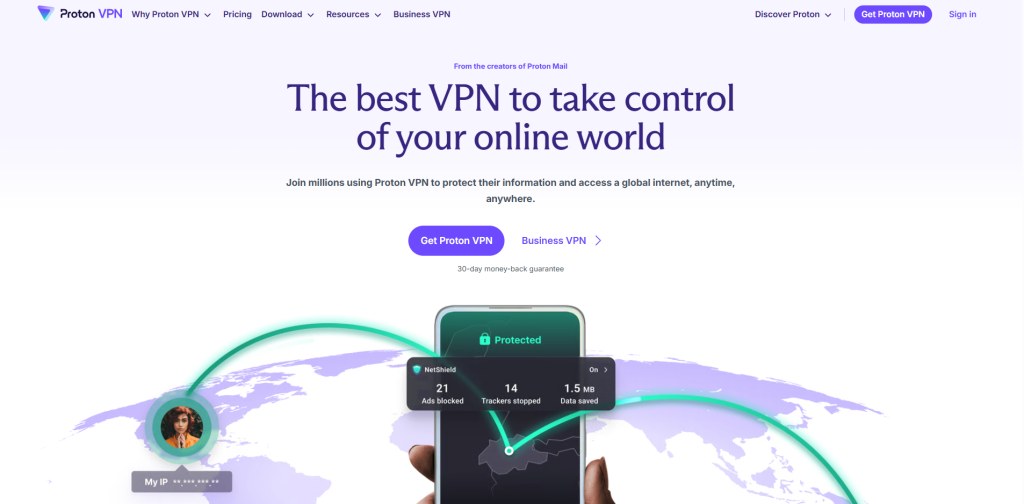
ProtonVPN is one of the strongest free VPN that is available right now. Most free VPNs come with an immediate data limit, but ProtonVPN’s free plan has no data limit and no speed throttling. You can browse as much as you want without watching a counter tick down.
It is based in Switzerland and built by the same team behind ProtonMail, which gives it serious credibility in the privacy world. The no-log policy has been independently audited and even tested in court. The apps are open source, which means security experts can review the code and verify its integrity.
Key Features:
- No data cap. You can browse without limits
- No speed throttling
- Strict, independently audited no-log policy
- Open-source apps
- Kill switch included
- AES-256 or ChaCha20 encryption
- Access to 5–6 server locations on the free plan
- One device connection at a time
- No streaming on the free tier
Its main limitation is that it allows you to connect to only one device, server locations are limited, and only paid users can stream videos. However, it works best for secure and private daily browsing.
2. Windscribe — Best for Multiple Devices

Windscribe stands out the most because its free plan supports unlimited simultaneous connections, which is quite rare. Many free VPNs limit you to only one device, making it harder to protect multiple devices. However, if you want to protect your laptop, phone, and tablet at the same time, Windscribe is your go-to option.
Key Features:
- 10 GB monthly data (2 GB without email signup)
- Unlimited device connections
- 10–11 server locations
- Supports torrenting/P2P on the free plan
- AES-256 encryption
- Feature-rich app with built-in ad and tracker blocking
- No dedicated streaming servers on the free tier
- Some users find the interface complex
3. PrivadoVPN — Best Free VPN for Streaming
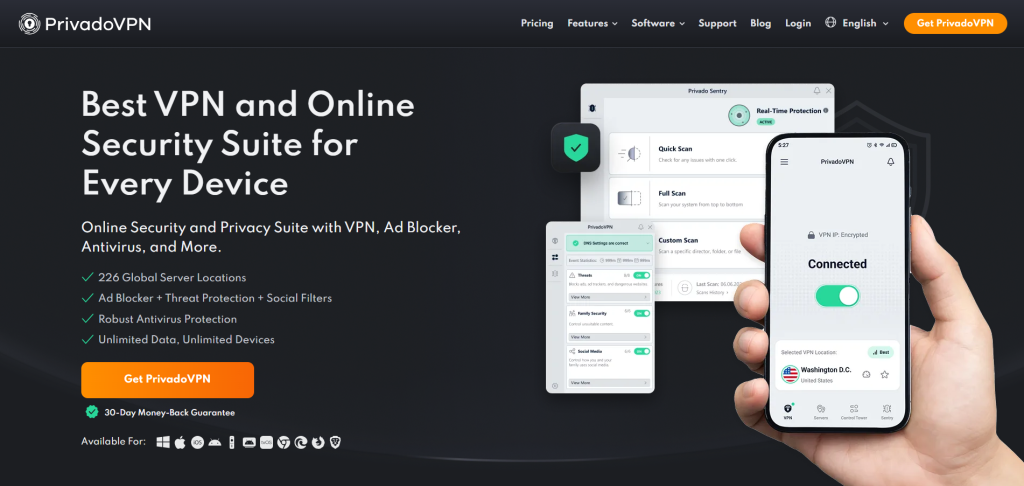
If you want to access content that is restricted in your region, PrivadoVPN is worth trying. It is one of the very few free VPNs where the free plan actually works with streaming services like Netflix.
Key Features:
- 10 GB/month at unlimited speeds
- Streaming-compatible on free plan (Netflix and others)
- 10–13 server locations including the US, UK, Germany, France, India, etc.,
- Split tunneling is available on the free tier
- Zero-log policy
- AES-256 encryption
- Based in Switzerland (strong privacy laws)
- Only one simultaneous connection
- No independent security audit yet
However, it is not without limitations. It connects to a single device. If you need multiple connections, you will need to upgrade or look somewhere else.
4. TunnelBear — Best for Server Variety
There are many VPNs that restrict you to a small handful of servers. However, TunnelBear gives free users access to all 47 server locations across 46 countries.
The catch is the data limit. You get 500 MB per month by default, though you can earn an extra 1 GB by sharing about TunnelBear on social media. That is not a lot for daily use. Still, for occasional browsing such as checking something quickly while travelling, or connecting securely in a pinch, it works well. The no-log policy has been independently audited by Cure53, and the app itself is clean and very easy to use.
Key Features:
- Access to all 47 server locations on the free plan
- Independently audited no-log policy (Cure53, 2024)
- AES-256 encryption
- No speed cap
- Clean, beginner-friendly interface
- Kill switch included
- Very limited data: 500 MB/month (up to 1.5 GB with social bonus)
- Only one simultaneous connection
- Not ideal for regular daily use
5. hide.me — Best No-Registration Free VPN
hide.me is a solid choice if you want a free VPN without the friction of signing up. The free plan requires no account, email, or payment method. You can simply download it and use it. There are also no ads or trackers built into the free version, which says something about how the company approaches its free users.
Previously, its data limit was set at 10 GB per month, but it has removed that cap entirely for free users. Additionally, you can access eight server locations, which include the US, UK, Germany, Netherlands, and Switzerland.
Key Features:
- No registration or account required
- No data cap (recently updated policy)
- No speed limits
- 8 server locations
- No ads or built-in trackers
- Supports P2P downloads
- One simultaneous connection
- No video streaming on the free plan
- Smaller server network than some competitors
How to Choose the Best Free VPN Alternative
It is not complicated to choose a VPN. A few things that matter that you need to keep in mind while choosing the best free VPN alternatives.
First, always check the no-log policy. Ideally, pick the one that has been independently audited. Because a VPN that logs all your activity is of no use. Next, look at the data cap. If you’re a light user, 10 GB per month works fine for you. If you browse heavily, go with an unlimited option like ProtonVPN or hide.me. Check device compatibility too, especially if you want to protect more than one device at a time.
And finally, if a VPN is completely free with no paid plan behind it, be cautious. That is usually a sign that your data is the product.
Conclusion
People have mixed opinions about free VPNs and rightfully so. There are genuinely dangerous free VPN apps that do more harm than good, and it is better to be safe than sorry. However, the options covered in this blog are different. They are free tiers offered by trustworthy and established providers. It is true that they come with real limitations such as data caps, fewer servers, and single-device restrictions, but they also offer real protection.
ProtonVPN is the strongest all-around choice. If you need multiple devices, Windscribe is your go-to option. PrivadoVPN works well for video streaming, TunnelBear is an excellent alternative for flexible, occasional use, and hide.me is the simplest and the most friction-free option of the group. The best free VPN alternative for you depends on what you actually need. This blog serves as a useful source of information that you are looking for to make the decision.
FAQs About VPN Alternatives
Free versions of established paid VPNs are generally safe. Avoid completely free VPNs with no paid tier, as they often monetize your data.
Most do not, but PrivadoVPN and TunnelBear are exceptions that support streaming on their free plans.
Yes, some free VPNs throttle speeds, but options like ProtonVPN and hide.me impose no speed limits.
Most free VPNs allow only one device at a time. Windscribe is the exception, offering unlimited simultaneous connections.
A freemium VPN is a limited free version of a paid service; a completely free VPN has no paid tier and often funds itself by collecting and selling user data.