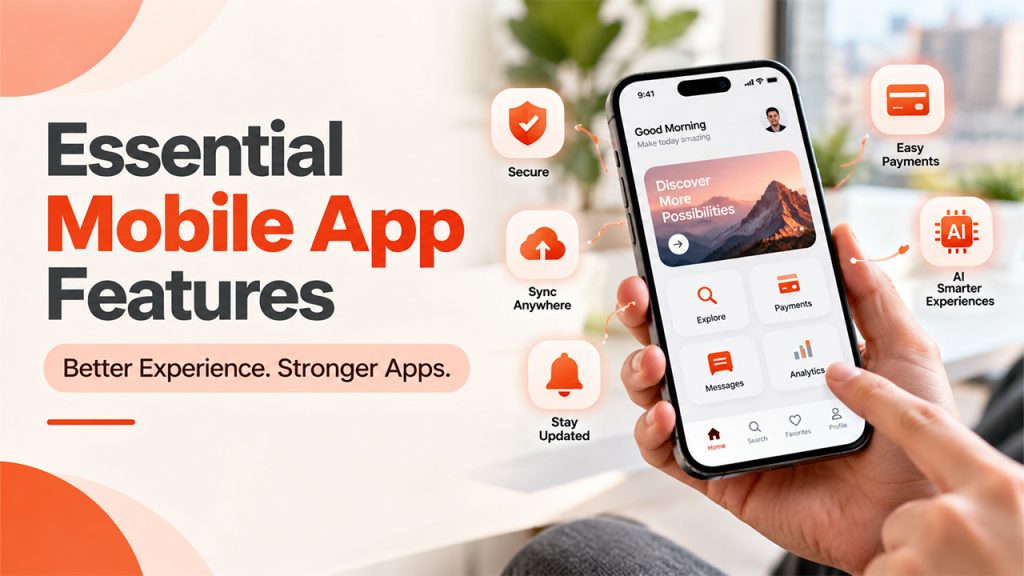






In today’s competitive market, having a sleek and user-friendly mobile app is no longer enough. To stand out, businesses must ensure their apps are equipped with advanced features that cater to user needs and deliver a seamless experience. Here are ten essential features every modern app should have in 2026 to keep users engaged and provide the best mobile app solutions.
Quick Answer: What Features Should Every Mobile App Have?
Every modern mobile application should offer a fast, secure, accessible, and intuitive user experience. While the exact features might depend on the purpose and target audience of the app, some successful mobile applications should include:
- Simple and intuitive navigation.
- Strong security and privacy.
- Fast performance.
- Personalized experiences.
- Offline functionality.
- Push notifications and in-app messaging.
- Cloud synchronization.
- Analytics
- Accessibility
- Integrations
- AI-powered capabilities
15 Essential Features Every Modern Mobile App Should Have
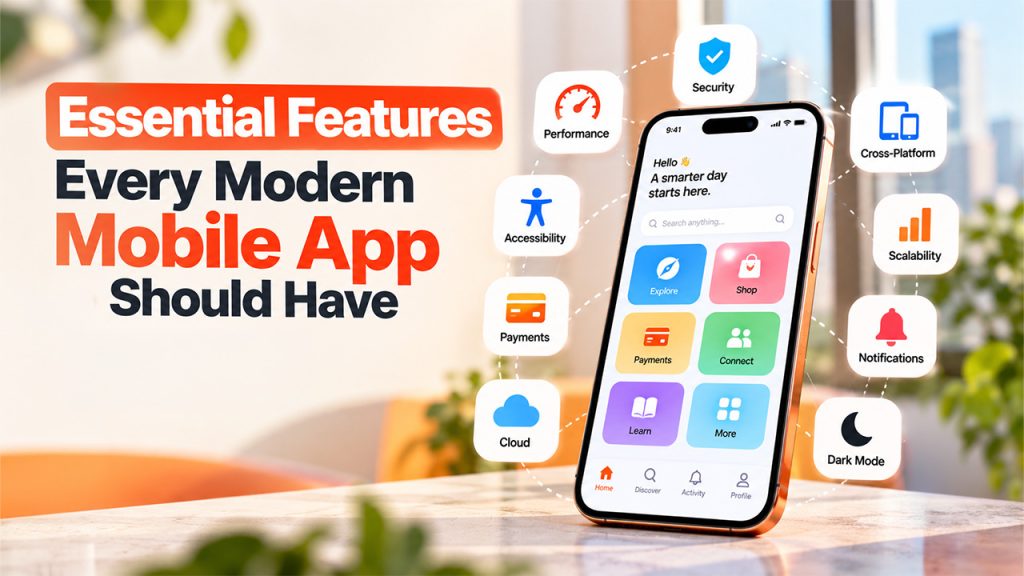
Some of the most essential features that every modern mobile application should have are as follows:
1. Fast Performance and Smooth Navigation
A mobile application should be able to load quickly, respond instantly to the user's action, and offer smooth and intuitive navigation. A slow loading time, crashes, or complicated menus generally frustrates users and increases app abandonment. Developers should optimize images, minimize unnecessary processes, use efficient code, and keep navigation simple to help improve the overall user experience significantly.
2. Accessibility
Accessibility helps ensure that a mobile application can be used by people with different abilities and needs easily. Applications should support key features, like readable text, sufficient color contrast, screen readers, voice controls, clear labels, and appropriately sized buttons. Designing an application for accessibility not only creates a better experience for users with disabilities but also makes the app easier and more convenient for every user.
3. Payments and In-App Transactions
Modern mobile applications increasingly need to support secure and frictionless transactions. A well-designed payment system should support multiple payment methods, which include credit and debit cards, digital wallets, UPI, and other region-specific options. Whether the app sells products, offers subscriptions, or provides premium digital features, integrating reliable payment options can significantly improve the user experience.
4. Cross-Platform Compatibility
Users access applications from a wide range of devices, making cross-platform compatibility an essential feature of modern mobile application development. An app should offer consistent experience across Android, iOS, tablets, and web platforms. Cross-platform compatibility also means more than simply making the interface available on different operating systems. Developers should also account for platform-specific requirements, such as different screen sizes, operating-system capabilities, notification systems, authentication methods, and app-store guidelines.
5. Scalability
A mobile app may start with a small user base, but it eventually needs to handle thousands of users. Building a scalable mobile application from the beginning helps prevent performance issues such as traffic, transactions, and data volumes from increasing. A scalable application should use an architecture that allows computing resources to grow as demand increases. Developers should continuously track response times, crashes, server health, API performance, and transaction failures to identify bottlenecks and resolve them before they significantly affect users.
6. Personalized User Experience
Personalization is the key to user engagement. Mobile apps should offer tailored content based on user behavior, preferences, and location. This feature enhances user satisfaction and boosts retention rates, making users feel that the app is designed specifically for them.
7. Seamless Integration with Wearables and IoT
With the rise of wearables and IoT devices, users expect their apps to integrate seamlessly with smartwatches, fitness trackers, and home automation systems. By enabling connectivity with these devices, apps can offer real-time data syncing, remote control, and personalized recommendations, creating a more cohesive ecosystem.
8. Advanced Security and Data Privacy
With increasing concerns over data breaches, robust security measures are crucial for any mobile app. Implementing features like two-factor authentication, end-to-end encryption, and secure payment gateways ensures that users’ personal and financial information remains protected, building trust and reliability.
9. Offline Mode
An offline mode allows users to access core features without an internet connection. This is particularly useful for apps related to travel, productivity, and content consumption. Users can continue using the app and sync their data when back online, providing an uninterrupted experience.
10. Voice Search and Command
Voice recognition has become increasingly popular, thanks to virtual assistants like Siri and Alexa. Integrating voice search and commands into your app can offer hands-free and more intuitive user experience, catering to a wider range of user preferences and making navigation simpler.
11. Push Notifications and In-App Messaging
User engagement is a powerful tool with push notifications, but you can’t use them too loosely. Users can be notified in person about updates, offers, and reminders. Offering in-app messaging can extend communication with real-time support and make users feel loved.
12. Cloud Integration
This also enables cloud integration between the apps such that the user can access the content from different devices, as opposed to on only one device. App that uses big amounts of data like file-sharing apps or collaborative platforms should use this feature to maintain a smooth user experience.
13. In-App Analytics
You need to know how users interact with your app so that you can always work on improving it. In-app analytics shows us where users are spending time, which features are used the most, and what pain points could exist. With this data on hand, businesses can enhance their mobile app solutions by making updates that serve the best interests and preferences of the users.
14. Social Media Integration
The integration with the social media facilitates the user to share content, log in, or invite friends via their preferred platforms. It not only improves the user experience but also makes it easy to boost app visibility and draw in new users by word of mouth in the case.
15. Dark Mode
Dark mode is not a trend, but because it saves your battery life and your eyes, it’s a useful feature. Presenting a dark mode option also fulfills user preferences — particularly those who spend time in front of their devices — and proves your app is in step with only growing user needs.
Conclusion
In 2026, mobile app success depends on providing data security, user experience, and network connectivity. Incorporating these ten essential elements into a mobile app solution empowers businesses to provide a complete mobile app solution that will keep users engaged, satisfied, and loyal. You don’t want to appear old so you have to keep track of the latest trends and user’s expectations because being out of date leads your app to be old and thus not good enough to make it compete.
Related Post:
Impact of Mobile Shopping: How smartphones are transforming e-commerce
Frequently Asked Questions
In mobile apps, personalization allows an app to tailor content, recommendations, notifications, and experiences according to individual user preferences and behavior.
Security is important for mobile applications, as mobile apps often handle sensitive information such as personal details, account credentials, payment information, and location data.
Push notifications allow apps to communicate important information directly to users. They can be used for reminders, order updates, personalized recommendations, security alerts, promotions, and other timely messages.
In a modern mobile app, AI can enhance mobile applications through personalized recommendations, intelligent search, virtual assistants, predictive analytics, automated customer support, content generation, and behavioral insights.