






Crypto markets do not vibrate. In each boom, novel ideas, tokens, models, and communities seeking to become the next big thing come into play. Some launches are huge and then disappear in a snap; others hinder the evolution of ecosystems with users and products that will last. This incessant renewal is what attracts so much enthusiasm to new crypto avenues. They offer opportunities: one might be fast; one might be slow. If one is to seriously engage with these avenues, one must have a clear way of seeing what could work, what could fail, and what is largely marketing.
Very few things contribute to the success of a project. That is where the correct timing lies, somewhere between product-market fit and the token design, through to thinking ahead for liquidity to avoid the community's wrath: with so few good features out of the whole scheme, they need to be completed consistently. Understanding the dynamics of each component and intertwining them from day one is how you can arrange for mechanisms rather than your inhibitions.
What Is “New” in the Crypto?
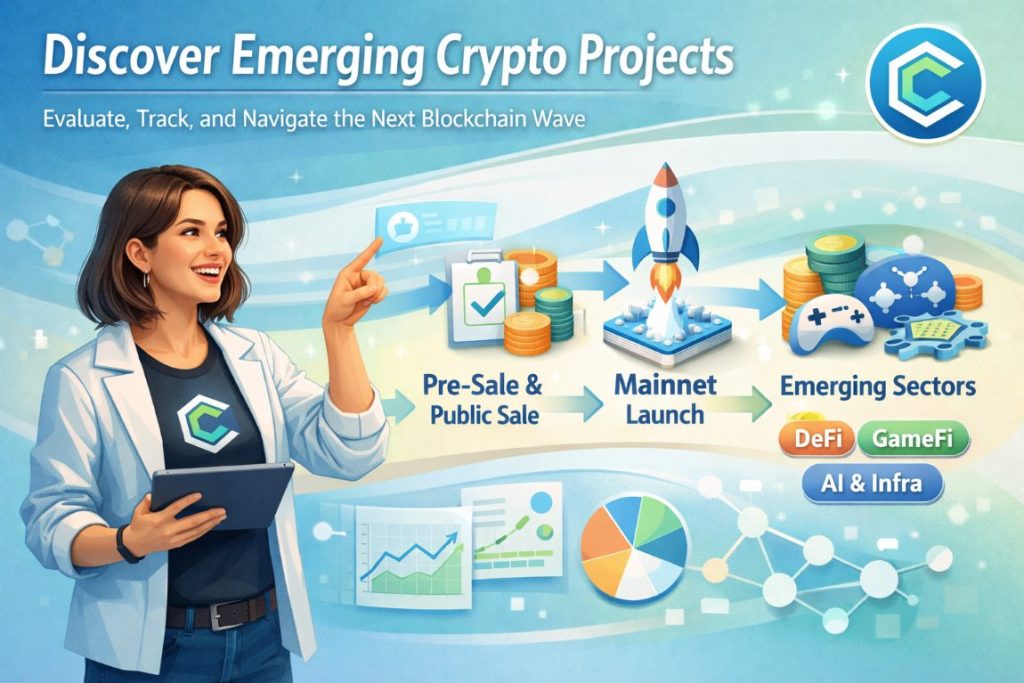
Not every "new" token is true. Mostly, a relaunch, fork, or quiet-build project is often invisible to the broader market for months before being launched. Nevertheless, the category usually comprises the following: early-stage tokens preparing for public sales, a recently listed coin in the markets, a new network launching its mainnet, new projects that are launching tokens, and other emerging sectors in DeFi protocols, GameFi, AI-driven platforms, and infra tools.
The privilege of this newer breed of crypto projects, besides shallowness, is minimal historical data. Investors don't have long-term charts to read. They rely on evaluating fundamentals and transparency, as well as crucial operational aspects.
What Prompts the Chase Behind New Crypto Projects?
The reason is simply the upside. Early-stage projects can move quite dramatically if they start to attract adoption or a strong partnership or get to be part of a prominent storyline. The underlying reason is that new launches tie in with new trends. When a new wave hits—scaling solutions, real-world assets, or on-chain AI—projects that represent it get attention and liquidity.
But the upsides come with trade-offs. New projects can find stringent limitations in liquidity or become wildly volatile, or allow themselves to become subject to excessive over-promising before crashing and burning. Without a user-friendly environment, without a token value, or without the message pitched to the investors, many of them fail. So the thing is not to go find the next 100x (closing our eyes in search of one) but to come up with a smarter way of picking so that we are not gambling. Key Criteria to Look Out For.
Project types bear distinct risks. Infrastructure projects are all about “building the roads and tools” of crypto—blockchains, bridges, oracle networks, wallets, and data layers. While these can have strong long-term potential, they tend to have a slow time to market. DeFi projects revolve around trading, lending, staking, and liquidity. When they offer larger yields or lower fees, they can grow big and fast, but their sensibilities depend both on security and the stages of market cycles.
Gaming and metaverse projects work mainly in the gamble of user growth and retention in a market that is tough on performance. AI-crypto projects are currently the hot thing since they, in effect, combine two ongoing narratives; so, be careful—most others are just rebranding with no real AI behind them. Real-world asset projects take aim at tokenizing bonds, invoices, or commodities; these could indeed deliver in the future but are subject either to regulatory hurdles or customer onboarding issues.
When scanning projects in the crypto space, getting a quick classification is key. You don’t evaluate a DeFi protocol the same way you would evaluate gaming platforms. For projects handling multiple crypto transactions, integrating a CRM for crypto platforms ensures smooth workflow and tracking. The goals, risks, and adoption signals differ.
An Executable Step-by-Step Review
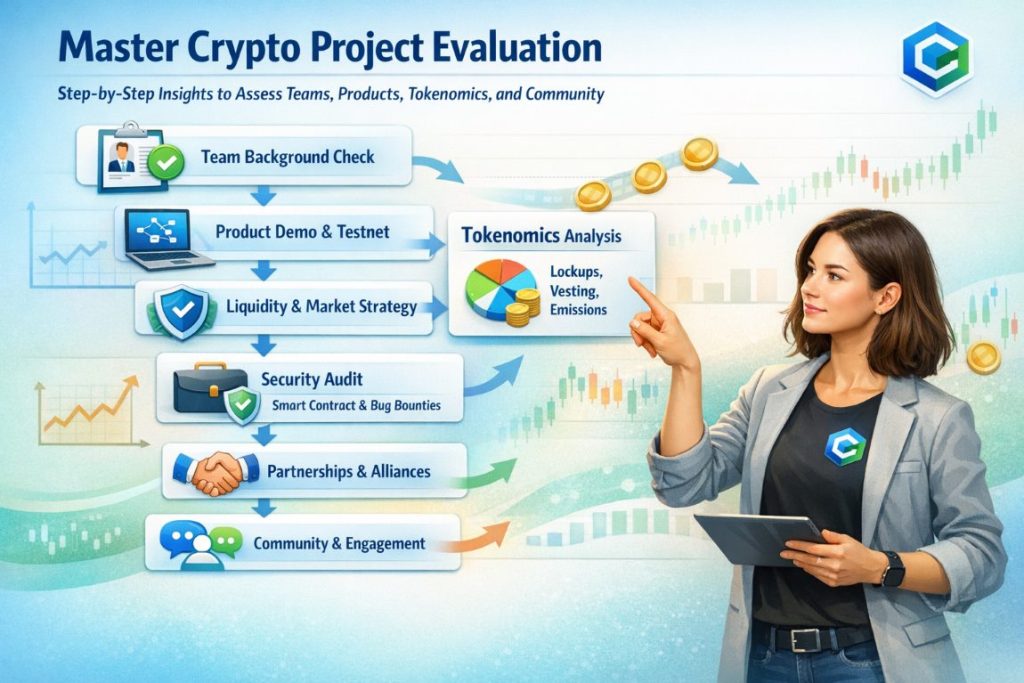
Given that early-stage projects do not have a long history, you want a checklist that allows you to focus on what you can see right now. Start with some background on the team: are they public, are their experiences verifiable, and are they publicly recognized? Afterward, pretty much evaluate the product: is there an example of a working demo or testnet, or do real people interact with it? In marketing, pitch is always huge, but it is a hundred times more so among whales.
How the tokenomics play out has to be reckoned with. In terms of tokenomics, you also like to know the lockups, emissions, vesting schedules, and, especially, who are holding the larger allocations. There is always a real danger when a herd of insider or early investors may decide to dump big time. From a token aspect, this sentiment becomes all the more crucial while liquidity strategy is put on the table: where tokens will be able to trade, how liquidity is to be supported, and what they will do to avoid thin order books.
The security aspect does not admit consideration. Smart contract audits pave the way, but they are not a promise in themselves. So, solid development practice, bug bounties, and risk transparency are all useful to have. Partnerships are a notable aspect where you can see speciousness. Simply seeing a logo on some website does not suffice as proof. Scrutinize for clear announcements, integrations, or technical collaboration. Lastly, watch the community, but don't confuse noise with strength. A strong community is good, but real adoption manifests as actual usage, retention, and continued interest after the launch.
Red Flags That Need Serious Consideration
Common snares that fellows newly brought forth to the crypto platform must watch out for include confusion spread by colorful branding rather than actual deeds. Unrealistic promises translate to barefaced features such as tech jargon, incessant hype separated from product updates, contentious countdown marketing, and unclear token distribution. Another warning sign is that a team would address neither vesting nor supply head-on.
Projects that rely heavily on referrals and "guaranteeing returns" are held suspect. Long-term successes in crypto do not need to overpromise with guarantees. Their focus is on building something good and letting the market community evaluate it.
Additionally, do beware of the scam urgency strategies: "Last Chance," "Only 24 Hours," and "Do Not Miss Out." There are some legitimate uses of urgency in fixed-time sales opportunities, but this can also be a move made to go past your critical thinking. It's arterial sharing, which makes sense regardless of position.
Timing and Market Cycles Paramount
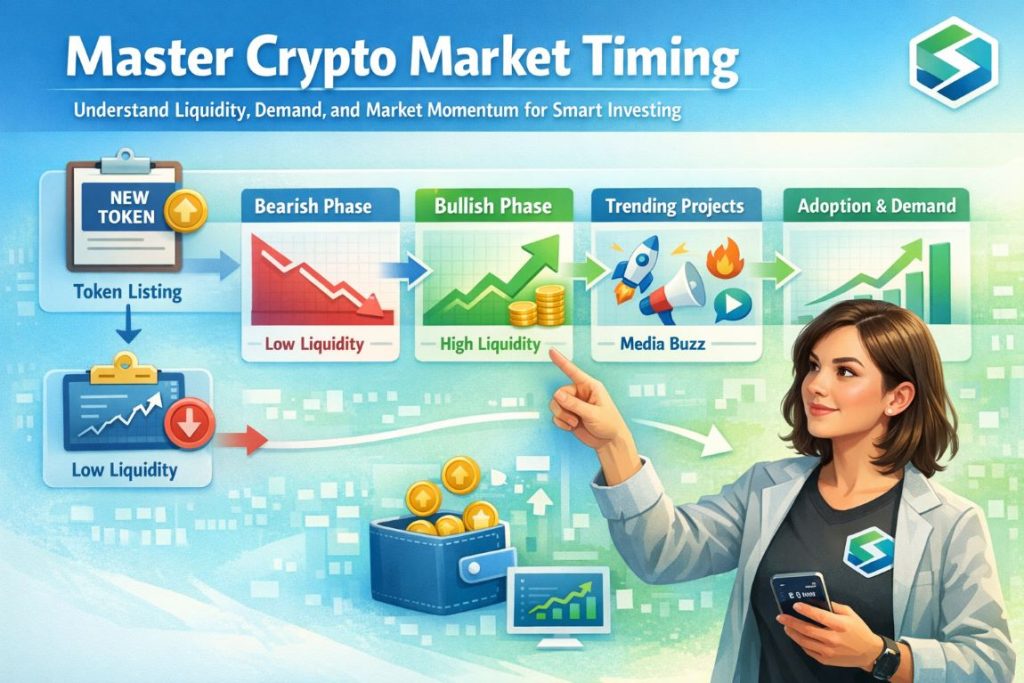
Good projects can also pop at the wrong time: many tokens languish after listing in times of low liquidity or bearish sentiment, whilst greater market and media attention and momentum in stronger markets can lift launches. That is not to say that you have to wait until a bull market or, at the very least, the sunniest times to get in, but it's very important to take that timeframe as a guide. Timing dynamics have a purpose in affecting the movement of prices, levels of demand, and narrative growth.
The main thing for traders is how much light is shed on daily performance. Liquidity, wallet volume, community members, attention paid to it (chartist target, media focus, positive news), the availability of the token in an exchange country, and self-propagating growth in demand—these factors all create an interesting free cash flow. For long-term investors, the focus is on timely and reliable accomplishment and delivery for the project's final run at our time-expiration level.
Research Workflow: From Discovery to Decision
A smart workflow allows for an easy dive into decision-making. Practice the discovery and assessment of projects consistently. Choose only those that interest you and do not exceed your level of risk. Enjoy the aroma as you dip heavy, deep-dive establish links first. You see, what do we have within the team, product, tokenomics, security measures, and community? All will be important, but the roadmap is almost the panic button. Develop your "on-the-way" perspective. This could be helping herd behavior, entering when it is hardly known, or waiting until standard listings are affected by looks of excitement. True orientation as well, so why stop at bidding? Define a related tool on the way and issues like when our limited sum enters the framework, or how my asset valuation may tumble for some solid reason, or some expected milestone.
This stops an ever-present trail of missed opportunities. There will always be more projects you do not know about. Here, your edge comes from choosing fewer commodities and doing a more careful job of researching.
How CoinLaunch Can Help You Track New Crypto Projects
Getting reputable information is half the battle. When you are in the business of keeping track of new crypto projects, where do you find a service that organizes launches and discovery? CoinLaunch is for people who wish to keep an eye on upcoming token sales, listings, and pre-sale opportunities all in one place, thereby fostering analysis by providing side-by-side project comparisons, uniting them with information on what is to be released in the near future, and tracking market activity without having to rely on random social media posts.
One can enjoy saving one's consistency by working with their very best platform globally. This system works well through consistency; it enables anyone to completely forget about stupid chit-chat and simply create a system where every project to check is just a click away!
A balanced approach stands as the best re-approach when dealing with new crypto projects; optimism and skepticism, you may call it. You dare to be innovative and yet safeguard yourself from being cheated. Literally, this means the use of checklists rather than emotional entries, respect for risk management, and focusing on dealing-execution signals rather than marketing promises.
Moreover, it is your self-awareness regarding goals as an investor. Are you jumping into the short-term trading mania, or are you investing in captures of products that will be in existence 2 years from now? Both objectives exist, yet they demand different research, timing, and expectations. When you are clear about your objective, choosing projects that will be best under it also becomes very easy.
So far, that is just me thinking aloud
In the democratic blockchain, what are the powers of creativity of new projects? New projects bring competition, new technology, and new ways of working for blockchain networks. Also, noise, risk, and distraction are brought by new projects. The established crypto trader will have to train in gauging the quality of fundamentals, recognizing warning signals, and perfecting the technique.
Using many organized and discoverable projects like CoinLaunch will make following easier, but in the end, all that really matters is the framework it supports. Combining curiosity with discipline raises the odds of finding real opportunities, while at the same time, keeping losses limited and well contained by not chasing foolhardy side pays.