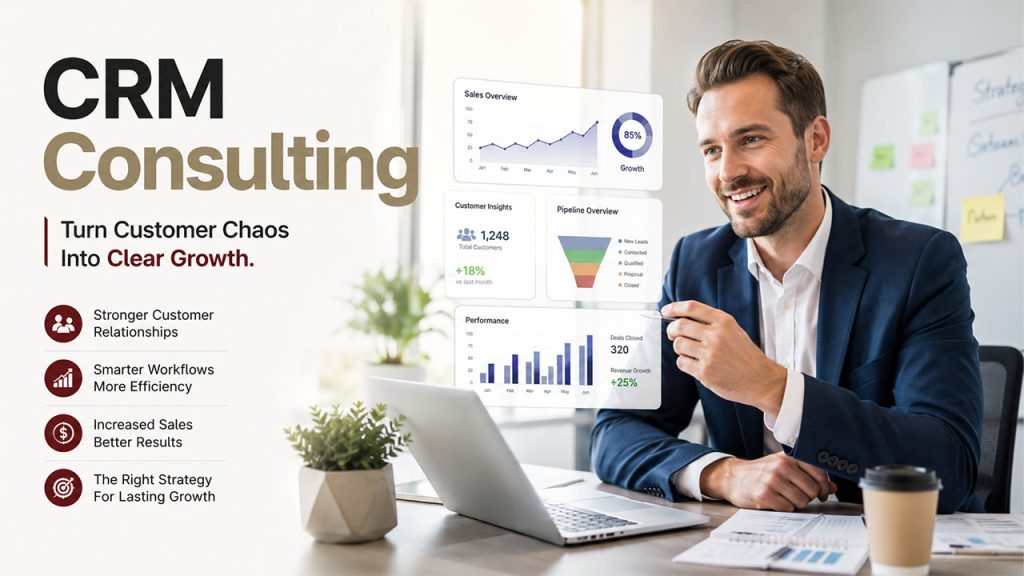






Hitting a wall with sales, marketing, or customer service targets, even after putting in real effort, is usually a sign something structural needs fixing. That’s often where CRM consulting comes in, helping you figure out what’s actually broken before throwing more time or budget at the problem.
Managing customer relationships well isn’t optional anymore; it’s become one of the most basic requirements for staying competitive. Investing in the right consulting support means building a strategy that’s tailored to your business, not a generic template that happens to work for someone else.
In this blog, we’ll walk through what CRM consulting actually involves, the signs it’s time to bring someone in, what a consultant does day to day, and how to pick the right one for your business.
What is CRM Consulting?
CRM consulting refers to the service that brings experts to resolve those issues in relation to customers that your team couldn’t resolve on its own, developing a strategy based on the unique specifics of your company.
One way or another, the outcome of such consulting always becomes more effective. No more spreadsheets, sticky notes, and multiple inboxes; the data related to customers will finally be structured more effectively.
So, what does a CRM consultant actually spend their time doing?
- Developing a customized strategy: Working together to create a solution that will meet the specific goals of your business.
- Implementing or updating the technology: Using new technologies or enhancing the existing ones in accordance with your processes.
- Tailoring the technology to your processes: Adapting the CRM system to your specific customer-related processes.
- Providing support and training for your team: The best technology will be useless without the proper skills to operate it.
Signs You Need CRM Consulting
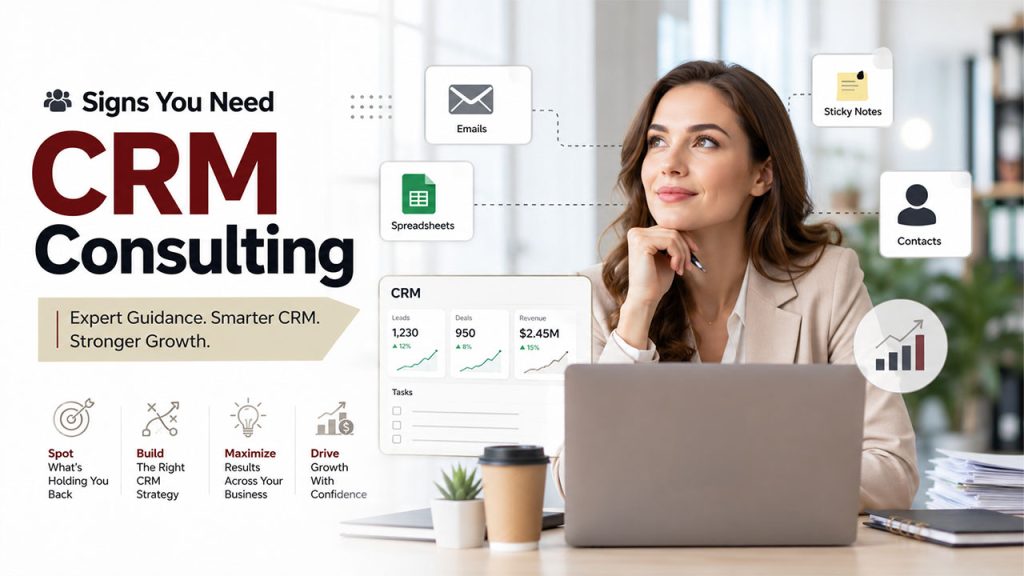
One of the first indicators that you need external assistance is when customer information is scattered in spreadsheets, emails, and Post-it notes. This results in poor follow-up, bad decision-making, and time being spent just looking for fundamental information. The following are three indications you should watch out for:
- You don’t have time to build or update your CRM strategy: Strategies need to evolve as your business does, and most teams simply don’t have the bandwidth to keep up with that on top of everything else.
- You want proof before committing to a new system: Switching CRMs is a real investment, and with so many providers offering different pricing and features, it’s easy to get overwhelmed. Consulting lets you see the potential value without locking yourself into anything yet.
- You’re missing your sales, marketing, or operational targets: Sometimes teams take on too much at once, or different departments end up working in silos toward different goals. A consultant can help pinpoint exactly where things are breaking down.
None of these indicators suggest that you are doing something incorrectly; they only suggest that a second opinion might be needed.
How CRM Strategy Consulting Transforms Your Business
A proper CRM strategy usually distinguishes the relationship with the clients that seems to be random from those that are carefully thought through. The right CRM consultant can create a clear picture of your client’s journey, clarify the concept of success, and pick the tools that will help you to achieve it rather than stand in the way.
Collaboration with the right consultant usually has some distinctive signs:
- More personalized customer experiences: When your data is organized and your team understands the customer journey, interactions stop feeling generic.
- More deals closed: A clearer strategy means fewer leads slipping through the cracks and more follow-ups that actually happen on time.
- Lower costs, higher efficiency: Less time spent untangling messy processes means more time spent on work that actually moves the needle.
Done well, this is what separates a business that just uses CRM software from one that’s genuinely built its operations around understanding its customers.
How to Choose the Right CRM Consultant
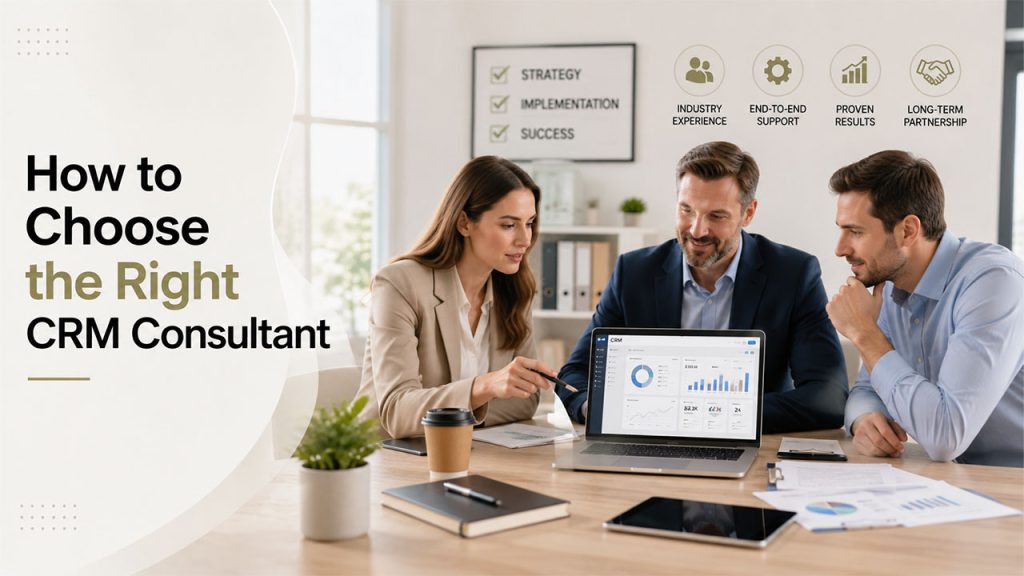
Not every CRM Consulting provider is worth the investment, so it’s worth knowing what actually separates a good one from the rest before you commit.
- Industry experience: Look for someone who’s worked with businesses like yours before and actually understands the specific challenges your industry deals with.
- Full-service support: Avoid anyone who only handles one piece of the puzzle. You want someone who can take you from strategy through to implementation and beyond.
- A real track record: Ask to see case studies or hear from past clients. Actual results tell you more than any sales pitch ever will.
A good consultant doesn’t just hand you a plan and disappear; they stick around long enough to make sure it actually works in practice, not just on paper.
Benefits of CRM Consulting for Business Growth
Beyond fixing what’s currently broken, good CRM consulting tends to pay off in ways that compound over time.
- Better decision-making: Clean, organized data means your team is working from facts instead of guesswork.
- Stronger customer retention: When interactions feel personal and follow-ups actually happen, customers notice, and they stick around longer.
- Scalable processes: A well-built strategy doesn’t just work today; it holds up as your team and customer base grow.
- Higher team adoption: When a system is shaped around how your team actually works, people use it properly instead of avoiding it.
The businesses that get the most out of CRM for business growth tend to be the ones that treat it as an ongoing investment, not a one-time fix.
Conclusion
CRM consulting is not about purchasing a new piece of software but creating an approach that will be based on your current work process and future goals. The right CRM consulting firm helps get rid of the noise- whether it is untidy data, lack of achievements, or a system that does not fit anyone in your company.
This doesn’t have to imply making a major change as well. Sometimes it is just enough to have a second opinion before the implementation of a new solution or get time and expertise to create the strategy your employee couldn’t make up until now.
If your relationship with customers seems like absolute chaos, this will probably be the strongest sign to start CRM consulting.
FAQs About CRM Consulting
CRM Consultant helps build a custom strategy, sets up or upgrades your system, adapts it to your workflows, and trains your team so the tool actually gets used properly.
The fee varies greatly, depending on what exactly you want, so usually, the price is given after the initial meeting when the consultant understands your requirements.
No, you don’t. The consultancy might include the optimization of the existing system, fixing problems with your workflows, etc.
Depends on the scope; if it’s only a strategy session, then maybe a week or two, but a whole implementation including the training may take a few months.
Definitely yes, because if your customer information is dispersed across various systems, or your team can’t cope with an increasing number of customers, CRM consultancy can help you.