





Assumptions give multiple tangents of thought, which is good for business. But there’s something wrong with the assumption that having a CRM automatically gives a business a competitive advantage.
In reality? It doesn’t. The CRM your business is relying on might be collecting data and storing it inside a system. But, even with months of data accumulation, there’s no acceleration on the sales front. Why? Well, you may have enough raw data, but not enough time to understand what to do with it.
The bigger picture remains blurry because the decision-makers don’t have actionable insights. While it’s easier to give quick status updates to a team of three. It becomes difficult to do so with a team of thirty.
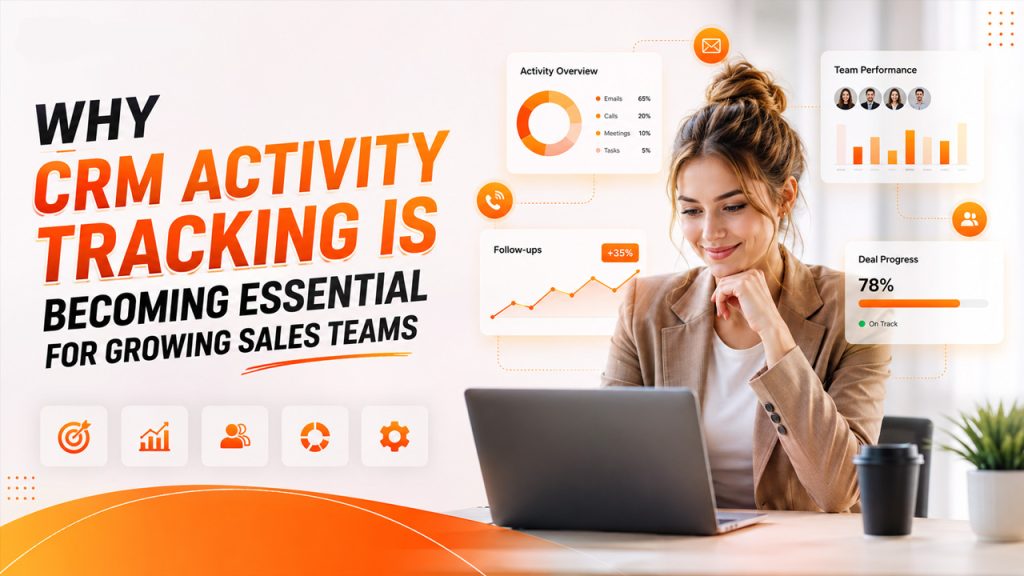
What makes a real difference here is tracking CRM data. Through this article, we have discussed CRM activity tracking and why tracking CRM data gives businesses a serious competitive edge in today’s business landscape.
Read More: Before going forward, make sure you are clear on how CRM works. This would help you better understand why activity metrics are as important as sales outcomes.
Why Activity Data Matters More Than Raw Sales Numbers?
There’s a difference between regular tracking and seeing data once in a quarter or a year. How so? Try to find the difference between revenue figures and regular customer behavior data on CRM.
First will tell you about the performance, while the latter discusses the pulse of the business. The numbers show numeric differences but don’t tell you why certain graphs are going up or down. That’s what you get from tracking the CRM data on a regular basis.
Activity data provides context. It illustrates whether top performers respond faster, conduct more follow-ups, or engage prospects more consistently.
Sales Metrics Versus Activity Metrics
| Sales Metrics | Activity Metrics |
| Closed deals | Follow-up frequency |
| Revenue generated | Calls completed |
| Win rate | Meetings scheduled |
| Deal value | CRM record updates |
| Pipeline size | Response times |
Behavior often becomes a leading indicator while revenue remains a lagging indicator. That distinction matters. Teams can correct behavior before it impacts results. Even industry experts also stress why CRM data works as a serious indicator of business growth. Similarly, independent evaluations such as VPNOverview.com testing demonstrate how consistent performance monitoring and data-driven analysis lead to more informed technology decisions.
Identifying Workflow Bottlenecks Before They Become Revenue Problems
Several CRM administrators prioritize dashboards, customization, and reporting. Those are critical elements. But workflow bottlenecks can emerge from the day-to-day user actions rather than system architecture.
Here’s an example worth noting:
A lead can enter the business pipeline and stay untouched for days. Sometimes opportunities stay untouched and pass through multiple stages without any interaction. When the CRM insights are untouched, these types of leads and potential customers start to leave.
The result? Your business sees a significant drop in conversion.
That’s the problem active tracking of business CRMs helps solve
Some common issues include:
- Delayed follow-ups after lead assignment.
- Inconsistent record updates among team members.
- Excessive time spent on administrative tasks.
- Missed customer interactions across different channels.
These observations create opportunities for process improvement rather than blame. That distinction is important in healthy sales organizations.
Balancing Accountability With Team Performance
There is often resistance when companies introduce deeper activity monitoring. Employees may perceive it as surveillance. In practice, effective tracking is less about oversight and more about operational clarity.
Managers gain a realistic understanding of workloads. Top performers receive recognition backed by evidence. New representatives can be coached using actual activity patterns instead of subjective impressions.
Business Impact Of CRM Activity Tracking
| Challenge | Effect of Activity Tracking |
| Missed follow-ups | Faster intervention |
| Uneven workloads | Better resource allocation |
| Limited visibility | Accurate performance insights |
| Process inconsistencies | Standardized workflows |
| Weak forecasting | Improved planning accuracy |
Organizations that use activity data thoughtfully tend to make more confident decisions because discussions rely less on assumptions and more on observable patterns.
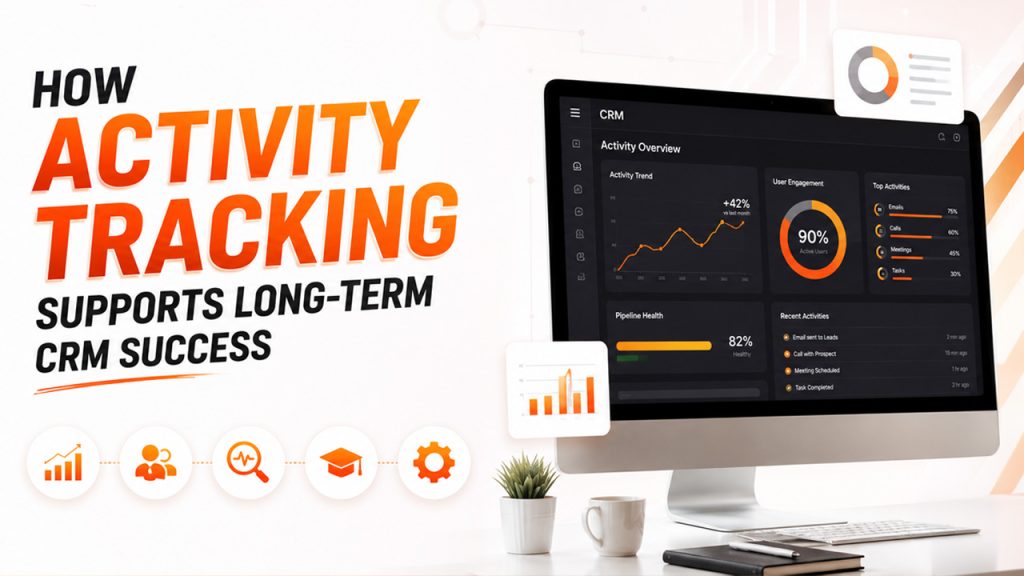
How Activity Tracking Supports Long-Term CRM Success?
CRM isn’t just an add-on tool to your business operations. Most businesses, whether small or at enterprise level, go to great lengths to implement a CRM. They make substantial investments to procure the right platform, implement it into their operations, train employees, and in customization.
However, doing all these only builds the foundation for a CRM. Simply having the tools doesn’t solve sales or revenue issues. What matters is constant adoption of the data.
Activity tracking serves as an adoption health check. It reveals whether users engage with the platform in meaningful ways. It highlights where additional training may be required. Sometimes it exposes processes that are unnecessarily complicated.
A CRM should function as a living operational system, not merely a digital database. Tracking real user behavior helps organizations move closer to that goal.
Endnote: Driving Smarter Revenue Growth with CRM
Driving smarter revenue growth depends on efficient use of artificial intelligence, advanced analytics, and sophisticated forecasting tools. True. But that’s just the baseline of achieving a competitive edge.
What makes a clear difference in revenue performance and agility is regular tracking and adoption of data.
When teams understand how work flows through the CRM, they gain the ability to improve performance systematically. CRM Activity tracking helps uncover bottlenecks, support accountability, and strengthen adoption across departments. The result is not merely better reporting. It is a clearer understanding of how sales success is actually created, day by day, inside the CRM ecosystem.