






In the present competitive market, the coaching industry demands a strong personal brand. Personal brand helps you in several ways ranging from attracting new clients and retaining current ones to scale your coaching business.
It does not matter if you are a career or a life coach; your coaching brand must resonate with your audience while delivering your expertise, value, and style. You need an online coaching platform to shape it, and these nine tips below can help with that.
1. Define your unique value proposition
Before building your coaching brand identity with an all-in-one coaching platform, you need to have a unique selling proposition (USP) that makes your coaching services a cut above the rest.
A clear USP can get you clients who resonate with your personal coaching brand.
2. Clarify your core values and brand personality.
These two convey what you stand for. You need to define the principles that guide your coaching process and be authentic in client interactions. To connect more effectively with your audience, share your own experiences without being preachy.
When you build your brand on strong values, you can gain the trust, confidence, and loyalty of paying clients.
3. Develop a consistent visual identity.
Developing a visual identity will enhance your personal branding across various websites, marketing materials, and social media channels. It makes the audience recognize your coaching brand instantly, thereby increasing your brand’s visibility. Let's see how:
- Make sure to use consistent fonts, colors, and logos.
- Align your visuals to match your coaching style.
- Your branding must be consistent on your slides, professional websites and social media posts.
4. Create valuable content for your target audience.
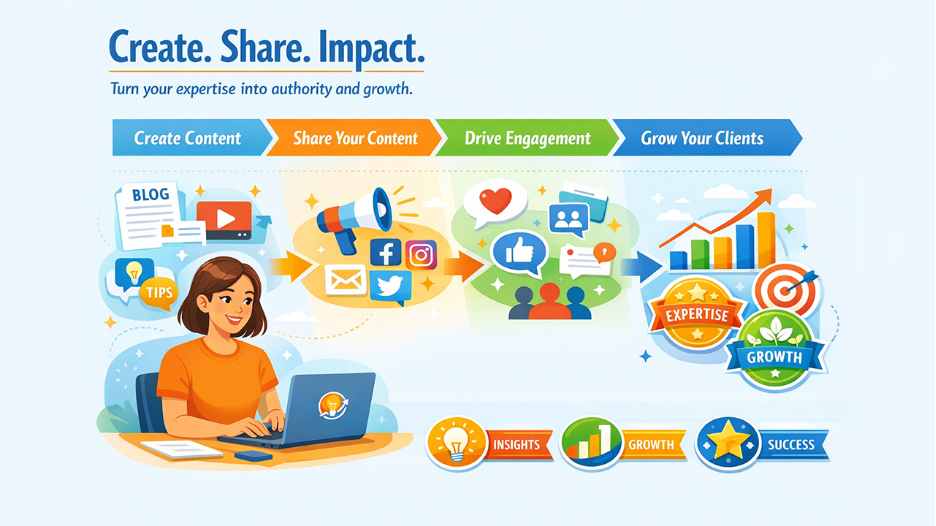
Good content creation highlights your presence as a thought leader. It makes your coaching practice credible and establishes its authority. Applying Content Marketing Magic principles will help your online business to grow and stand out in a saturated market:
- To offer valuable insights on relatable topics, make sure to write, create and publish blogs along with social media posts and videos.
- Share useful and practical tips that show your expertise in life coaching, personal growth, and business coaching.
- Post resources that encourage clients to see through their coaching journey to the end and attract new clients into your brand.
5. Collect and highlight client testimonials.
To show the real benefits that you deliver to your customers can effectively be done by collecting and highlighting client feedback and testimonials. To push your coaching brand forward, you need to:
- Gather testimonials after coaching programs and sessions end.
- Feature the positive comments on your professional website, marketing materials, and social media accounts.
- Highlight the most measurable results and memorable success stories.
6. Build your social media presence.
A strong social media presence puts your business into people’s radar. The more you appear online, the more you’ll likely get people who want to improve themselves through your coaching practice.
Share your insights, client wins, and thought leadership, and engage with your ideal clients with comments and messages.
7. Leverage speaking engagements and workshops.
Public engagements put you in the limelight as an expert and thought leader. You can:
- Offer webinars, speaking events, and workshops to everyone on the weekend.
- Present your case studies or coaching insights from your personal journey.
- Build relationships with other coaches and small business owners to expand your network and get more clients.
8. Create a personal website as a marketing tool.
Your website is the hub and one-stop shop for your online coaching business. Here, you can:
- Share your brand story, core values, and USP.
- Show coaching programs, services, and sessions.
- Offer free resources, coaching tools, and signups for interested visitors.
A website adds more credibility to your coaching brand and supports the growth of your business.
9. Track marketing efforts.
Ongoing tracking, reporting, and polishing helps maintain your coaching brand. That’s why you should:
- Keep monitoring website traffic, social media engagement, and client inquiries. This helps you promote your services, see what’s working, and where you can improve.
- Test different content types before publishing.
- Try a new marketing strategy to increase conversion rates and attract more potential clients.
Continuous tracking and monitoring make your personal brand strong and coaching effective. ThriveCart can assist with building a successful coaching business. It integrates your coaching platform with its subscription management and payment processing tools. This enables you to deliver coaching services more smoothly, share meaningful content, manage new clients, and grow your coaching brand with ease.
Optimize Your Website for Performance and SEO
Just design and content are not enough. Your coaching website also needs a robust technical infrastructure that can attract and convert clients effectively. To optimize your website, focus on these core technical elements:
Page Speed Optimization: Compress used images to under 200KB, enable browser caching, and use a content delivery network (CDN). Faster sites rank higher on Google. Around 53% of mobile visitors leave pages that take over 3 seconds to load.
Mobile Responsiveness: Mobile devices contribute to over 60% of web traffic. That's why it is essential to use a responsive design with flexible grids and scalable images that can easily adapt to any screen size.
SSL Certificate and Security: Install an SSL certificate (HTTPS) to encrypt data and build trust. Search engines penalize those sites that are not secure to browse, and clients won't share payment information on unsecured pages.
SEO Technical Setup: Make sure to write proper meta titles that are under 50-60 characters, meta descriptions that are under 150-160 characters, clear header tags such as H1, H2, H3, and schema markup for coaching services. It is also important to use clean URL structures like "yoursite.com/life-coaching" instead of "yoursite.com/page?id=123".
Analytics Integration: Add Google Analytics 4 and Google Search Console to track behaviors of the visitor, identify sources of traffic, conversion rates, and keyword rankings. This data reveals which marketing efforts drive actual bookings.
Many coaching platforms manage these technical requirements automatically. However, if you're building a custom website, addressing these foundations will ensure that your brand reaches its full potential online.
Conclusion
A strong foundation of personal branding, content creation and clever marketing strategies along with consistent engagement with your audience is required to build a coaching brand. When you put yourself out there as a coach, make sure to promote your coaching practice well with content that is clear, well-structured and valuable along with a clear USP and a robust online presence.