





Agency owners are being asked to do more with the same headcount. Clients want PPC, SEO, web design, and social media handled under one roof, but hiring a specialist for every channel isn’t realistic for a 5 or 10-person shop. That gap is why white label partnerships have become a common move for growing agencies.
In a white label arrangement, an outside team does the actual campaign work, strategy, or fulfillment, and the agency delivers it to the client under its own brand. The client never sees the subcontractor. The agency keeps the relationship, the invoice, and the credit.
Below are six agencies worth knowing, along with what separates a good white label partner from one that will make your life harder.
What to look for in a white label marketing partner
A few things matter more than the sales pitch. Reporting transparency is one: can the agency hand you a report you can put your own logo on without editing every line? Turnaround time matters just as much, since a partner who takes two weeks to launch a campaign will make you look slow to your own client.
Platform breadth is worth checking too. Some partners only run Google Ads. Others cover SEO, social, web design, and email as well, which saves you from stitching together three vendors. Pricing structure determines your actual margin, so ask how billing works before you sign anything, not after.
Communication matters just as much once the work is underway. Look at how quickly a partner responds, how clearly they explain campaign changes, and whether you can easily get answers when a client needs an update.
The right balance of these factors depends on what your agency is actually trying to outsource. Some partners are built to take over several parts of delivery, while others specialize in a particular channel or combine fulfillment with their own software.
White Label Marketing Agency
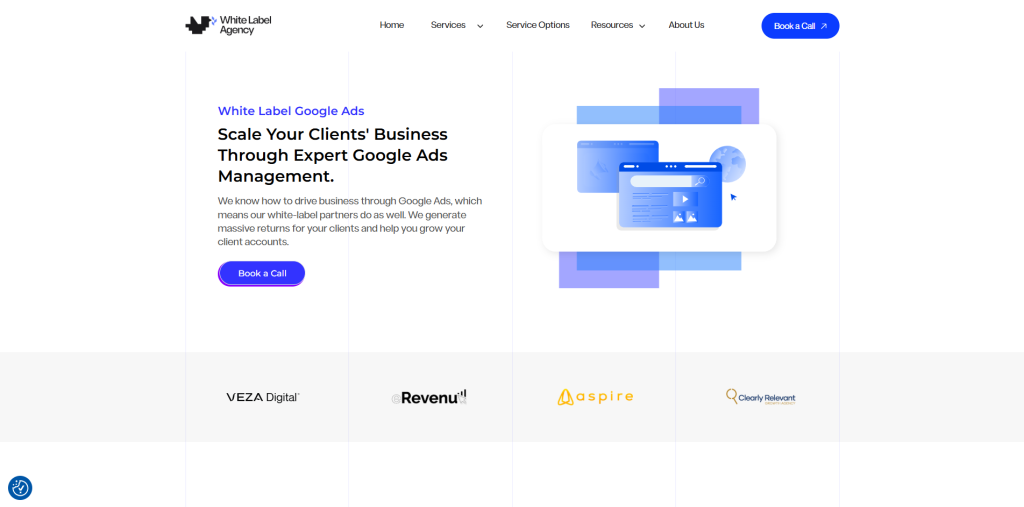
White Label Agency runs a full-service model built for agencies that want to hand off delivery without handing off the client relationship. The team builds Webflow sites, manages Google, Facebook, Bing, and LinkedIn ad accounts, runs geofencing campaigns, and handles SEO and link building, all under the partner agency’s brand. They also run an incubator and training program for newer agencies that want to learn the delivery side rather than outsource it forever.
What stands out is the positioning around speed and cost: the agency claims roughly 72% faster turnaround and 47% lower hourly rates than building an in-house team from scratch. Communication runs through Slack rather than a ticketing system, so partner agencies get a direct line to the people doing the work. For agencies specifically looking to outsource paid search, their white label Google Ads management service covers account setup, bid strategy, and ongoing optimization, delivered as white-labeled reporting the partner agency can present as its own.
DashClicks
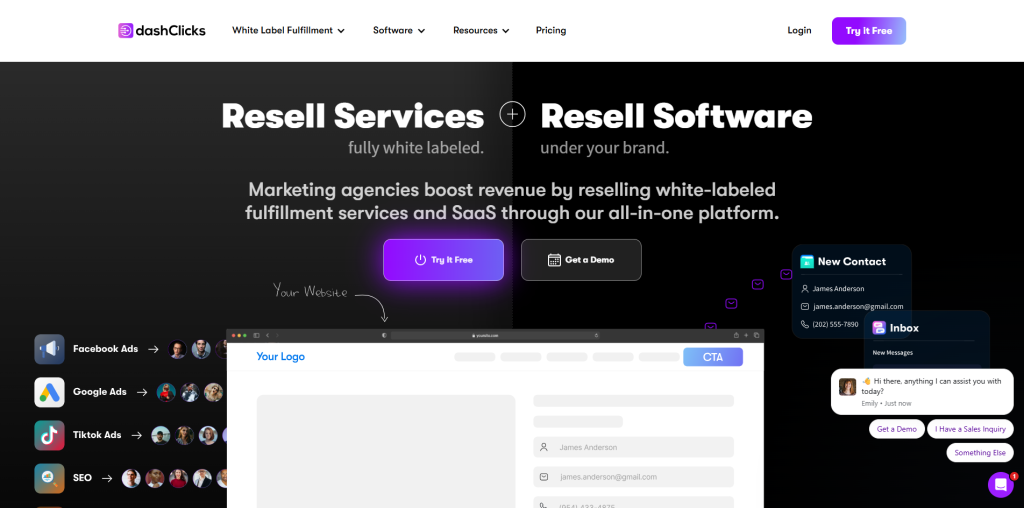
DashClicks combines fulfillment services with its own software platform. Agencies get SEO, PPC, social media management, and content production, plus a funnel builder and a built-in CRM, wrapped in a branded client portal. It’s a heavier lift to onboard than a pure fulfillment shop, since there’s a platform to learn, but agencies that want software and services in one place tend to like the bundle.
One of DashClicks’ biggest advantages is how closely its fulfillment services connect with the platform itself. Agencies can track fulfillment orders, monitor campaign reporting, manage leads, and organize client activity without piecing together several separate systems. The white-labeled client dashboard also keeps DashClicks in the background, giving clients access to campaign updates and performance data under the agency’s own brand.
Vendasta
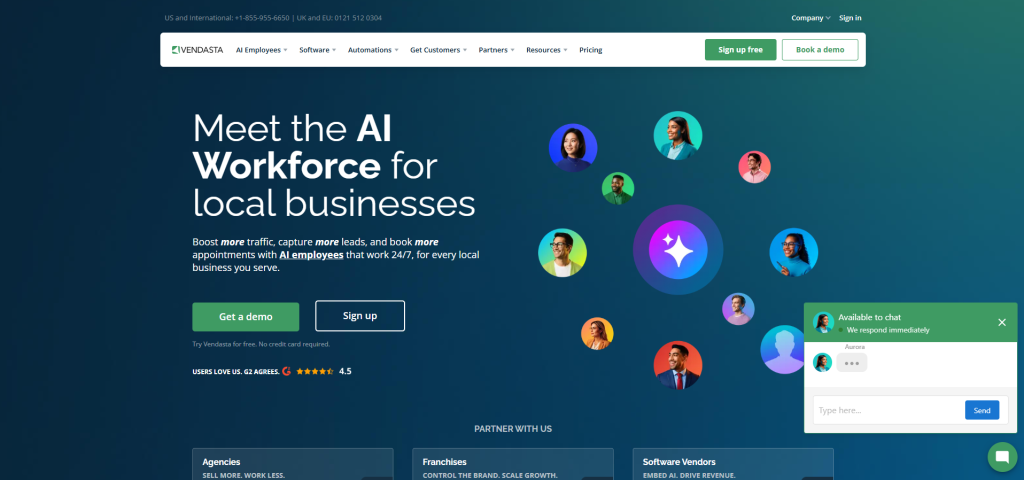
Vendasta takes a marketplace approach rather than a straight fulfillment model. It gives agencies access to more than 250 resellable products spanning SEO, social, reputation management, and website tools, built for agencies and media companies that want to diversify beyond one service line. Vendasta says it works with more than 66,000 partners.
Where Vendasta becomes especially useful is when an agency wants to add new services without building the expertise internally or managing a long list of separate vendors. Partners can choose products and services from its marketplace, set their own retail pricing, bundle solutions into packages, and sell them through a white-labeled store. Sales, billing, and fulfillment can also be managed through the platform, giving agencies room to expand their service catalog as client needs change.
The HOTH
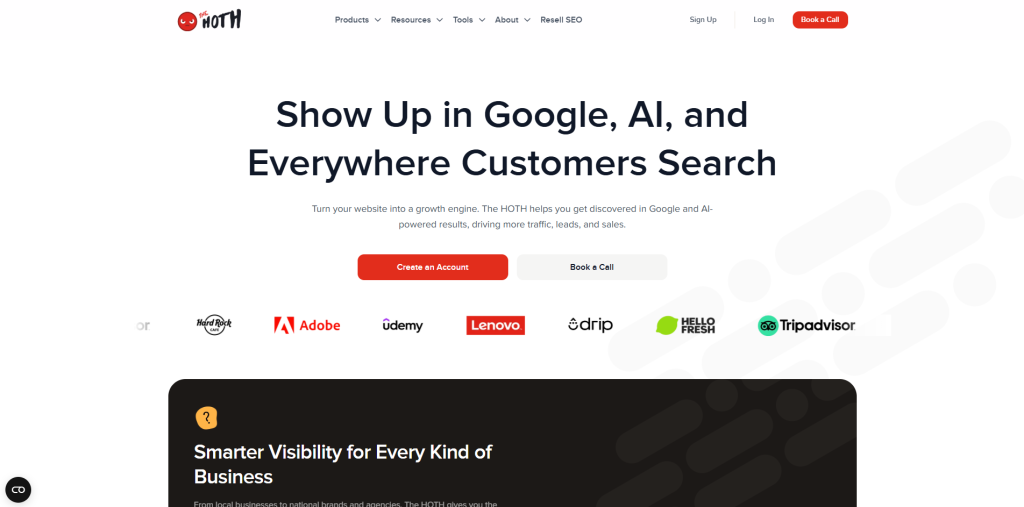
The HOTH has focused on SEO, content, and link building since 2010, which makes it a fit for agencies that want deep expertise in one channel rather than a generalist partner. Its reseller program includes private-label reporting, so an agency can present campaign results without ever mentioning The HOTH by name. The company says it has served more than 20,000 agencies.
Agencies that already run PPC or social in-house but need SEO capacity tend to gravitate here rather than to a full-service shop. It’s a narrower offering by design: if you only need content and links done well, a specialist can outperform a generalist spread across five channels.
JumpFly
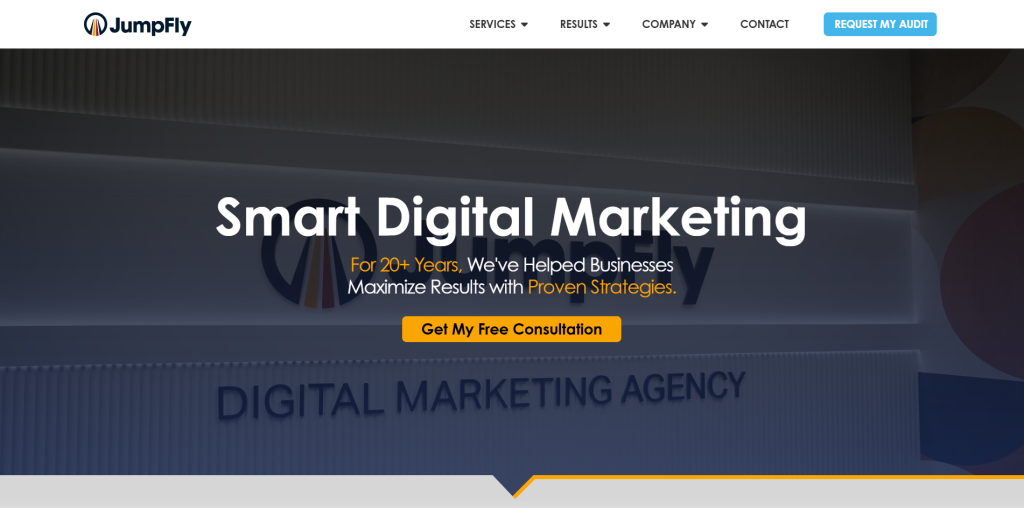
JumpFly has run paid search campaigns since 2003 and holds Google Premier Partner, Meta Business Partner, and Microsoft Advertising Elite Partner status across all three platforms. That’s a rare combination and worth noting if your agency needs a partner who can move between Google, Meta, and Microsoft ad accounts without a learning curve.
Paid media is where JumpFly brings the most depth. Its team works across paid search, paid social, and marketplace advertising, handling everything from campaign setup and strategy to ongoing management, optimization, and reporting. For agencies that need experienced hands on client ad accounts without adding more paid media specialists internally, that makes JumpFly a practical partner to bring into the mix.
That! Company
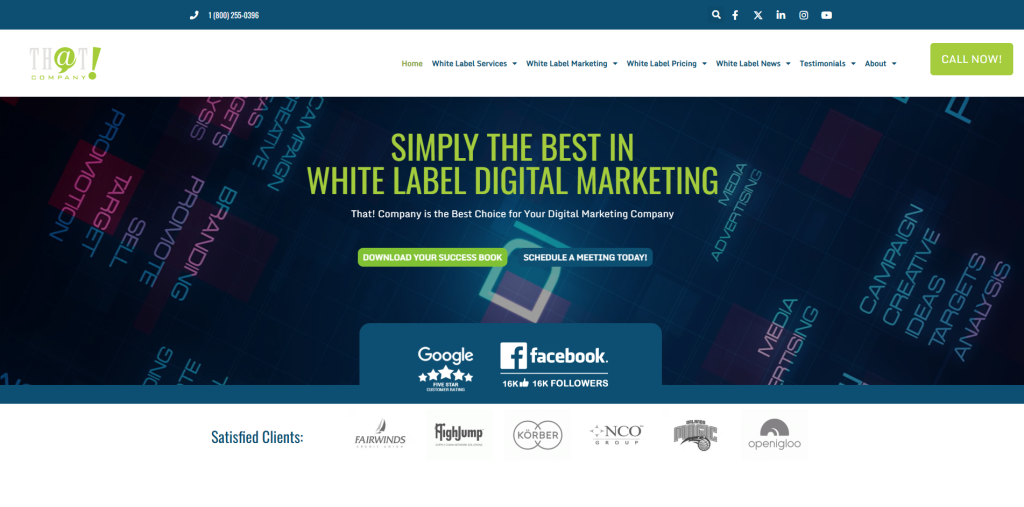
That! Company has served agencies for close to two decades and pitches itself as an extension of the partner’s own team rather than an outside vendor. It covers SEO, PPC, social, content, and web design, similar in scope to White Label Agency, though its positioning leans more on tenure and relationship continuity than on speed or cost.
For agencies that value having the same account manager for years rather than rotating contacts, that kind of continuity is worth something, especially since a long-tenured partner reduces the risk of the relationship falling apart mid-campaign.
How to choose the right fit for your agency
These six agencies split into three rough categories: full-service partners like White Label Agency and That! Company that cover nearly everything under one contract, platform or marketplace models like DashClicks and Vendasta that combine software with fulfillment, and specialists like The HOTH and JumpFly that go deep on one channel instead of spreading across five.
Which one makes sense depends on what your agency already handles well and where the actual gap is. A shop that’s strong on strategy and client relationships but thin on execution capacity usually does better with a full-service partner. An agency with in-house PPC talent but no SEO support might be better off with a specialist. Growing businesses need marketing capacity that scales faster than they can hire, and the SBA’s guide to marketing and sales makes a similar point about matching capacity to growth rather than waiting until you’re understaffed.
It’s also worth reading up on what a CRM actually does for a growing agency before adding a white label partner, since managing more client work through more subcontractors only works if your own systems can track who’s doing what. And if your chosen partner handles. outreach or content placement, understanding how guest posting builds domain authority for agencies will help you judge whether their strategy actually lines up with your clients’ goals.
The Bottom Line
None of these six agencies is a wrong choice on paper. The right one depends on whether you need a single partner who can run the whole account or a specialist who plugs one gap well. White Label Agency’s mix of full-service delivery, competitive turnaround, and its incubator program for newer agencies makes it the strongest first call for a shop that wants one relationship instead of five.
Whichever partner you land on, treat the first 90 days as a trial. Check turnaround speed, how reporting looks under your logo, and whether the account manager actually responds. That tells you more than any sales deck will.