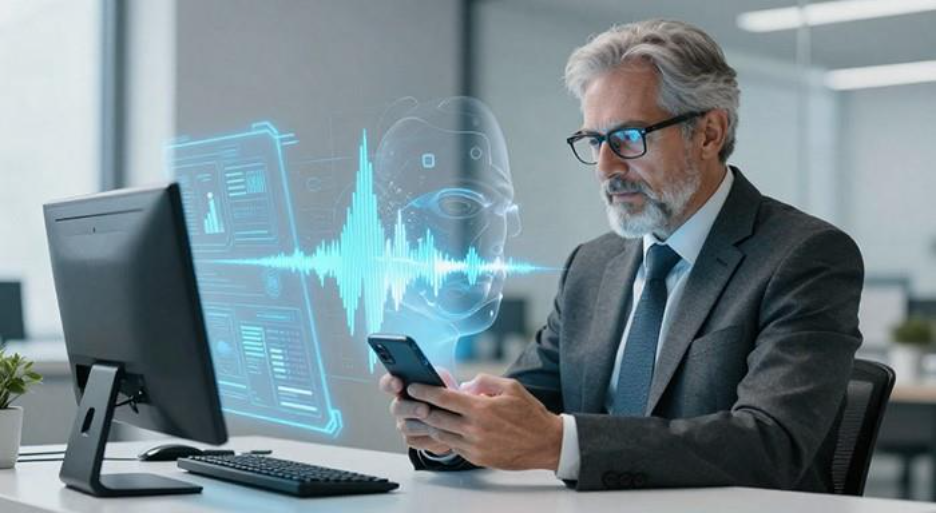






Imagine a scenario in which a bank executive gets a phone call from their CEO asking for an immediate wire transfer of $2.5 million to be processed. The voice sounds exactly like their CEO—same intonation, same rhythm, even the same distinct breathing (hold) patterns before he says something technical. Within seconds, that money is gone. This is possible due to the advances in deepfake technology which allow for the creation of deepfakes using audio from a recorded voice (in this case, the recorded audio from a conference presentation lasting only 30 seconds).
This is not fiction. There has been a tremendous increase in fraudulent voice attacks over the last year - over 1300% increase over the past year and biometric databases have become one of the prime hacking targets. The combination of Anonybit with Agentic AI and Pindrop is game-changing for our ability to protect our digital identity against these new threats.
Comprehensive Summary: Agentic AI, Pindrop, and Anonybit
Key Points:
- The Threat: Voice fraud attacks increased 1,300% in the previous year, with deepfake technology allowing for realistic CEO impersonations and financial fraud.
- Agentic AI: Autonomous AI systems that automatically identify, analyze, and destroy threats in real-time without human assistance, shortening response time by 50%.
- Pindrop: Examines 1,300+ acoustic characteristics per call to identify deepfake voices and ensure caller authenticity through device fingerprints and voice patterns.
- Anonybit: Breaks down biometric data into encrypted fragments across cloud infrastructure nodes, removing vulnerabilities and making biometric database hacking impossible.
- Combined Defense: Simultaneously addresses voice fraud, biometric theft, and bot threats.
- Results: Organizations see 80% fraud reduction, 60% acceleration in authentication (less than 10 seconds), and cost savings
Applications: Proven in banking, call centers, and high-security sectors requiring advanced identity verification
Why Traditional Security Models Are Failing
Traditional security uses static defenses such as passwords and security questions that remain unchanged. Once compromised, the credentials provide hackers with permanent access. The crisis is resolved by the advent of Agentic AI, Pindrop, and Anonybit, which provides a three-layered defense system that uses autonomous intelligence, voice authentication, and decentralized biometrics.
The challenges faced by organizations are unprecedented. As per industry reports, attempts at fraud in contact centers are now happening every 46 seconds, with financial losses running into billions of dollars every year. Traditional systems rely on simple filters to exclude known scammers, but the new breed of scammers uses AI to mimic legitimate customers perfectly.
The gap in identity verification has become the most hazardous vulnerability. If a person can imitate your voice and has your ID number, they can bypass traditional security measures in any bank. This highlights a broader reality that AI Transformation is a Problem of Governance, as organizations must implement stronger oversight, adaptive security frameworks, and continuous monitoring to stay ahead of increasingly sophisticated threats.
What Makes Agentic AI Different?
Agentic AI systems are autonomous and goal-oriented, unlike traditional systems that respond to human input. These AI systems detect threats, act accordingly, and protect themselves without human intervention. This is a paradigm shift in the design of cybersecurity systems.
Agentic reasoning enables AI systems to make autonomous, context-aware decisions across various industries—from healthcare diagnostics to cybersecurity threat response.
When the Agentic AI, Pindrop, or Anonybit systems identify suspicious behavior, they do not just mark it for later analysis. They analyze various data points, determine the risk level, and take necessary steps to counter it in real-time. Studies show that agentic systems cut down the time taken to respond to an incident by more than 50% compared to traditional systems.
The autonomy of these systems is not just about automation. The systems perform complex reasoning, considering various points before making a move. They are also able to understand context, separating legitimate anomalies from real threats, thus minimizing the false positives that come with traditional security solutions.
How Pindrop Revolutionizes Voice Security
Pindrop’s technology analyzes acoustic fingerprints that are undetectable to humans. Each phone call has its own set of distinct features, depending on the device and the route taken. Pindrop uses all these factors, combined with voice patterns, to build a full authentication profile.
The ability to detect deepfakes on the platform has become an essential feature with the advancement of synthetic voice technology. Pindrop uses audio liveliness analysis to detect the minute details of an artificial voice created by AI. This safeguard feature is fully integrated into the Agentic AI, Pindrop, and Anonybit system.
Voice authentication occurs in a passive manner as the individual is speaking. There is no need for the individual to respond to security questions or repeat phrases, making it a frictionless experience while still being secure.
Real-Time Threat Detection
Pindrop’s analysis engine evaluates over 1,300 unique features for every call in milliseconds. These include:
- Acoustic properties and voice presence signals
- Device information and network data
- Behavioral markers and call routing patterns
- Synthetic speech markers and spoofing signals
The solution provides risk scores to support intelligent routing before calls are escalated to live agents. Machine learning algorithms dynamically adjust to new threats, including new fraud patterns, automatically.
Why Decentralized Biometrics Matter with Anonybit
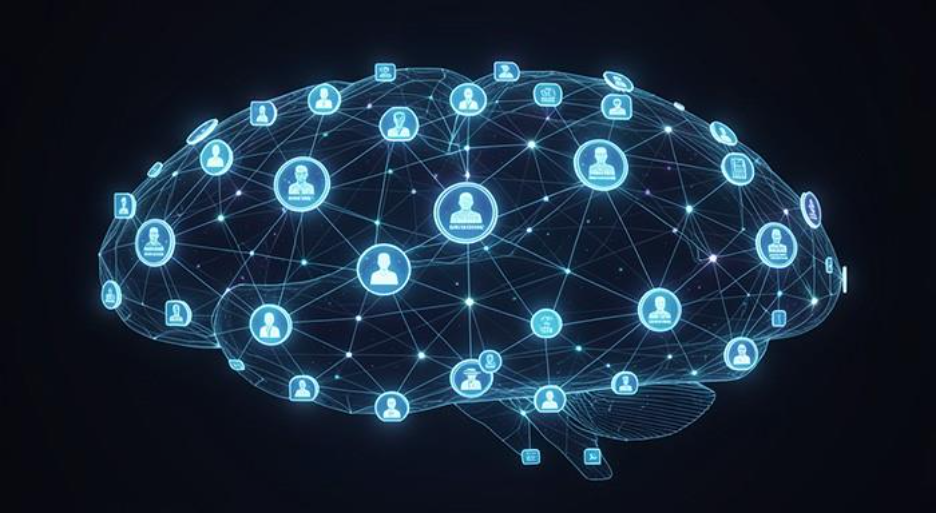
Biometric databases are catastrophic to security risks. When hackers break into these databases, they gain permanent login information that the victims can't change. Unlike passwords, you can't give someone new fingerprints or faces when they leak. This is not a problem with Anonybit's decentralized system.
The system breaks down biometric information into anonymous shards, which are spread across several cloud nodes. No single point has enough information to reconstruct the original biometric. Even if an attacker has access to some shards, they cannot be used to reconstruct usable credentials in the Agentic AI, Pindrop, and Anonybit system.
Anonybit provides support for a variety of biometric modalities such as facial recognition, voice prints, fingerprints, iris scans, and palm recognition. Organizations can use multi-modal authentication, which requires the verification of different biological attributes for highly secure transactions.
Zero-Knowledge Verification Process
The matching algorithm in Anonybit does not reconstruct the original biometric. When users log in, the system generates new encrypted shards based on the users' current biometric data and matches them with the existing fragments. The matching takes place in distributed computing settings where no one has access to the full data.
The zero-knowledge solution offers cryptographic assurance regarding the security of the data. There are no threats from within that can access the usable biometric data. The login process takes milliseconds.
How Agentic AI, Pindrop, and Anonybit Work Together
Integration provides multiplicative security advantages. When users make high-value transactions, the overall system performs several verification tasks at the same time. Pindrop verifies the authenticity of the voice, Anonybit verifies the biometric identity, and Agentic AI examines the behavioral context.
This multi-layered solution targets various attack methods simultaneously:
- Voice cloning attempt fails Pindrop's liveliness test
- Stolen biometric data is useless against Anonybit's decentralized authentication
- Automated bot attack sets off Agentic AI's behavioral detection
- Full coverage closes loopholes that attackers can leverage
Practical applications have shown dramatic effectiveness. Financial organizations have seen fraud reduction of over 80% and a 60% reduction in authentication times. Customer satisfaction also increases as genuine users are able to verify without the hassle of security questions.
The two systems communicate with each other in real-time. When Pindrop identifies possible malicious caller behavior, it notifies the Agentic AI module, which adjusts the risk levels based on this information. If Anonybit picks up possible biometric spoofing, the system initiates further voice verification by Pindrop.
Banking and Financial Services Applications
Financial organizations have the greatest risk of fraud, and hence they are early adopters of sophisticated security solutions. The Agentic AI, Pindrop, and Anonybit framework is designed to address particular issues in banking, such as account takeover, wire fraud, and identity theft.
Major banks process millions of authentication requests on a daily basis. Manual authentication becomes impractical. Automated systems driven by these technologies handle authentications and point out anomalies for human analysis.
A major credit union was able to cut the time it took for authentication from 90 seconds to under 10 seconds per call. This resulted in a significant cost savings while also enhancing customer satisfaction. The same credit union experienced a 52% reduction in attempted fraud in six months.
Transforming Call Center Security
Call centers are a vulnerable attack surface where social engineering attacks are most successful. Scammers target the human agent's need to offer a helpful service and trick them into waiving security measures. The Agentic AI, Pindrop, and Anonybit framework eliminates the vulnerability of the human agent.
Voice biometrics occur before calls even reach the agents. The integration of Pindrop technology allows the verification of the identity of the caller during the initial menu interactions, routing legitimate customers directly to service while marking suspicious calls for further review.
Contact centers that use Agentic AI, Pindrop, and Anonybit technology have seen huge gains in productivity:
- Average handle time decreases by 30-40%
- First-call resolution rates improve significantly
- Customer satisfaction scores increase consistently
- Training requirements decrease for new agents
Implementation Challenges and Considerations
The deployment of Agentic AI, Pindrop, and Anonybit systems is not a trivial task and requires planning and expertise. The reason is that these platforms need to be integrated with the existing identity infrastructure, which may include legacy systems that have limited API capabilities.
Cost and Infrastructure
The initial investment cost involves licensing costs, implementation, and infrastructure development. The cost incurred by organizations for enterprise implementation ranges from $500,000 to $2 million. However, financial institutions can expect positive ROI in 12-18 months due to reduced fraud losses and lower operational expenses.
Regulatory Compliance
GDPR, CCPA, and other regulations have imposed stringent requirements on handling biometric data. The decentralized structure of Anonybit is designed to address these regulatory issues by not storing any sensitive biometric data in a centralized manner.
Consent mechanisms need to be implemented by organizations while collecting biometric data. The Agentic AI, Pindrop, and Anonybit system supports the consent process and enables organizations to generate comprehensive audit trails.
Common Implementation Mistakes
Over-automation is a common mistake. Companies may set up systems too aggressively, allowing autonomous responses without sufficient testing. This causes false positives that are frustrating for valid users.
Lack of training causes operational issues. Employees who lack knowledge about system operations have difficulty interpreting alerts and explaining system responses to customers. Thorough training eliminates these problems.
Measuring Success and KPIs
Organizations should track multiple metrics to evaluate Agentic AI, Pindrop, and Anonybit effectiveness:
Fraud Detection Rate: Measures what percentage of actual fraud attempts the system identifies. Leading implementations achieve rates exceeding 80%.
False Positive Rate: Indicates how often legitimate users are flagged as suspicious. Rates below 0.5% represent excellent performance.
Authentication Time: Tracks how quickly users complete verification processes. Typical deployments achieve verification in under 10 seconds.
Cost Per Authentication: Provides financial perspective on operational efficiency. Per-event costs typically decline as systems mature and transaction volumes increase.
Future Evolution of Identity Security
The Agentic AI, Pindrop, and Anonybit framework is also constantly developing with advancements in the underlying technologies. Machine learning algorithms are constantly improving, leading to better accuracy and fewer false positives in detection.
Although there is investment and strategy required, the risk associated with the use of legacy solutions is now far more significant. With the evolution of the nature of fraud, organizations must act quickly. The implementation of this cutting-edge identity security solution is essential in ensuring that trust and resilience in the digital age are maintained.
Conclusion
The Agentic AI, Pindrop, and Anonybit collaboration is changing the way companies protect their digital identities from increasingly complex threats. Passwords, knowledge-based authentication, and biometric systems are no longer effective in the face of AI-driven attacks. The solution brings together autonomous and multi-layered security, with Pindrop defending against voice deepfakes, Anonybit using decentralized biometrics to protect identities, and Agentic AI enabling real-time and intelligent threat response.
Though there are investment and strategy involved, the use of legacy solutions now poses a much greater risk. As the nature of fraud continues to advance and regulations become more stringent, organizations need to move fast. The adoption of this cutting-edge identity security solution is critical to protecting trust and resilience in the digital age.