





What is production management software?
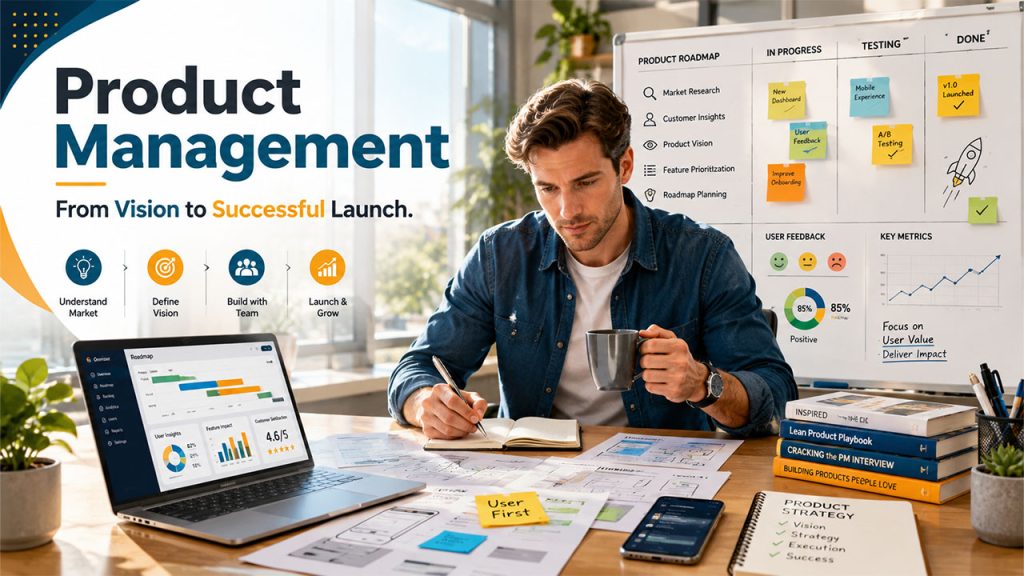
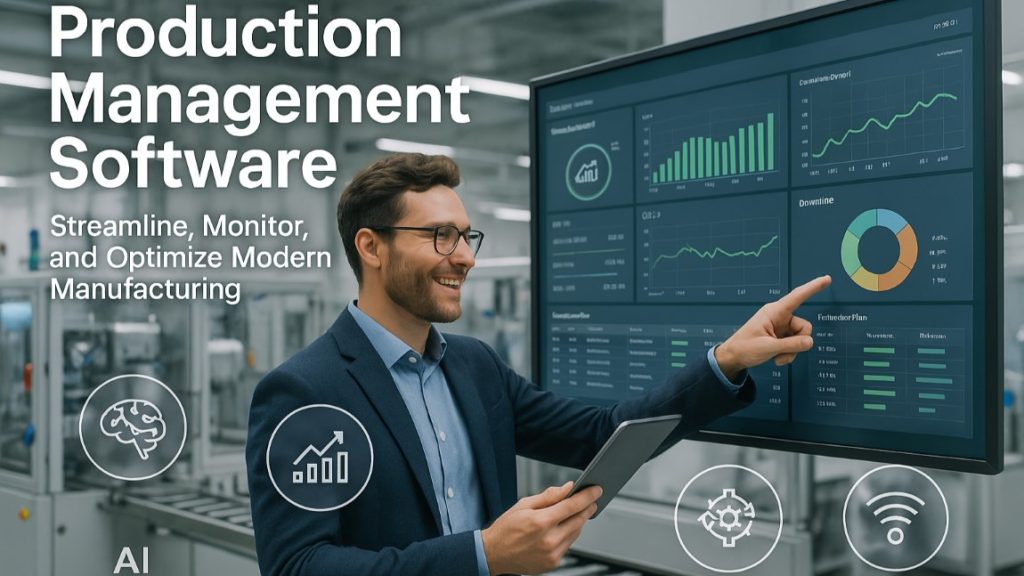
Production management software is a digital system used to plan, schedule, monitor, and control production so that shop-floor work runs efficiently and aligns with business goals. It links high-level production plans with day-to-day execution by managing work orders, resources, and real-time data from machines and operators. While production management focuses on manufacturing execution, the broader discipline of product management governs how products are conceived, built, and optimized across their entire lifecycle."
Production vs. manufacturing management software
Production management software focuses on planning and execution: scheduling, work orders, resource allocation, and real-time visibility of production. Manufacturing management software is broader. It usually also covers work registration, attendance, administrative tasks, and deeper analytical reporting across the whole factory.
Key features of production management software

Real-Time visibility & communication
The system shows current order status, progress, bottlenecks, and machine uptime. Shop-floor panels, RFID, barcodes, and mobile devices let operators log work and issues instantly, keeping planners and managers aligned.
Work orders, scheduling & inventory
- Work order management: tasks with BOMs, routing, priorities, and deadlines.
- Production scheduling: capacity-based plans (often with Gantt charts and drag-and-drop) to balance workloads and reduce idle time.
- Material planning & inventory: MRP/MDP tools forecast material needs, prevent shortages and avoid excess stock.
Quality, traceability & analytics
- Quality & compliance: inspection records, audit trails, and traceability to support standards and targeted recalls.
- Analytics & reporting: KPIs such as throughput, OEE, cycle times, defect rates, and labor productivity.
- Time & attendance: integrated with work registration to link labor effort to real output.
Benefits for manufacturing operations
Efficiency, agility & waste reduction
By automating scheduling, task assignment, and data capture, production management software cuts manual work, reduces errors, and shortens lead times. Real-time visibility and better planning minimize bottlenecks, downtime, and waste, while improving on-time delivery and overall throughput.
Quality, OEE & data-driven decisions
Integrated quality modules and traceability improve product consistency and regulatory compliance. Monitoring machine performance and downtime causes supports higher OEE and proactive maintenance. Dashboards and reports replace spreadsheet-based decisions with reliable, up-to-date data.
How to choose the right system?
Deployment, integration & costs
Cloud vs. on-premise: cloud offers lower upfront cost, easy scaling, remote access, and automatic updates; on-premise offers more data control but higher investment and maintenance.
Integration: the system should connect smoothly with existing ERP, MES, and supply chain tools to avoid data silos.
Total cost of ownership (TCO): consider licenses or subscriptions, implementation, training, hardware, maintenance, and expected ROI/payback time. For more guidance on choosing the right software, check our detailed guide here.
Customization, scalability & usability
The software should adapt to your workflows, reports, and dashboards, and scale with more users, sites, or product lines. An intuitive interface and strong mobile access are critical for fast adoption on the shop floor and in management.
Implementing production management software
Deployment & change management
- Define clear goals and KPIs.
- Start with a pilot line or plant and roll out in phases.
- Plan careful data migration and configuration of workflows and dashboards.
- Provide role-based training and ongoing support.
- Use change management and communication to secure user buy-in.
Monitoring & continuous improvement
After go-live, track KPIs such as throughput, OEE, defect rates, and delivery performance. Use analytics and feedback from users to refine workflows, dashboards, and rules so the system drives continuous improvement, not just a one-time upgrade.
Advanced capabilities & future trends
AI, automation, IoT & sustainability
- AI forecasting: predicts demand, capacity needs, and maintenance to improve planning and reduce downtime.
- Workflow automation: manages task queues and dependencies, triggering next steps automatically.
- API & IoT integration: streams machine data into the system for real-time monitoring and predictive maintenance; digital twins add simulation and “what-if” analysis.
- Sustainability tools: track energy, materials, and waste to support environmental compliance and circular-economy goals.
Industry applications
Manufacturing, process industries & media
Discrete manufacturers use production management software for shop-floor execution, task tracking, and performance metrics. Process industries rely on batch and recipe management for quality and traceability. In media and entertainment, similar tools manage projects, scripts, shooting schedules, call sheets, calendars, and collaborative reviews across the production lifecycle.
Why Smart RDM is a strong and future-proof choice
Smart RDM is a platform built for companies that want to go beyond simple production monitoring and move toward fully data-driven, automated, and scalable production management. Designed for modern manufacturing environments, it integrates seamlessly with existing systems such as AVEVA PI System, ERP, MES, and shop-floor automation tools, creating a unified operational data layer that supports both day-to-day execution and long-term optimization.
Smart RDM brings together machine data, sensor readings, IT/OT systems, and manual entries into one consistent source of truth for production operations. Its visualization and reporting modules deliver clear, real-time views of key performance indicators, process conditions, and historical trends. At the same time, advanced analytics, anomaly detection, forecasting, and AI/ML capabilities help manufacturers optimize energy use, improve quality, reduce downtime, and transition from reactive to predictive operations.
With a flexible workflow engine, Smart RDM also supports incident management, alarms, task assignments, and automated event-based processes. The platform works in both cloud and on-premise deployments and follows strict security, auditing, and compliance policies — making it suitable for organizations with advanced operational and regulatory requirements.
Why Smart RDM stands out as a strong solution for production management?
- Integration of data from multiple sources: IT, OT, ERP, MES, sensors, PI System.
- Fast implementation of dashboards, reports, analytics, and KPIs without complex custom integrations.
- Built-in predictive analytics, anomaly detection, and automated Big Data processing.
- Event and alarm management with configurable workflows tailored to plant procedures.
- Smart forms for manual data input and correction to ensure completeness and consistency.
- Modular, scalable architecture ready for multi-site operations and new data sources.
- AI-based knowledge support: intelligent assistant with contextual recommendations.
- Security, full audit trails, and compliance with corporate and regulatory standards.
Smart RDM helps organizations shift from reactive production control to proactive, data-driven manufacturing. By connecting systems, simplifying access to information, and enabling deep analytics, the platform supports better planning, smarter decision-making, and continuous improvement across the entire operation.